Cultic Studies Review, Vol. 1, No. 2, 2002, Page 125
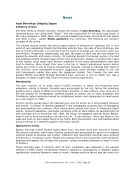
The Rise and Fall of Synanon: A California Utopia
Rod Janzen. Baltimore: The Johns Hopkins University Press, 2001,
300 pages.
Founded in 1958 by Charles E. ―Chuck‖ Diederich, a charismatic alcoholic, Synanon started
in California as a residential treatment center for drug addicts. According to author Rod
Janzen, Synanon became ―one of the most successful and most innovative communal
societies in the United States.‖ At its peak, more than 2,000 men, women, and children
resided in its various communities and its commercial enterprises had spread across the
country and abroad. But by 1991, Synanon was disgraced and bankrupt. Why did this
enterprise succeed, and why did it fail? Was it a cult?
Janzen attributes much of Synanon‘s success to Diederich‘s brilliant leadership, and its
decline to his increasing alcoholism and manic depression. He disagrees with Richard Ofshe,
Margaret Singer, and other specialists, arguing that Synanon was not a cult.
A professor of social sciences at Fresno Pacific University, Janzen bases his narrative
primarily on documents and tape recordings of interactions at Synanon, and on interviews
with former Synanon people. In its early years, Synanon relied heavily on ―the Game‖ and
other confrontational techniques within a highly structured, self-contained community.
Members faced brutal truth from one another about their shortcomings. A special
terminology and a variety of unusual customs developed. Synanon was a psychological boot
camp.
Although unfortunately no follow-up statistics were collected, Synanon gained a reputation
for rehabilitating ―dope fiends.‖ It attracted the attention of Hollywood celebrities such as
Steve Allen and Stan Kenton bevies of sociologists, psychiatrists, and psychologists and
squads of government officials eager to contract out the care of delinquents, criminals, and
substance abusers. Synanon‘s appeal as a Utopian, diverse, non-violent, caring, mini society
led to the admission of ―squares,‖ including anti-war hippies. At first, this mix of people
bonded. Later, there were tensions, crime, skinheads, violence, and arbitrary expulsions.
Under the direction of ―the boss,‖ new enterprises flourished. Synanon initiated businesses,
charities, progressive schools — including a law school, and so on, and it acquired real
estate. When Synanon claimed to be a religious organization, state and federal tax
exemption followed. Governance was authoritarian, controlled by Diederich, his family, and
an inner circle of members who enjoyed comfortable salaries and special perquisites.
Diederich was a kind of self-taught social inventor, influenced by unusual combinations for
instance, by Ralph W. Emerson, humanistic psychology, and the Ouija board. He believed
that to improve the society Synanon must try out new ideas. And after his first wife died,
these ideas became increasingly bizarre. He decreed that Synanites could drink and smoke,
must change marital partners, and must defend themselves with lawsuits and violence. And
no more children. The men were ordered to get vasectomies. Many members became
disillusioned, hurt, and angry.
In consequence, many members ―flipped‖ — that is, left the group. Journalists and
researchers such as Richard Ofshe published exposés. When a live rattlesnake was placed in
the mail box of an opposing lawyer, Synanon‘s reputation dropped sharply. The organization
lost its tax-exempt status, and IRS charges forced bankruptcy and liquidation in 1991. Six
years later, Charles Diederich died of cardio-respiratory failure at age 83. Janzen concludes
his account by summarizing the heritage of Synanon and the accomplishments of its ex-
members.
What can readers learn from The Rise and Fall of Synanon? Contrary to what the author
believes, Synanon failed because, as it transformed from a drug rehab center to a ―Utopia,‖
it indeed became a cult. The harm its charismatic and dictatorial leader did to its members
The Rise and Fall of Synanon: A California Utopia
Rod Janzen. Baltimore: The Johns Hopkins University Press, 2001,
300 pages.
Founded in 1958 by Charles E. ―Chuck‖ Diederich, a charismatic alcoholic, Synanon started
in California as a residential treatment center for drug addicts. According to author Rod
Janzen, Synanon became ―one of the most successful and most innovative communal
societies in the United States.‖ At its peak, more than 2,000 men, women, and children
resided in its various communities and its commercial enterprises had spread across the
country and abroad. But by 1991, Synanon was disgraced and bankrupt. Why did this
enterprise succeed, and why did it fail? Was it a cult?
Janzen attributes much of Synanon‘s success to Diederich‘s brilliant leadership, and its
decline to his increasing alcoholism and manic depression. He disagrees with Richard Ofshe,
Margaret Singer, and other specialists, arguing that Synanon was not a cult.
A professor of social sciences at Fresno Pacific University, Janzen bases his narrative
primarily on documents and tape recordings of interactions at Synanon, and on interviews
with former Synanon people. In its early years, Synanon relied heavily on ―the Game‖ and
other confrontational techniques within a highly structured, self-contained community.
Members faced brutal truth from one another about their shortcomings. A special
terminology and a variety of unusual customs developed. Synanon was a psychological boot
camp.
Although unfortunately no follow-up statistics were collected, Synanon gained a reputation
for rehabilitating ―dope fiends.‖ It attracted the attention of Hollywood celebrities such as
Steve Allen and Stan Kenton bevies of sociologists, psychiatrists, and psychologists and
squads of government officials eager to contract out the care of delinquents, criminals, and
substance abusers. Synanon‘s appeal as a Utopian, diverse, non-violent, caring, mini society
led to the admission of ―squares,‖ including anti-war hippies. At first, this mix of people
bonded. Later, there were tensions, crime, skinheads, violence, and arbitrary expulsions.
Under the direction of ―the boss,‖ new enterprises flourished. Synanon initiated businesses,
charities, progressive schools — including a law school, and so on, and it acquired real
estate. When Synanon claimed to be a religious organization, state and federal tax
exemption followed. Governance was authoritarian, controlled by Diederich, his family, and
an inner circle of members who enjoyed comfortable salaries and special perquisites.
Diederich was a kind of self-taught social inventor, influenced by unusual combinations for
instance, by Ralph W. Emerson, humanistic psychology, and the Ouija board. He believed
that to improve the society Synanon must try out new ideas. And after his first wife died,
these ideas became increasingly bizarre. He decreed that Synanites could drink and smoke,
must change marital partners, and must defend themselves with lawsuits and violence. And
no more children. The men were ordered to get vasectomies. Many members became
disillusioned, hurt, and angry.
In consequence, many members ―flipped‖ — that is, left the group. Journalists and
researchers such as Richard Ofshe published exposés. When a live rattlesnake was placed in
the mail box of an opposing lawyer, Synanon‘s reputation dropped sharply. The organization
lost its tax-exempt status, and IRS charges forced bankruptcy and liquidation in 1991. Six
years later, Charles Diederich died of cardio-respiratory failure at age 83. Janzen concludes
his account by summarizing the heritage of Synanon and the accomplishments of its ex-
members.
What can readers learn from The Rise and Fall of Synanon? Contrary to what the author
believes, Synanon failed because, as it transformed from a drug rehab center to a ―Utopia,‖
it indeed became a cult. The harm its charismatic and dictatorial leader did to its members