Cultic Studies Review, Vol. 1, No. 2, 2002, Page 103
Visual Analogue Scales
We used visual analogue scales (VASs) (McCormack, Horne, &Sheather, 1988) using
bipolar dimensions of not anxious-anxious, not angry-angry, unreal-real, not fearful-fearful,
not agitated-agitated, and not guilty-guilty to record Matthew‘s subjective reactions to the
imagery. The scales were scored from 0-100 (with a higher score reflecting a more negative
experience) on a 100mm line. Matthew‘s psychological response was considered negative if
the rating he gave was higher than 50, moderate for a rating from 65 to 75, marked for a
rating from 75 to 85, and extreme for a rating from 85 to 100.
Apparatus
We made psychophysiological recordings using an Acer TravelMate 514T computer linked to
a PowerLab 4/20 portable data-acquisition system using Chart 4.0.1. Although we made
multimodal recordings, we will report heart rate here. We recorded heart rate using Unilect
high resolution, Ag/AgCl adhesive ECG electrodes at the second rib on either side of the
torso, with an earth reference on the mastoid process.
Procedure
Two of us collected the data as part of a larger study that had the approval of the University
Human Research Ethics Committee and the Department of Justice and Industrial Relations.
We obtained written informed consent from the participant, Matthew.
We interviewed Matthew at the prison hospital at Her Majesty‘s Prison Risdon to obtain the
information required for script construction. We audio-taped this interview. We administered
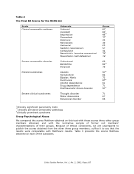
the WAIS-III to Matthew and gave him the MCMI-III and the Group Psychological Abuse
Scale to complete.
We obtained information about the event from Matthew before trial, although the actual
assessment did not occur until after trial. In general, deterioration of memory has been
cited as a problem with retrospective evaluation of responses to events. However, research
evaluating the efficacy of traumatic memories indicates that little change occurs in either
the factual or the emotive nature of these types of memories (e.g., Koss et al., 1995).
One of us prepared the scripts from the audio-taped interview. At the second session, we
applied electrodes using standard electrode placements. We took a 60-second baseline
recording as Matthew sat with his eyes closed. One of us then administered each stage of
the first script, while the other monitored the recording of the psychophysiological data.
There was a 10-second pause between each stage, during which Matthew was allowed to
open his eyes. At the end of the script, we asked Matthew to rate his psychological response
to each stage of the preceding script on the VASs. To facilitate these ratings, we reiterated
key elements of each stage. We administered subsequent scripts in the same way.
We debriefed Matthew at the end of the session. Further, we visited him on another
occasion, when we described the results of the assessment and did additional debriefing.
Data Transformation, Scoring, and Analysis
We took a 30-second scoring period from the baseline and during each stage of each script.
We took this scoring period from approximately 15 seconds into each stage. This scoring
method has been successfully used elsewhere (e.g., Haines et al., 1995 Haines, Josephs,
Williams &Wells, 1998). We obtained a mean heart rate for the scoring period.
We handled the data in a number of ways. We have presented descriptive data from
psychological testing with either an indication of clinical significance or a comparison with
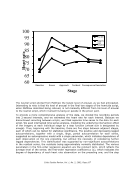
normative data. We have described across-stage responses to imagery relative to script
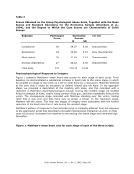
content. For the VASs, we determined between-script differences at each stage to be
Visual Analogue Scales
We used visual analogue scales (VASs) (McCormack, Horne, &Sheather, 1988) using
bipolar dimensions of not anxious-anxious, not angry-angry, unreal-real, not fearful-fearful,
not agitated-agitated, and not guilty-guilty to record Matthew‘s subjective reactions to the
imagery. The scales were scored from 0-100 (with a higher score reflecting a more negative
experience) on a 100mm line. Matthew‘s psychological response was considered negative if
the rating he gave was higher than 50, moderate for a rating from 65 to 75, marked for a
rating from 75 to 85, and extreme for a rating from 85 to 100.
Apparatus
We made psychophysiological recordings using an Acer TravelMate 514T computer linked to
a PowerLab 4/20 portable data-acquisition system using Chart 4.0.1. Although we made
multimodal recordings, we will report heart rate here. We recorded heart rate using Unilect
high resolution, Ag/AgCl adhesive ECG electrodes at the second rib on either side of the
torso, with an earth reference on the mastoid process.
Procedure
Two of us collected the data as part of a larger study that had the approval of the University
Human Research Ethics Committee and the Department of Justice and Industrial Relations.
We obtained written informed consent from the participant, Matthew.
We interviewed Matthew at the prison hospital at Her Majesty‘s Prison Risdon to obtain the
information required for script construction. We audio-taped this interview. We administered
the WAIS-III to Matthew and gave him the MCMI-III and the Group Psychological Abuse
Scale to complete.
We obtained information about the event from Matthew before trial, although the actual
assessment did not occur until after trial. In general, deterioration of memory has been
cited as a problem with retrospective evaluation of responses to events. However, research
evaluating the efficacy of traumatic memories indicates that little change occurs in either
the factual or the emotive nature of these types of memories (e.g., Koss et al., 1995).
One of us prepared the scripts from the audio-taped interview. At the second session, we
applied electrodes using standard electrode placements. We took a 60-second baseline
recording as Matthew sat with his eyes closed. One of us then administered each stage of
the first script, while the other monitored the recording of the psychophysiological data.
There was a 10-second pause between each stage, during which Matthew was allowed to
open his eyes. At the end of the script, we asked Matthew to rate his psychological response
to each stage of the preceding script on the VASs. To facilitate these ratings, we reiterated
key elements of each stage. We administered subsequent scripts in the same way.
We debriefed Matthew at the end of the session. Further, we visited him on another
occasion, when we described the results of the assessment and did additional debriefing.
Data Transformation, Scoring, and Analysis
We took a 30-second scoring period from the baseline and during each stage of each script.
We took this scoring period from approximately 15 seconds into each stage. This scoring
method has been successfully used elsewhere (e.g., Haines et al., 1995 Haines, Josephs,
Williams &Wells, 1998). We obtained a mean heart rate for the scoring period.
We handled the data in a number of ways. We have presented descriptive data from
psychological testing with either an indication of clinical significance or a comparison with
normative data. We have described across-stage responses to imagery relative to script
content. For the VASs, we determined between-script differences at each stage to be