Cultic Studies Review, Vol. 1, No. 2, 2002, Page 107
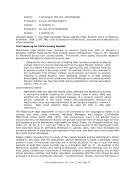
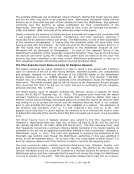
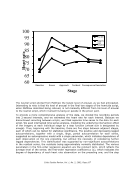
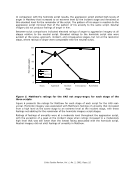
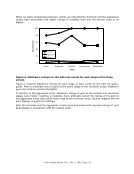
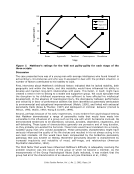
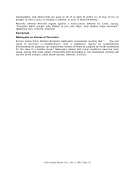
The neutral script elicited from Matthew the lowest level of arousal, as we had anticipated.
Interesting to note is that his level of arousal in the final two stages of the homicide script,
when Matthew described being relieved, is not markedly different from his level of arousal
to the neutral script, which involved his being on parade in the prison yard.
To provide a more comprehensive analysis of the data, we divided the recording periods
into 2-second intervals, and we estimated the heart rate for each interval. Because we
discontinued recording between scripts, we fitted separate time series to the data for each
script. We used interrupted time-series analysis, modeling the underlying intervention effect
of the imagery at each individual stage by a step function (whose size is designated by
omega). Thus, beginning with the baseline, there are five steps between adjacent stages,
each of which can be tested for statistical significance. The positive and decreasing lagged
autocorrelations, together with a single, large, partial autocorrelation for each series,
suggested an autoregressive model with a single parameter, which indicates dependence of
each observation on the one preceding, but without the necessity of considering further
lagged dependencies. This identification was supported by non-significant autocorrelations
in the residual series, the residuals being approximately normally distributed. The various
parameters in the first-order regression equation are the constant term, which reflects the
average level of the series the first-order regression coefficient p (1), which indicates the
degree of dependency of each heart rate observation on the preceding one and the step
60
65
70
75
80
85
90
95
100
Baseline Scene Approach Incident Consequence Resolution
Stage
Murder
Aggres
sion
Neutral
Heart
rate
The neutral script elicited from Matthew the lowest level of arousal, as we had anticipated.
Interesting to note is that his level of arousal in the final two stages of the homicide script,
when Matthew described being relieved, is not markedly different from his level of arousal
to the neutral script, which involved his being on parade in the prison yard.
To provide a more comprehensive analysis of the data, we divided the recording periods
into 2-second intervals, and we estimated the heart rate for each interval. Because we
discontinued recording between scripts, we fitted separate time series to the data for each
script. We used interrupted time-series analysis, modeling the underlying intervention effect
of the imagery at each individual stage by a step function (whose size is designated by
omega). Thus, beginning with the baseline, there are five steps between adjacent stages,
each of which can be tested for statistical significance. The positive and decreasing lagged
autocorrelations, together with a single, large, partial autocorrelation for each series,
suggested an autoregressive model with a single parameter, which indicates dependence of
each observation on the one preceding, but without the necessity of considering further
lagged dependencies. This identification was supported by non-significant autocorrelations
in the residual series, the residuals being approximately normally distributed. The various
parameters in the first-order regression equation are the constant term, which reflects the
average level of the series the first-order regression coefficient p (1), which indicates the
degree of dependency of each heart rate observation on the preceding one and the step
60
65
70
75
80
85
90
95
100
Baseline Scene Approach Incident Consequence Resolution
Stage
Murder
Aggres
sion
Neutral
Heart
rate