Cultic Studies Review, Vol. 1, No. 2, 2002, Page 126
and to society outdid the good. In the absence of democratic checks and balances, and of
responsibility, Synanon‘s eccentric leader, like leader‘s of other cultic groups, exercised a
highly damaging behavioral, cognitive, financial, and emotional control over the group‘s
members. Finally, the decline of Synanon illustrates the importance of sunshine, of the
public exposure of abusive groups.
Arthur A. Dole, Ph.D., A.B.P.P.
Trenton, Maine
Varieties of Anomalous Experiences: Examining Scientific Evidence
Edited by Etzel Cardena, Steven Jay Lynn, and Stanley Krippner.
Washington, D.C.: American Psychological Association, 2000, 320
pages. $39.95.
This book is a pleasant and welcome surprise to those who fought to have ―mental
processes‖ added to the definition of psychology. Until the 1960s psychology was ―the
science of behavior‖ limited to overt, observable, empirically demonstrated behavior. That
the American Psychological Association (APA) has published it adds to the surprise because
its journals for decades rejected submissions on this subject and still them. In the
introduction the book‘s editors observe that traditional psychology ―long neglected or
derided‖ anomalous experiences because they ―fell between the cracks of contemporary
mainstream psychology.‖ But, they add, ―Psychology has achieved enough maturity and
breadth it can take a serious look at these unusual but important experiences.‖ Skinner
surely would have cringed at such an admission.
The editors describe their goal as inviting ―recognized international authorities‖ to evaluate
―empirical support‖ for anomalous phenomena ―in an even-handed manner‖ and ―do justice
to the experiences themselves.‖ They cite the need to ―address topics relevant to clinicians‖
to help them differentiate the anomalous from the pathological and ―evaluate the impact in
the lives of their clients.‖ They also cite the importance of exploring the role of these
experiences in optimal development, and the need to see them in socio-cultural context. For
example, a near-death experience in the East might be seen as a karmic error but in the
West as a life-changing, mystic experience. The editors cite the need to ―satisfy readers who
want a ‗state of science account‘‖ of the phenomena. In a refreshing departure from
mainstream psychology, the editors conclude, ―The time has come for psychologists and
other social and behavioral scientists to seriously consider the varieties of anomalous
experiences and integrate them into theory, research, and clinical practice.‖ Wow!
The book is a collection of 12 articles by a variety of authors on ―anomalous experiences‖
defined as ―strange, extraordinary, and unexplained experiences and encounters with the
unknown‖ that ―hold great significance for those who have them.‖ The editors clarify their
use of the word ―anomalous,‖ taken from Greek for ―irregular, uneven, or unequal …
deviation from the usually acceptable explanation of reality‖ or ―an uncommon experience,‖
but one that might occur in ―a substantial amount of the population.‖ The book‘s focus is
experiential and ―not on testing consensual validity.‖ Anomalous experiences, according to
the editors, are not altered states because they might be part of the ―ordering‖ and not
altering of consciousness, and such experiences are not necessarily psychopathological.
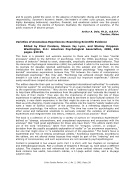
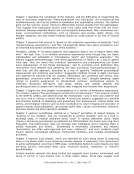
Content is presented in two uneven parts. Part 1 is short, with two chapters on conceptual
and methodological issues. Part 2 consists of Chapters 3 through 12, each about a different
subject. The chapters are well referenced but with some omitted relevant material. The
book contains two useful, two-column indices, a 17-page author index, and a 16-page
subject index.
and to society outdid the good. In the absence of democratic checks and balances, and of
responsibility, Synanon‘s eccentric leader, like leader‘s of other cultic groups, exercised a
highly damaging behavioral, cognitive, financial, and emotional control over the group‘s
members. Finally, the decline of Synanon illustrates the importance of sunshine, of the
public exposure of abusive groups.
Arthur A. Dole, Ph.D., A.B.P.P.
Trenton, Maine
Varieties of Anomalous Experiences: Examining Scientific Evidence
Edited by Etzel Cardena, Steven Jay Lynn, and Stanley Krippner.
Washington, D.C.: American Psychological Association, 2000, 320
pages. $39.95.
This book is a pleasant and welcome surprise to those who fought to have ―mental
processes‖ added to the definition of psychology. Until the 1960s psychology was ―the
science of behavior‖ limited to overt, observable, empirically demonstrated behavior. That
the American Psychological Association (APA) has published it adds to the surprise because
its journals for decades rejected submissions on this subject and still them. In the
introduction the book‘s editors observe that traditional psychology ―long neglected or
derided‖ anomalous experiences because they ―fell between the cracks of contemporary
mainstream psychology.‖ But, they add, ―Psychology has achieved enough maturity and
breadth it can take a serious look at these unusual but important experiences.‖ Skinner
surely would have cringed at such an admission.
The editors describe their goal as inviting ―recognized international authorities‖ to evaluate
―empirical support‖ for anomalous phenomena ―in an even-handed manner‖ and ―do justice
to the experiences themselves.‖ They cite the need to ―address topics relevant to clinicians‖
to help them differentiate the anomalous from the pathological and ―evaluate the impact in
the lives of their clients.‖ They also cite the importance of exploring the role of these
experiences in optimal development, and the need to see them in socio-cultural context. For
example, a near-death experience in the East might be seen as a karmic error but in the
West as a life-changing, mystic experience. The editors cite the need to ―satisfy readers who
want a ‗state of science account‘‖ of the phenomena. In a refreshing departure from
mainstream psychology, the editors conclude, ―The time has come for psychologists and
other social and behavioral scientists to seriously consider the varieties of anomalous
experiences and integrate them into theory, research, and clinical practice.‖ Wow!
The book is a collection of 12 articles by a variety of authors on ―anomalous experiences‖
defined as ―strange, extraordinary, and unexplained experiences and encounters with the
unknown‖ that ―hold great significance for those who have them.‖ The editors clarify their
use of the word ―anomalous,‖ taken from Greek for ―irregular, uneven, or unequal …
deviation from the usually acceptable explanation of reality‖ or ―an uncommon experience,‖
but one that might occur in ―a substantial amount of the population.‖ The book‘s focus is
experiential and ―not on testing consensual validity.‖ Anomalous experiences, according to
the editors, are not altered states because they might be part of the ―ordering‖ and not
altering of consciousness, and such experiences are not necessarily psychopathological.
Content is presented in two uneven parts. Part 1 is short, with two chapters on conceptual
and methodological issues. Part 2 consists of Chapters 3 through 12, each about a different
subject. The chapters are well referenced but with some omitted relevant material. The
book contains two useful, two-column indices, a 17-page author index, and a 16-page
subject index.