Cultic Studies Review, Vol. 1, No. 2, 2002, Page 51
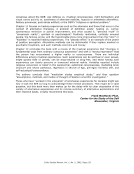
Lester depends for his information on a particular group of ―clubby‖ academics who purport
to be experts on ―new religious movements.‖ They promote their own careers by claiming
that these movements are essentially benign, arguing that to question any religion violates
fundamental human rights. Their willingness to ignore the dangers posed by destructive
religious movements has real and negative consequences, contributing to a climate of
unquestioning acceptance of any group that calls itself a religion.
Toby Lester’s Response to Mr. Rosedale’s Letter
Herbert Rosedale has mischaracterized my article. I did not dismiss ―cult critics‖ (his term,
not mine) as either ―ignorant‖ or ―intolerant‖ (again, his term). In fact, I deliberately
avoided getting into the cult-anti-cult debate at all, because as far as I can tell, it inevitably
boils down to unprovable judgments about what is true religion and what is not. Are some
new religious movements less than savory? Of course, and we should watch out for them.
But a major point I tried to make was that just about every new religious movement—
including those that today have hundreds of millions of members—was initially dismissed as
socially deviant. What interests me about scholars of the new religious movements is that
they try to study what new movements are like, not whether the movements are socially
acceptable.
Mr. Rosedale’s Response to The Publication of His Letter and to Toby Lester’s
Reply
I have read your truncated publication of my letter, and Toby Lester's response, in your
May, 2002 issue, and would like to respond.
Accusations Not Substantiated
First, the letter you published is not the letter I wrote. The letter you published substantially
eliminated the reasons for my argument with the article. For example, you allow the author
to criticize my concern about his dismissal of cult critics as "ignorant" and "intolerant" by
simply saying that those were my words not his. You omitted my showing that in his
article, Toby Lester's sources were clearly not objective, being often paid and supported by
the cults they report on, and that with respect to the anti-cult movement, he alleged that it
often engaged in illegal, but frequently tolerated, kidnapping and deprogramming of
members of new religious movements.
The libelous statement that members of the anti-cult movement often engaged in criminal
activity is not substantiated it is certainly a more serious charge than that of being
"ignorant" or "intolerant," and warrants response, not evasion. The further erroneous
conclusion that the cult-anti-cult debate, which the author claims to eschew because it
"invariably boils down to unprovable judgements as to what is true religion and what is
not," is vacuous nonsense, spoon fed by cult apologists. Does condemnation of David
Koresh's sexual abuse of minors depend upon a judgment of the validity of his claim to be
the Messiah? Is evaluation of the acknowledged illegal exploitation of children by the
Twelve Tribes, admitted in their agreement with the Attorney General of the State of New
York, predicated on necessary determination of whether their leader's pronouncements are
"true" religion? Does the outcome of the legal proceedings involving the death of children in
Attleboro, Massachusetts [see article on ―Attleboro‖ group in this issue of the CSR] depend
on whether the commune is [practicing] a "true" religion? And, finally, does the author
believe that there is no point in condemning the abuse of women by the Taliban, or the
commission of terrorist acts of violence, because this inevitably boils down to an unprovable
judgment as to whether or not those acts were committed in the name of a "true" religion?
A major flaw in both the article and the writer‘s response to my letter (as pointed out in that
portion of my letter which you did not reprint), is that Mr. Lester is relying solely on
selective information furnished by people with a bias and an economic interest in setting
Lester depends for his information on a particular group of ―clubby‖ academics who purport
to be experts on ―new religious movements.‖ They promote their own careers by claiming
that these movements are essentially benign, arguing that to question any religion violates
fundamental human rights. Their willingness to ignore the dangers posed by destructive
religious movements has real and negative consequences, contributing to a climate of
unquestioning acceptance of any group that calls itself a religion.
Toby Lester’s Response to Mr. Rosedale’s Letter
Herbert Rosedale has mischaracterized my article. I did not dismiss ―cult critics‖ (his term,
not mine) as either ―ignorant‖ or ―intolerant‖ (again, his term). In fact, I deliberately
avoided getting into the cult-anti-cult debate at all, because as far as I can tell, it inevitably
boils down to unprovable judgments about what is true religion and what is not. Are some
new religious movements less than savory? Of course, and we should watch out for them.
But a major point I tried to make was that just about every new religious movement—
including those that today have hundreds of millions of members—was initially dismissed as
socially deviant. What interests me about scholars of the new religious movements is that
they try to study what new movements are like, not whether the movements are socially
acceptable.
Mr. Rosedale’s Response to The Publication of His Letter and to Toby Lester’s
Reply
I have read your truncated publication of my letter, and Toby Lester's response, in your
May, 2002 issue, and would like to respond.
Accusations Not Substantiated
First, the letter you published is not the letter I wrote. The letter you published substantially
eliminated the reasons for my argument with the article. For example, you allow the author
to criticize my concern about his dismissal of cult critics as "ignorant" and "intolerant" by
simply saying that those were my words not his. You omitted my showing that in his
article, Toby Lester's sources were clearly not objective, being often paid and supported by
the cults they report on, and that with respect to the anti-cult movement, he alleged that it
often engaged in illegal, but frequently tolerated, kidnapping and deprogramming of
members of new religious movements.
The libelous statement that members of the anti-cult movement often engaged in criminal
activity is not substantiated it is certainly a more serious charge than that of being
"ignorant" or "intolerant," and warrants response, not evasion. The further erroneous
conclusion that the cult-anti-cult debate, which the author claims to eschew because it
"invariably boils down to unprovable judgements as to what is true religion and what is
not," is vacuous nonsense, spoon fed by cult apologists. Does condemnation of David
Koresh's sexual abuse of minors depend upon a judgment of the validity of his claim to be
the Messiah? Is evaluation of the acknowledged illegal exploitation of children by the
Twelve Tribes, admitted in their agreement with the Attorney General of the State of New
York, predicated on necessary determination of whether their leader's pronouncements are
"true" religion? Does the outcome of the legal proceedings involving the death of children in
Attleboro, Massachusetts [see article on ―Attleboro‖ group in this issue of the CSR] depend
on whether the commune is [practicing] a "true" religion? And, finally, does the author
believe that there is no point in condemning the abuse of women by the Taliban, or the
commission of terrorist acts of violence, because this inevitably boils down to an unprovable
judgment as to whether or not those acts were committed in the name of a "true" religion?
A major flaw in both the article and the writer‘s response to my letter (as pointed out in that
portion of my letter which you did not reprint), is that Mr. Lester is relying solely on
selective information furnished by people with a bias and an economic interest in setting