Cultic Studies Review, Vol. 1, No. 2, 2002, Page 120
Book Reviews
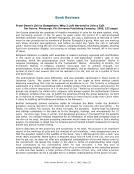
From Dean’s List to Dumpsters: Why I Left Harvard to Join a Cult
Jim Guerra. Pittsburgh, PA: Dorrance Publishing Company, 2000, 232 pages.
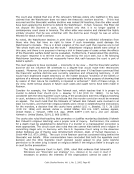
Jim Guerra deserves the gratitude of readers interested in cults for his plain-spoken, vivid,
and harrowing account of the 10 years he spent under the control of a self-proclaimed
Christian preacher known as Brother Evangelist. Jim was a sophomore at Harvard in 1975
when he was proselytized by members of Brother Evangelist's group. After just one meeting
with these itinerant soul-gatherers, and before he could say "pahk the cah in Hahvahd
yahd," Guerra was living the life of a fugitive, camping illegally, hitchhiking illegally, stealing
food from dumpsters illegally, and preying on college students like himself. All in the name
of Jesus.
Religious literature is replete with examples of seekers pursuing agonized self-mortification
in the name of God. Guerra‘s story provides a well-elaborated, insider's view of this
mentality, which the psychoanalyst Erich Fromm called the ―authoritarian‖ theme in
religious philosophy, as opposed to the ―humanistic‖ theme. According to Fromm, the
humanistic themes in religious tradition encourage man to achieve strength, not
powerlessness. Virtue is understood as self-realization, not as obedience. God stands as a
symbol of man‘s own powers that can be realized in his life, and not as a symbol of force
and domination.
The authoritarian theme goes differently, and was probably epitomized in these words of
Johannes Calvin: ―We cannot think of ourselves as we ought to think without utterly
despising everything that may be supposed as excellence in us. This humility is unfeigned
submission of a mind overwhelmed with a weighty sense of its own misery and poverty for
such is the uniform description of it in the word of God.‖ While not all authoritarian religious
groups can properly be called cults, religious cults always exploit the authoritarian themes
in whatever scripture they use, to justify the paranoia driving the group behaviors. As hard
as it might be to imagine, Brother Evangelist seems to have tried to outdo even Calvin when
it came to instilling self-loathing and shame in his followers.
Brother Evangelist claimed exclusive rights to interpret the Bible. Under the Brother‘s
guidance, Guerra learned to feel contempt and disgust for everyone and everything — his
family, his school, his country, his mind, his body, his sexuality. Guerra kept his parents
and siblings completely in the dark as to his thoughts, feelings, and whereabouts for 10
years. He wore rags, froze in winter, and developed anorexia in the belief that his appetite
was sinful. He refused medical treatment for an infestation of mites that shredded most of
the skin on his body, because accepting treatment would mean lack of faith in God‘s healing
powers. He describes in detail how he tortured and tormented himself incessantly for having
almost any kind of human feeling.
Guerra describes all this powerfully and evocatively in his book. His account is an important
record of the workings of cults and the mindset of cult members. I was disappointed only in
that the question raised in the subtitle of the book, "why I left Harvard to join a cult," was
never really answered. While Guerra is eloquent about how he lived in the cult, and why and
how he got out, he does not offer any substantial contemplation of his own history prior to
his recruitment. He leaves the reader in the dark in terms of understanding what might
have contributed to his vulnerability when he was recruited. I find this kind of
understanding helpful, because although none of us is invulnerable to the seductive powers
of cults and their leaders, a fuller picture of the specifics of how, why, and when a person
becomes vulnerable can be a valuable key to a deeper understanding of the power of cults.
Book Reviews
From Dean’s List to Dumpsters: Why I Left Harvard to Join a Cult
Jim Guerra. Pittsburgh, PA: Dorrance Publishing Company, 2000, 232 pages.
Jim Guerra deserves the gratitude of readers interested in cults for his plain-spoken, vivid,
and harrowing account of the 10 years he spent under the control of a self-proclaimed
Christian preacher known as Brother Evangelist. Jim was a sophomore at Harvard in 1975
when he was proselytized by members of Brother Evangelist's group. After just one meeting
with these itinerant soul-gatherers, and before he could say "pahk the cah in Hahvahd
yahd," Guerra was living the life of a fugitive, camping illegally, hitchhiking illegally, stealing
food from dumpsters illegally, and preying on college students like himself. All in the name
of Jesus.
Religious literature is replete with examples of seekers pursuing agonized self-mortification
in the name of God. Guerra‘s story provides a well-elaborated, insider's view of this
mentality, which the psychoanalyst Erich Fromm called the ―authoritarian‖ theme in
religious philosophy, as opposed to the ―humanistic‖ theme. According to Fromm, the
humanistic themes in religious tradition encourage man to achieve strength, not
powerlessness. Virtue is understood as self-realization, not as obedience. God stands as a
symbol of man‘s own powers that can be realized in his life, and not as a symbol of force
and domination.
The authoritarian theme goes differently, and was probably epitomized in these words of
Johannes Calvin: ―We cannot think of ourselves as we ought to think without utterly
despising everything that may be supposed as excellence in us. This humility is unfeigned
submission of a mind overwhelmed with a weighty sense of its own misery and poverty for
such is the uniform description of it in the word of God.‖ While not all authoritarian religious
groups can properly be called cults, religious cults always exploit the authoritarian themes
in whatever scripture they use, to justify the paranoia driving the group behaviors. As hard
as it might be to imagine, Brother Evangelist seems to have tried to outdo even Calvin when
it came to instilling self-loathing and shame in his followers.
Brother Evangelist claimed exclusive rights to interpret the Bible. Under the Brother‘s
guidance, Guerra learned to feel contempt and disgust for everyone and everything — his
family, his school, his country, his mind, his body, his sexuality. Guerra kept his parents
and siblings completely in the dark as to his thoughts, feelings, and whereabouts for 10
years. He wore rags, froze in winter, and developed anorexia in the belief that his appetite
was sinful. He refused medical treatment for an infestation of mites that shredded most of
the skin on his body, because accepting treatment would mean lack of faith in God‘s healing
powers. He describes in detail how he tortured and tormented himself incessantly for having
almost any kind of human feeling.
Guerra describes all this powerfully and evocatively in his book. His account is an important
record of the workings of cults and the mindset of cult members. I was disappointed only in
that the question raised in the subtitle of the book, "why I left Harvard to join a cult," was
never really answered. While Guerra is eloquent about how he lived in the cult, and why and
how he got out, he does not offer any substantial contemplation of his own history prior to
his recruitment. He leaves the reader in the dark in terms of understanding what might
have contributed to his vulnerability when he was recruited. I find this kind of
understanding helpful, because although none of us is invulnerable to the seductive powers
of cults and their leaders, a fuller picture of the specifics of how, why, and when a person
becomes vulnerable can be a valuable key to a deeper understanding of the power of cults.