Cultic Studies Review, Vol. 1, No. 2, 2002, Page 101
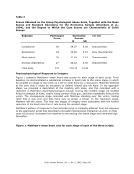
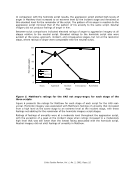
Psychological functioning. The Millon Clinical Multiaxial Inventory-III (MCMI-III Millon,
Davis, &Millon, 1997) is a self-report measure of Axis I and Axis II psychopathology,
compatible with the DSM-IV diagnostic system. We used this test to assess Matthew‘s
psychological functioning. This instrument has subscales that fall into four categories:
clinical personality patterns (schizoid, avoidant, depressive, dependent, histrionic,
narcissistic, antisocial, sadistic, compulsive, negativistic, masochistic) severe personality
disorder (schizotypal, borderline, paranoid) clinical syndromes (anxiety, somatoform,
bipolar, dysthymia, alcohol dependence, drug dependence, posttraumatic stress disorder)
and severe clinical syndromes (thought disorder, major depression, delusional disorder).
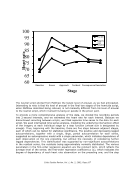
The MCMI-III allows for the calculation of Base Rate scores (BR scores), standard scores
that take into account the prevalence of particular attributes in the psychiatric population
and that are an appropriate alternative to norm based T scores when measuring personality
traits (Millon et al., 1997). We administered a range of other psychological tests as part of a
larger research project, but we will not report those results here.
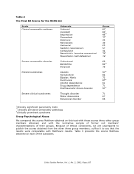
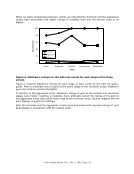
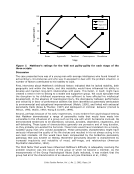
Group psychological abuse. The Group Psychological Abuse Scale (Chambers, Langone,
Dole, &Grice, 1994) is a self-report measure of group processes for former members of
various groups that provides subscales relating to compliance, exploitation, mind control,
and anxious dependency. The scale measures how characteristic each of 28 functions is on
a scale from 1 (not at all) to 5 (very characteristic). We obtained normative data from a
sample of former American cult members.
Assessment of Peri-Homicidal Reactions
The examination of peri-homicidal reactions represents an assessment challenge. Although
recall of events might be enhanced through hypnotism (e.g., Scheflin, Spiegel, &Spiegel,
1999) or abreaction interviewing techniques that rely on the administration of disinhibiting
drugs (Kopelman, Christensen, Puffett, &Stanhope, 1994), the methods used mask the
psychophysiological arousal that would normally occur in response to recollection. To
overcome these problems, guided imagery has been used to recreate the memory of a past
event so that psychophysiological reactions and psychological responses to such an event
can be examined. Success with this type of procedure has been achieved, for example, in
the examination of traumatic events (e.g., Blanchard, Hickling, &Taylor, 1991 Holmes,
Williams, &Haines, 1998 Orr et al., 1998 Shalev, Orr, &Pitman, 1993) and acts of self-
injury (Brain, Haines, &Williams, 1998 Haines, Williams, Brain, &Wilson, 1995 Wells,
Haines, Williams, &Brain, 1999).
The use of guided imagery is based on the propositions of Lang (1979), who suggested that
cognitive events (thoughts about a behavior) result in measurable efferent outflow. It has
since been established that personalized imagery depicting actual events the individual has
experienced result in a more appropriate response to imagery content than does standard
imagery wherein individuals are asked to image an event they have not experienced (e.g.,
Haines et al., 1995 Pitman et al., 2001 Shin et al., 2000). The function of personalized
guided imagery is to recreate the memory of an event, present the imagery to the individual
in a structured way, and measure the efferent outflow and the psychological response. In
addition, by structuring the imagery into identifiable stages, it is possible to examine the
development of the reaction over the course of an event.
Although the reliability of memories elicited by guided imagery has been criticized by some
(e.g., Schacter, 2001), others have reported that the content of traumatic memories
remains unchanged over time (Koss, Tromp, &Tharan, 1995). This methodology has been
successfully applied to the examination of homicidal behavior (e.g., Glading, Williams, &
Haines, 2001 Glading, Williams, Haines, &Sale, 2001 Haines, Williams, Sale, &Glading,
2001 Williams &Haines, 2001 Williams, Haines, &Casey, 2000 Williams, Haines, Sale, &
Glading, 2001).
Psychological functioning. The Millon Clinical Multiaxial Inventory-III (MCMI-III Millon,
Davis, &Millon, 1997) is a self-report measure of Axis I and Axis II psychopathology,
compatible with the DSM-IV diagnostic system. We used this test to assess Matthew‘s
psychological functioning. This instrument has subscales that fall into four categories:
clinical personality patterns (schizoid, avoidant, depressive, dependent, histrionic,
narcissistic, antisocial, sadistic, compulsive, negativistic, masochistic) severe personality
disorder (schizotypal, borderline, paranoid) clinical syndromes (anxiety, somatoform,
bipolar, dysthymia, alcohol dependence, drug dependence, posttraumatic stress disorder)
and severe clinical syndromes (thought disorder, major depression, delusional disorder).
The MCMI-III allows for the calculation of Base Rate scores (BR scores), standard scores
that take into account the prevalence of particular attributes in the psychiatric population
and that are an appropriate alternative to norm based T scores when measuring personality
traits (Millon et al., 1997). We administered a range of other psychological tests as part of a
larger research project, but we will not report those results here.
Group psychological abuse. The Group Psychological Abuse Scale (Chambers, Langone,
Dole, &Grice, 1994) is a self-report measure of group processes for former members of
various groups that provides subscales relating to compliance, exploitation, mind control,
and anxious dependency. The scale measures how characteristic each of 28 functions is on
a scale from 1 (not at all) to 5 (very characteristic). We obtained normative data from a
sample of former American cult members.
Assessment of Peri-Homicidal Reactions
The examination of peri-homicidal reactions represents an assessment challenge. Although
recall of events might be enhanced through hypnotism (e.g., Scheflin, Spiegel, &Spiegel,
1999) or abreaction interviewing techniques that rely on the administration of disinhibiting
drugs (Kopelman, Christensen, Puffett, &Stanhope, 1994), the methods used mask the
psychophysiological arousal that would normally occur in response to recollection. To
overcome these problems, guided imagery has been used to recreate the memory of a past
event so that psychophysiological reactions and psychological responses to such an event
can be examined. Success with this type of procedure has been achieved, for example, in
the examination of traumatic events (e.g., Blanchard, Hickling, &Taylor, 1991 Holmes,
Williams, &Haines, 1998 Orr et al., 1998 Shalev, Orr, &Pitman, 1993) and acts of self-
injury (Brain, Haines, &Williams, 1998 Haines, Williams, Brain, &Wilson, 1995 Wells,
Haines, Williams, &Brain, 1999).
The use of guided imagery is based on the propositions of Lang (1979), who suggested that
cognitive events (thoughts about a behavior) result in measurable efferent outflow. It has
since been established that personalized imagery depicting actual events the individual has
experienced result in a more appropriate response to imagery content than does standard
imagery wherein individuals are asked to image an event they have not experienced (e.g.,
Haines et al., 1995 Pitman et al., 2001 Shin et al., 2000). The function of personalized
guided imagery is to recreate the memory of an event, present the imagery to the individual
in a structured way, and measure the efferent outflow and the psychological response. In
addition, by structuring the imagery into identifiable stages, it is possible to examine the
development of the reaction over the course of an event.
Although the reliability of memories elicited by guided imagery has been criticized by some
(e.g., Schacter, 2001), others have reported that the content of traumatic memories
remains unchanged over time (Koss, Tromp, &Tharan, 1995). This methodology has been
successfully applied to the examination of homicidal behavior (e.g., Glading, Williams, &
Haines, 2001 Glading, Williams, Haines, &Sale, 2001 Haines, Williams, Sale, &Glading,
2001 Williams &Haines, 2001 Williams, Haines, &Casey, 2000 Williams, Haines, Sale, &
Glading, 2001).