International Journal of Cultic Studies Vol. 4, 2013 63
Violence and New Religious Movements
James R. Lewis, Editor
Reviewed by Joseph Szimhart
New York: Oxford University Press. 2011.
ISBN-10: 0199735611 ISBN-13: 978-
0199735617 (paperback), $26.23
(Amazon.com). 443 pages.
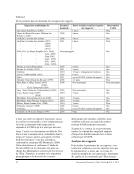
Violence and New Religious Movements, edited
by James R Lewis, is a collection of 20 articles
by 22 scholars. The ambitious project offers a
limited sample of new religious movements
(NRMs), also called minority religions, sects,
and cults, but with a broad analysis of aspects of
violence as expressed, imagined, and attracted
by NRMs. In other words, this highly nuanced
if sketchy collection is not merely about violent
cults or movements. The authors collectively
offer a complex phenomenon that includes harsh
societal reactions to generally nonviolent
strangers in its midst it also describes group-
generated violence to insiders and outsiders.
Moreover, the outside perception or rumor of
violence can be the cause of defensive reactions
by the targeted group, thus creating a kind of
self-fulfilling, outsider prophecy—like the
oddball teenager who finally snaps after being
bullied for a year. Other groups that have some
hallmarks of suicidal or homicidal potential may
never act on violent doctrinal beliefs. And
others may become victims of violence merely
because they arise in a totalitarian surround or
regime that feels threatened by insurrection or
mere disobedience. The reader should come
away with a clearer idea that, to understand an
NRM, per se, one must view it as a dynamic,
uniquely focused grouping to be studied and
appreciated according to actual evidence in
context and not impressions, stereotypes, or
preconceived notions.
James Lewis introduces the chapters with some
self-disclosure as a former member of the 3HO
(Happy Healthy Holy Organization) founded by
Yogi Bhajan (died 2004), in 1969 a maverick
Sikh meditation teacher from India—perfect
timing for the coming post-Hippie era when
young folk were looking for non-drug-induced,
mind-expanding techniques. Lewis alleges (p.
5) that NRM critics “collectively referred to as
the anticult movement (ACM) … regularly
portray a wide variety of alternative religions, if
not all NRMs, as potentially violent.” Many of
the authors follow the narrow Lewis stereotype
of the purported ACM throughout the book (e.g.,
Richardson, p. 46 Elsberg, p. 343 Aitamurto, p.
246) while others, refreshingly, are less
dependent on a constricted bias about a wide-
ranging social, religious, and psychological
critique of NRMs, even within established cult-
awareness organizations (e.g., Peste, Chapter 10
Crovetto, Chapter 12 Rochford, Chapter 13).
Constance Elsberg describes 3HO (Chapter 16)
as one NRM that had strong traits of a
potentially violent group (the Indian Sikhs that
3HO mimics have a proud warrior tradition) yet
it never acted violently toward society or its
members—unless, of course, one regards forced
sex by Yogi Bhajan on at least two of his “holy
wives” (p. 342) as violent. Lewis uses research
and his personal experience with 3HO to
reassure us that, despite appearances and critics,
3HO and most other emergent religions have
been relatively benign actors in society.
Part I. Theorizing NRM Violence has three
chapters by prominent writers in the NRM field:
David G. Bromley offers a sociological
overview in “Deciphering the NRM-Violence
Connection” James T. Richardson offers insight
from his specialty of forensics and sociology but
with somewhat dated information in “Minority
Religions and the Context of Violence.”
Richardson also has a penchant for sociological
spin: “The Church Universal and Triumphant
(CUT) was accused of stock-piling weapons,
attracting considerable attention some years
ago” (p. 35). According to court testimony and
many eye witnesses, CUT (a.k.a. Summit
Lighthouse) did stockpile a truckload of
weapons in bunkers in Idaho as early as 1973
before it stockpiled even more weapons, some
illegally purchased and transported to Montana
15 years later, which is the period Richardson
Violence and New Religious Movements
James R. Lewis, Editor
Reviewed by Joseph Szimhart
New York: Oxford University Press. 2011.
ISBN-10: 0199735611 ISBN-13: 978-
0199735617 (paperback), $26.23
(Amazon.com). 443 pages.
Violence and New Religious Movements, edited
by James R Lewis, is a collection of 20 articles
by 22 scholars. The ambitious project offers a
limited sample of new religious movements
(NRMs), also called minority religions, sects,
and cults, but with a broad analysis of aspects of
violence as expressed, imagined, and attracted
by NRMs. In other words, this highly nuanced
if sketchy collection is not merely about violent
cults or movements. The authors collectively
offer a complex phenomenon that includes harsh
societal reactions to generally nonviolent
strangers in its midst it also describes group-
generated violence to insiders and outsiders.
Moreover, the outside perception or rumor of
violence can be the cause of defensive reactions
by the targeted group, thus creating a kind of
self-fulfilling, outsider prophecy—like the
oddball teenager who finally snaps after being
bullied for a year. Other groups that have some
hallmarks of suicidal or homicidal potential may
never act on violent doctrinal beliefs. And
others may become victims of violence merely
because they arise in a totalitarian surround or
regime that feels threatened by insurrection or
mere disobedience. The reader should come
away with a clearer idea that, to understand an
NRM, per se, one must view it as a dynamic,
uniquely focused grouping to be studied and
appreciated according to actual evidence in
context and not impressions, stereotypes, or
preconceived notions.
James Lewis introduces the chapters with some
self-disclosure as a former member of the 3HO
(Happy Healthy Holy Organization) founded by
Yogi Bhajan (died 2004), in 1969 a maverick
Sikh meditation teacher from India—perfect
timing for the coming post-Hippie era when
young folk were looking for non-drug-induced,
mind-expanding techniques. Lewis alleges (p.
5) that NRM critics “collectively referred to as
the anticult movement (ACM) … regularly
portray a wide variety of alternative religions, if
not all NRMs, as potentially violent.” Many of
the authors follow the narrow Lewis stereotype
of the purported ACM throughout the book (e.g.,
Richardson, p. 46 Elsberg, p. 343 Aitamurto, p.
246) while others, refreshingly, are less
dependent on a constricted bias about a wide-
ranging social, religious, and psychological
critique of NRMs, even within established cult-
awareness organizations (e.g., Peste, Chapter 10
Crovetto, Chapter 12 Rochford, Chapter 13).
Constance Elsberg describes 3HO (Chapter 16)
as one NRM that had strong traits of a
potentially violent group (the Indian Sikhs that
3HO mimics have a proud warrior tradition) yet
it never acted violently toward society or its
members—unless, of course, one regards forced
sex by Yogi Bhajan on at least two of his “holy
wives” (p. 342) as violent. Lewis uses research
and his personal experience with 3HO to
reassure us that, despite appearances and critics,
3HO and most other emergent religions have
been relatively benign actors in society.
Part I. Theorizing NRM Violence has three
chapters by prominent writers in the NRM field:
David G. Bromley offers a sociological
overview in “Deciphering the NRM-Violence
Connection” James T. Richardson offers insight
from his specialty of forensics and sociology but
with somewhat dated information in “Minority
Religions and the Context of Violence.”
Richardson also has a penchant for sociological
spin: “The Church Universal and Triumphant
(CUT) was accused of stock-piling weapons,
attracting considerable attention some years
ago” (p. 35). According to court testimony and
many eye witnesses, CUT (a.k.a. Summit
Lighthouse) did stockpile a truckload of
weapons in bunkers in Idaho as early as 1973
before it stockpiled even more weapons, some
illegally purchased and transported to Montana
15 years later, which is the period Richardson