International Journal of Cultic Studies Vol. 4, 2013 17
Using these predefined categories for coding
was important because they provide direction,
inform the research question, and illustrate the
range of meanings of the phenomenon.
However, even though I identified most of these
categories in the available texts, the sample I
used is not all encompassing. Locating all
primary documents of the group under study was
difficult since HUE zealously guards them.
Thus, for instance, I located only eight of 20
teaching manuals thanks to several anonymous
ex-HUE members who were willing to
contribute to this study. Nevertheless, the
information contained in these manuals is
repetitive. As much as 75 percent of the content
of any given manual is repeated in any
subsequent one. Additionally, using the same
categories, I found and coded an e-book HUEFI
recently published and a total of 29 primary
documents (other than teaching manuals). These
documents include teaching programs,
transcripts of meetings, New Year’s messages,
urgent messages, reports, newsletters, and
summaries of various seminars.
A HUE center director questioned on the subject
offered a rival explanation concerning Mr.
Dang’s criminal convictions in Belgium and
Switzerland (to be discussed later). This
individual argued that their leader was subject to
unfair religious persecution by the Catholic
Church and the European Union (Anonymous,
personal communication, July 6, 2012). This
argument does not fully explain the
incriminating evidence found against Mr. Dang
in these countries, or his conviction in
Switzerland. Moreover, the argument is in line
with what Janja Lalich and Madeleine Tobias
call “delusion of persecution,” or the tendency
of cult leaders to be “highly suspicious... [to]
feel conspired against, spied upon or cheated, or
maligned by a person, group, or governmental
agency” (2006, p. 60).
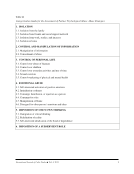
After coding all texts and identifying the themes
that were key concepts for the analysis, I
synthesized all information, which is included in
this paper and its organizational structure.
Background and History
Mr. Dang, or Master Dang, as he is known
among his followers, came to the United States
as political refugee in 1985. He held his first
class on universal energy for 27 students in San
Diego, California, on July 20, 1989. Between
1990 and 1994, he taught in Latin America and
Spain (Luong, M. T., 2008, p. 1). From that
time onward, he used false academic titles and
other false credentials (see below) to establish
himself as a healer practitioner and teacher in
the United States and several European
countries, successfully attracting a large number
of followers from all over the world during the
next decade.
By 2007, SHY and MEL had centers in 50
countries around the world and—according to
statistical data provided by these
organizations—more than 3 million students.
After Master Dang’s death in August of that
year, both his second wife and his son wanted
control over these organizations and centers.
The issue was settled by December 2007. Mrs.
Theresa Thu-Thuy Nguyen retained control over
MEL Australia and changed its name to HUESA
(Luong, M. T., 2007a, pp. 2–3). Apparently,
HUESA established new centers, including four
in the United States, and created alliances with
some existing SHY and MEL centers. Mr.
Luong Minh Trung, in contrast, established the
company HUE Faculty Inc. (HUEFI) in the state
of Missouri in 2011 and trademarked the names
MEL, Human and Universal Energy, and
Human and Universal Energy after Mr. Luong
Minh Dang (Luong, M. T., 2011 HUEFI, n.d.,
Disclaimer section, para. 8). Centers around the
world with these names are official partners of
HUEFI, as well as most under the name SHY.
Although HUE’s headquarters are independent,
according to HUESA, their method and
teachings are basically the same (n.d., Outline of
Universal Energy Method section, para. 2).
They both offer a teaching program that consists
of eight seminars of various durations that group
together the 20 levels of Master Dang’s original
program, as well as special seminars,
educational events (symposia), congresses, and a
training program for instructors. Nevertheless,
there are some differences. Before 2010, HUE
organizations claimed to be affiliated with the
Open International University for
Complementary Medicines (OIUCM) in
Colombo, Sri Lanka. This university has no
Using these predefined categories for coding
was important because they provide direction,
inform the research question, and illustrate the
range of meanings of the phenomenon.
However, even though I identified most of these
categories in the available texts, the sample I
used is not all encompassing. Locating all
primary documents of the group under study was
difficult since HUE zealously guards them.
Thus, for instance, I located only eight of 20
teaching manuals thanks to several anonymous
ex-HUE members who were willing to
contribute to this study. Nevertheless, the
information contained in these manuals is
repetitive. As much as 75 percent of the content
of any given manual is repeated in any
subsequent one. Additionally, using the same
categories, I found and coded an e-book HUEFI
recently published and a total of 29 primary
documents (other than teaching manuals). These
documents include teaching programs,
transcripts of meetings, New Year’s messages,
urgent messages, reports, newsletters, and
summaries of various seminars.
A HUE center director questioned on the subject
offered a rival explanation concerning Mr.
Dang’s criminal convictions in Belgium and
Switzerland (to be discussed later). This
individual argued that their leader was subject to
unfair religious persecution by the Catholic
Church and the European Union (Anonymous,
personal communication, July 6, 2012). This
argument does not fully explain the
incriminating evidence found against Mr. Dang
in these countries, or his conviction in
Switzerland. Moreover, the argument is in line
with what Janja Lalich and Madeleine Tobias
call “delusion of persecution,” or the tendency
of cult leaders to be “highly suspicious... [to]
feel conspired against, spied upon or cheated, or
maligned by a person, group, or governmental
agency” (2006, p. 60).
After coding all texts and identifying the themes
that were key concepts for the analysis, I
synthesized all information, which is included in
this paper and its organizational structure.
Background and History
Mr. Dang, or Master Dang, as he is known
among his followers, came to the United States
as political refugee in 1985. He held his first
class on universal energy for 27 students in San
Diego, California, on July 20, 1989. Between
1990 and 1994, he taught in Latin America and
Spain (Luong, M. T., 2008, p. 1). From that
time onward, he used false academic titles and
other false credentials (see below) to establish
himself as a healer practitioner and teacher in
the United States and several European
countries, successfully attracting a large number
of followers from all over the world during the
next decade.
By 2007, SHY and MEL had centers in 50
countries around the world and—according to
statistical data provided by these
organizations—more than 3 million students.
After Master Dang’s death in August of that
year, both his second wife and his son wanted
control over these organizations and centers.
The issue was settled by December 2007. Mrs.
Theresa Thu-Thuy Nguyen retained control over
MEL Australia and changed its name to HUESA
(Luong, M. T., 2007a, pp. 2–3). Apparently,
HUESA established new centers, including four
in the United States, and created alliances with
some existing SHY and MEL centers. Mr.
Luong Minh Trung, in contrast, established the
company HUE Faculty Inc. (HUEFI) in the state
of Missouri in 2011 and trademarked the names
MEL, Human and Universal Energy, and
Human and Universal Energy after Mr. Luong
Minh Dang (Luong, M. T., 2011 HUEFI, n.d.,
Disclaimer section, para. 8). Centers around the
world with these names are official partners of
HUEFI, as well as most under the name SHY.
Although HUE’s headquarters are independent,
according to HUESA, their method and
teachings are basically the same (n.d., Outline of
Universal Energy Method section, para. 2).
They both offer a teaching program that consists
of eight seminars of various durations that group
together the 20 levels of Master Dang’s original
program, as well as special seminars,
educational events (symposia), congresses, and a
training program for instructors. Nevertheless,
there are some differences. Before 2010, HUE
organizations claimed to be affiliated with the
Open International University for
Complementary Medicines (OIUCM) in
Colombo, Sri Lanka. This university has no