24 International Journal of Cultic Studies Vol. 4, 2013
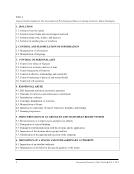
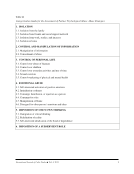
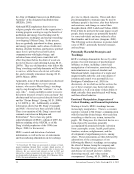
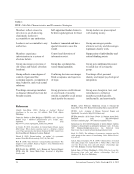
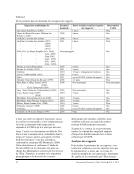
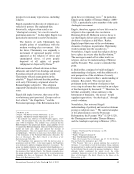
Table 1
HUE: Cult-Like Characteristics and Persuasive Strategies
Members reflect excessive
devotion to an all-knowing,
charismatic leader not
accountable to any authorities.
Self-appointed leader claims to
be direct spokesperson for God.
Group leaders are preoccupied
with making money.
Leader is not accountable to any
authorities.
Leader is venerated and has a
special mission to save the
world.
Group encourages pseudo-
altruistic activity and discourages
legitimate charity work.
Members experience
indoctrination in a system of
absolute beliefs.
Control and distortion of
information exist.
Suppression of individuality and
critical thinking exists.
Group encourages rejection of
old values and beliefs (absolute
freedom).
Group has a polarized us-
versus-them mentality.
Group uses millennial discourse
to instill fear of leaving the
group.
Group reflects some degree of
control of personal life:
economic aspects, occupation of
time, behavior, and even sexual
relations.
Confusing doctrine encourages
blind acceptance and rejection
of logic.
Teachings affect personal
identity and impair psychological
integration.
Teachings encourage members
to distance themselves from the
broader society.
Group promotes establishment
of own brand of morality
outside acceptable social norms
(ends justify the means).
Group uses deception, fear, and
intimidation to influence
members psychologically,
intellectually, and emotionally.
References
Abgrall, Jean-Marie. (2001). Healing or stealing? Medical
charlatans in the new age (1st edition). New York: Algora
Publishing.
Center for Studies on New Religions (CESNUR). (n.d.). Spiritual
Human Yoga – Mankind Enlightenment Love. Torino, Italy:
CESNUR. Retrieved from
http://www.cesnur.org/religioni_italia/c/cina_08.htm
de Cordes, H. (2011, December). In Eileen Barker (Chair). Luong
Minh Dang: When shakra opening leads to a Belgian criminal
court. Paper presented at the Inform Seminar XLVIII: Legal Cases
Involving Minority Religions, London, England.
Edzard, E. (2003). Distant healing – an “update” of a systematic
review. Wien Klin Wochenschrift, 115(7–8), 241–245.
Hall, H. (2008). Gary Schwartz’s energy healing experiments: The
emperor’s new clothes? Skeptical Inquirer 32(2). Retrieved from
http://www.csicop.org/
HUE Faculty Inc. (HUEFI). (n.d.). Human and Universal Energy
(HUE) after Mr. Luong Minh Dang. Accessed at http://hue-
faculty.com/
HUESA. (2010, February). Meditation session to welcome the
Lunar New Year 2010. Retrieved from http://huesa.org/node/1720
HUESA. (n.d.). Academy of Human Universal Energy and
Spirituality. Accessed at http://www.huesa.org/
HUESA-Australia. (2010, June). Notice: 21 Seminar Ayers Rock.
Retrieved from http://www.huesa-
australia.com/index.php?...76%3Anoticeseminarlevel21a
Instructions for level I-II development of latent abilities students,
wishing to obtain degrees in alternative medicine. (n.d.). St. Louis,
MO: Mankind-Enlightenment-Love, Inc. Retrieved from
http://www.shy-en.narod.ru/materials/pages/degrees.html
Krok, D. (2009). The influence of persuasive strategies used by
cultic groups in the context of forewarning. Cultic Studies Review,
8(1), 43–67.
Lalich, Janja, &Langone, M. D. (2006). Characteristics associated
with cultic groups. In J. Lalich &M. L. Tobias (Eds.), Take back
your life: Recovering from cults and abusive relationships (pp.
327–328). Berkeley, CA: Bay Tree Publishing.
Lalich, Janja, &Tobias, Madeline L. (2006). Take back your life:
Recovering from cults and abusive relationships (2nd ed.).
Berkeley, CA: Bay Tree Publishing.
Table 1
HUE: Cult-Like Characteristics and Persuasive Strategies
Members reflect excessive
devotion to an all-knowing,
charismatic leader not
accountable to any authorities.
Self-appointed leader claims to
be direct spokesperson for God.
Group leaders are preoccupied
with making money.
Leader is not accountable to any
authorities.
Leader is venerated and has a
special mission to save the
world.
Group encourages pseudo-
altruistic activity and discourages
legitimate charity work.
Members experience
indoctrination in a system of
absolute beliefs.
Control and distortion of
information exist.
Suppression of individuality and
critical thinking exists.
Group encourages rejection of
old values and beliefs (absolute
freedom).
Group has a polarized us-
versus-them mentality.
Group uses millennial discourse
to instill fear of leaving the
group.
Group reflects some degree of
control of personal life:
economic aspects, occupation of
time, behavior, and even sexual
relations.
Confusing doctrine encourages
blind acceptance and rejection
of logic.
Teachings affect personal
identity and impair psychological
integration.
Teachings encourage members
to distance themselves from the
broader society.
Group promotes establishment
of own brand of morality
outside acceptable social norms
(ends justify the means).
Group uses deception, fear, and
intimidation to influence
members psychologically,
intellectually, and emotionally.
References
Abgrall, Jean-Marie. (2001). Healing or stealing? Medical
charlatans in the new age (1st edition). New York: Algora
Publishing.
Center for Studies on New Religions (CESNUR). (n.d.). Spiritual
Human Yoga – Mankind Enlightenment Love. Torino, Italy:
CESNUR. Retrieved from
http://www.cesnur.org/religioni_italia/c/cina_08.htm
de Cordes, H. (2011, December). In Eileen Barker (Chair). Luong
Minh Dang: When shakra opening leads to a Belgian criminal
court. Paper presented at the Inform Seminar XLVIII: Legal Cases
Involving Minority Religions, London, England.
Edzard, E. (2003). Distant healing – an “update” of a systematic
review. Wien Klin Wochenschrift, 115(7–8), 241–245.
Hall, H. (2008). Gary Schwartz’s energy healing experiments: The
emperor’s new clothes? Skeptical Inquirer 32(2). Retrieved from
http://www.csicop.org/
HUE Faculty Inc. (HUEFI). (n.d.). Human and Universal Energy
(HUE) after Mr. Luong Minh Dang. Accessed at http://hue-
faculty.com/
HUESA. (2010, February). Meditation session to welcome the
Lunar New Year 2010. Retrieved from http://huesa.org/node/1720
HUESA. (n.d.). Academy of Human Universal Energy and
Spirituality. Accessed at http://www.huesa.org/
HUESA-Australia. (2010, June). Notice: 21 Seminar Ayers Rock.
Retrieved from http://www.huesa-
australia.com/index.php?...76%3Anoticeseminarlevel21a
Instructions for level I-II development of latent abilities students,
wishing to obtain degrees in alternative medicine. (n.d.). St. Louis,
MO: Mankind-Enlightenment-Love, Inc. Retrieved from
http://www.shy-en.narod.ru/materials/pages/degrees.html
Krok, D. (2009). The influence of persuasive strategies used by
cultic groups in the context of forewarning. Cultic Studies Review,
8(1), 43–67.
Lalich, Janja, &Langone, M. D. (2006). Characteristics associated
with cultic groups. In J. Lalich &M. L. Tobias (Eds.), Take back
your life: Recovering from cults and abusive relationships (pp.
327–328). Berkeley, CA: Bay Tree Publishing.
Lalich, Janja, &Tobias, Madeline L. (2006). Take back your life:
Recovering from cults and abusive relationships (2nd ed.).
Berkeley, CA: Bay Tree Publishing.