International Journal of Cultic Studies Vol. 4, 2013 7
Results
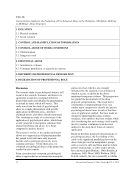
After a comprehensive analysis of the above-
mentioned studies and measurement
instruments, and following a psychosocial
approach to identify the inclusive characteristics,
we obtained a classification of the abuse
strategies for each of the three evaluated areas.
Upon naming the categories and subcategories,
we attempted, as far as possible, to use terms to
define each psychological abuse component by
its abusive action, trying to avoid mentioning the
reaction caused or the possible most common
consequences. We can refine these names in the
future when we develop the operating stage.
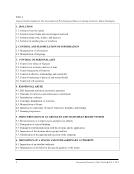
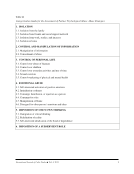
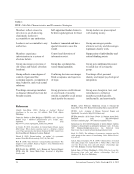
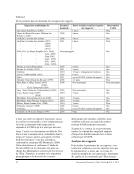
Three tables with their respective classifications,
which can be used as guidelines for evaluating
psychological abuse in each area, follow.
Each categorization is subdivided into six types
of psychological abuse strategies. The first three
types cover the main components of the context
or situation: (a) on isolation, (b) on the control
of information, and (c) on other controls of daily
life. The last three cover the main components
of a personal nature: (d) emotional, (e)
cognitive, and (f) behavioral. These are the
names of the categories based on the primary
emphasis in each strategy type, although it is
understood that these components interact with
each other and, therefore, are not exclusive.
Results
After a comprehensive analysis of the above-
mentioned studies and measurement
instruments, and following a psychosocial
approach to identify the inclusive characteristics,
we obtained a classification of the abuse
strategies for each of the three evaluated areas.
Upon naming the categories and subcategories,
we attempted, as far as possible, to use terms to
define each psychological abuse component by
its abusive action, trying to avoid mentioning the
reaction caused or the possible most common
consequences. We can refine these names in the
future when we develop the operating stage.
Three tables with their respective classifications,
which can be used as guidelines for evaluating
psychological abuse in each area, follow.
Each categorization is subdivided into six types
of psychological abuse strategies. The first three
types cover the main components of the context
or situation: (a) on isolation, (b) on the control
of information, and (c) on other controls of daily
life. The last three cover the main components
of a personal nature: (d) emotional, (e)
cognitive, and (f) behavioral. These are the
names of the categories based on the primary
emphasis in each strategy type, although it is
understood that these components interact with
each other and, therefore, are not exclusive.