10 International Journal of Cultic Studies Vol. 4, 2013
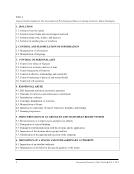
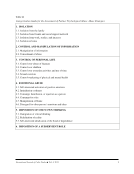
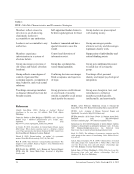
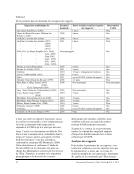
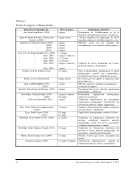
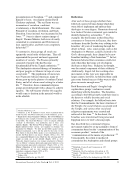
Table III
Categorization Guide for the Evaluation of Psychological Abuse in the Workplace (Workplace Bullying
or Mobbing): Abuse Strategies
1. ISOLATION
1.1. Physical isolation
1.2. Social isolation
2. CONTROL AND MANIPULATION OF INFORMATION
3. CONTROL-ABUSE OF WORK CONDITIONS
3.1. Obstructionism
3.2. Dangerous work
4. EMOTIONAL ABUSE
4.1. Intimidation or threats
4.2. Contempt, humiliation, or rejection as a person
5. DISCREDIT OR PROFESSIONAL DENIGRATION
6. DEGRADATION OF PROFESSIONAL ROLE
Discussion
The accurate study of psychological abuse is still
recent in the scientific literature, and there is no
agreement around the conceptual definition
thereof that marks and delimits the phenomenon,
or around its name, which still varies. This
study starts from the study of psychological
abuse as a single phenomenon with specific
applications in different areas—the three
evaluated herein, and others already mentioned.
This simultaneous study of several areas of the
application of psychological abuse, which from
a joint viewpoint is uncommon, enhances their
mutual enrichment and allows for a better
comparative analysis thereof.
The extensive review of the studies performed
allows us to approach an old phenomenon that
has gained social relevance only in recent
decades and is gaining progressively more
scientific relevance. Of the three areas we
evaluated, psychological abuse of the partner has
resulted in more studies.
From a psychosocial viewpoint, psychological
abuse is approached as an interaction among the
parties involved, which is also strongly
influenced by the situation or environment in
which it occurs, as shown by the above-
mentioned categories of abuse. This perspective
has guided the development of the three
proposed categorizations. The result shows
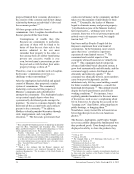
consistently a common pattern of six very
similar major categories to classify the specific
psychological abuse forms in each of the three
areas of application studied. We have made an
attempt to understand the range of abuse
strategies, from subtle to the most evident, while
also considering that each strategy itself usually
involves another continuum, from the most
indirect to the most direct forms of concrete
application.
Based on the three proposed categorizations of
psychological abuse, the first finding of this
study is the significant parallelism between the
abuse strategies used in manipulative groups
such as coercive cults and those used in violent
partner relationships, as other studies already
have shown in part (Boulette, 1980 Boulette &
Andersen, 1985 Ward, 2000 Wolfson, 2002).
In both contexts, the aim is generally to subdue
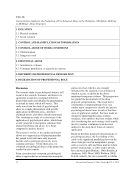
Table III
Categorization Guide for the Evaluation of Psychological Abuse in the Workplace (Workplace Bullying
or Mobbing): Abuse Strategies
1. ISOLATION
1.1. Physical isolation
1.2. Social isolation
2. CONTROL AND MANIPULATION OF INFORMATION
3. CONTROL-ABUSE OF WORK CONDITIONS
3.1. Obstructionism
3.2. Dangerous work
4. EMOTIONAL ABUSE
4.1. Intimidation or threats
4.2. Contempt, humiliation, or rejection as a person
5. DISCREDIT OR PROFESSIONAL DENIGRATION
6. DEGRADATION OF PROFESSIONAL ROLE
Discussion
The accurate study of psychological abuse is still
recent in the scientific literature, and there is no
agreement around the conceptual definition
thereof that marks and delimits the phenomenon,
or around its name, which still varies. This
study starts from the study of psychological
abuse as a single phenomenon with specific
applications in different areas—the three
evaluated herein, and others already mentioned.
This simultaneous study of several areas of the
application of psychological abuse, which from
a joint viewpoint is uncommon, enhances their
mutual enrichment and allows for a better
comparative analysis thereof.
The extensive review of the studies performed
allows us to approach an old phenomenon that
has gained social relevance only in recent
decades and is gaining progressively more
scientific relevance. Of the three areas we
evaluated, psychological abuse of the partner has
resulted in more studies.
From a psychosocial viewpoint, psychological
abuse is approached as an interaction among the
parties involved, which is also strongly
influenced by the situation or environment in
which it occurs, as shown by the above-
mentioned categories of abuse. This perspective
has guided the development of the three
proposed categorizations. The result shows
consistently a common pattern of six very
similar major categories to classify the specific
psychological abuse forms in each of the three
areas of application studied. We have made an
attempt to understand the range of abuse
strategies, from subtle to the most evident, while
also considering that each strategy itself usually
involves another continuum, from the most
indirect to the most direct forms of concrete
application.
Based on the three proposed categorizations of
psychological abuse, the first finding of this
study is the significant parallelism between the
abuse strategies used in manipulative groups
such as coercive cults and those used in violent
partner relationships, as other studies already
have shown in part (Boulette, 1980 Boulette &
Andersen, 1985 Ward, 2000 Wolfson, 2002).
In both contexts, the aim is generally to subdue