International Journal of Cultic Studies ■ Vol. 10, 2019 75
taken in is a “pseudo-identification” (Perls &
Wysong, 1992, p. 5). Introjects are not truly
integrated or part of the authentic identity and
therefore are not rendered useful to the
individual—the self is not created at the contact
boundary.
Typically, the person who introjects is
• not in contact with one’s self
• identifies more with the values of the social
group
• is easily swayed by authority figures and
• is overwhelmed by environmental forces
(Clarkson &Mackewn, 1993, pp. 72–73).
I suggest that, as the member introjects the
negative influences from the thought-reform and
thought-forming environment-field, believing
herself to be bad, sinful, or impure, she projects
her positive aspects onto the cult leader or
higher spiritual being, which in turn sets up an
interdependent, confluent (merged) relationship
(Lichtenberg, 1990 Lifton, 1999). As the
confluence opens up the channels for
introjection, the facility to “chew over” what is
flowing in becomes weakened and is, in some
cases, virtually nonexistent. This state is
“introjective confluence” (Perls, et al., 1951, p.
191) and, for some, is self-perpetuating whilst
the leader remains in power and the member
remains compliant, suppressing her critical
thoughts (Jacobs, 1987). This combination of
factors can exacerbate the psychological
restriction of the member (a fixed Gestalt) and
maintain the cult pseudo identity. Coercive can
therefore be added to Perls’s term to indicate the
presence of cultic abuse and thought reform, and
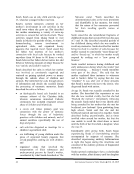
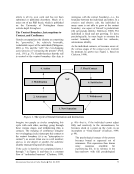
a new term, introjective coercive confluence, can
then be created (see Figure 2).
I suggest that the idealization of the cult
leader/ship is crucial to the evolving introjective
coercive confluence and results in a loss of
contact boundary as the individual turns his
focus in the direction of the leader/ship as the
embodiment of a god, the representative of a
god, the answer to the member’s problems, and
so on. As the individual introjects the claims
made, she merges with the environment
(confluence). The introjective coercive
confluence is then reinforced by the abusive
practices, which often start sometime after the
individual has joined. The leader would be
foolish to reveal this aspect on entry because the
member would be more likely not to join or to
leave immediately after having joined.
In the next section, I discuss how one might
view the result of this introjective coercive
confluence as confluential trance.
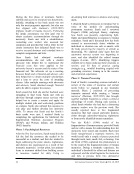
Figure 2. Introjective coercive confluence.
Individual
member
required to
be confluent
with… …the cult and the
leader
Introjects flow in
taken in is a “pseudo-identification” (Perls &
Wysong, 1992, p. 5). Introjects are not truly
integrated or part of the authentic identity and
therefore are not rendered useful to the
individual—the self is not created at the contact
boundary.
Typically, the person who introjects is
• not in contact with one’s self
• identifies more with the values of the social
group
• is easily swayed by authority figures and
• is overwhelmed by environmental forces
(Clarkson &Mackewn, 1993, pp. 72–73).
I suggest that, as the member introjects the
negative influences from the thought-reform and
thought-forming environment-field, believing
herself to be bad, sinful, or impure, she projects
her positive aspects onto the cult leader or
higher spiritual being, which in turn sets up an
interdependent, confluent (merged) relationship
(Lichtenberg, 1990 Lifton, 1999). As the
confluence opens up the channels for
introjection, the facility to “chew over” what is
flowing in becomes weakened and is, in some
cases, virtually nonexistent. This state is
“introjective confluence” (Perls, et al., 1951, p.
191) and, for some, is self-perpetuating whilst
the leader remains in power and the member
remains compliant, suppressing her critical
thoughts (Jacobs, 1987). This combination of
factors can exacerbate the psychological
restriction of the member (a fixed Gestalt) and
maintain the cult pseudo identity. Coercive can
therefore be added to Perls’s term to indicate the
presence of cultic abuse and thought reform, and
a new term, introjective coercive confluence, can
then be created (see Figure 2).
I suggest that the idealization of the cult
leader/ship is crucial to the evolving introjective
coercive confluence and results in a loss of
contact boundary as the individual turns his
focus in the direction of the leader/ship as the
embodiment of a god, the representative of a
god, the answer to the member’s problems, and
so on. As the individual introjects the claims
made, she merges with the environment
(confluence). The introjective coercive
confluence is then reinforced by the abusive
practices, which often start sometime after the
individual has joined. The leader would be
foolish to reveal this aspect on entry because the
member would be more likely not to join or to
leave immediately after having joined.
In the next section, I discuss how one might
view the result of this introjective coercive
confluence as confluential trance.
Figure 2. Introjective coercive confluence.
Individual
member
required to
be confluent
with… …the cult and the
leader
Introjects flow in