International Journal of Cultic Studies ■ Vol. 10, 2019 99
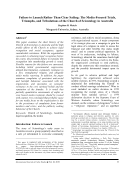
Contextualizing Debates About
Brainwashing Within the Discipline of
Sociology
Stephen A. Kent and Kelsey Lindquist
English
As a discipline, sociology lacks a core of
universally accepted paradigms. Consequently,
noncognitive factors, such as political and
ideological values, influence sociologists’ choice
of research problems and responses to conflicts
between and among theories, which hinders
theory growth. In this article, we examine
aspects of the theoretical debate within
sociology about brainwashing to assess the
possibility of theory growth in the absence of
universally accepted paradigms. We do so by
returning to important debates between
sociologist Benjamin Zablocki and transpersonal
psychologist Dick Anthony, and also published
exchanges between sociologists Stephen Kent
and Lorne Dawson. These debates reveal
imprecision over whether the brainwashing term
refers to a psychological condition or a social
program, and disagreements over the
implications of brainwashing for controversial
sociological concepts that involve agency versus
free-will restrictions. Imprecision and
disagreements within these debates hinder
theoretical growth involving brainwashing as a
useful, scientific, sociological concept.
Español
Contextualizando los debates teóricos acerca del
lavado de cerebro en el campo de la Sociología
Stephen A. Kent y Kelsey Lindquist
Como disciplina, la sociología carece de un
corpus de paradigmas aceptados universalmente.
En consecuencia, factores no cognitivos, tales
como los valores políticos e ideológicos,
influencian en la elección de los problemas de
investigación y las respuestas a los conflictos en
el seno de las propias teorías y entre las mismas,
circunstancias que dificultan el avance teórico.
Así, ante la ausencia de paradigmas
universalmente aceptados, en este artículo
revisamos aspectos del debate teórico acerca del
lavado de cerebro a fin de evaluar las
posibilidades. Recurrimos a importantes debates
entre el sociólogo Zablocki y el psicólogo
transpersonal Dock Anthony, y también a los
diálogos publicados entre los sociólogos Stephen
Kent y Lorne Dawson. Estos debates revelan la
imprecisión existente sobre si el término lavado
de cerebro se refiere a una condición psicológica
o a un programa social, y evidencian las
opiniones encontradas sobre sus implicaciones
en conceptos sociológicos controvertidos como
agencia versus restricciones a la libertad de
elección. Teniendo en cuenta ambos factores, es
complicado proporcionar una explicación teórica
del lavado de cerebro como un concepto
sociológico y científico útil.
Français
Contextualiser les débats autour du lavage de
cerveau dans la discipline de la sociologie
Stephen A. Kent et Kelsey Lindquist
En tant que discipline, il manque à la sociologie
un ensemble de paradigmes universellement
acceptés. En conséquence, des facteurs non-
cognitifs, tels que les valeurs politiques et
idéologiques, influencent les choix des
sociologues dans leurs problèmes de recherche
et dans les réponses à apporter aux conflits entre
les théories, ce qui entrave le développement de
la théorie. Dans cet article, nous examinons
certains aspects du débat au sein de la sociologie
au sujet du “lavage de cerveau” afin d'évaluer la
possibilité d'un développement de cette théorie
en l'absence de paradigmes universellement
acceptés. Nous y parvenons en reprenant
d’importantes discussions entre le sociologue
Benjamin Zablocki et le psychologue
transpersonnel Dick Anthony, mais aussi en
publiant des échanges entre les sociologues
Stephen Kent et Lorne Dawson. Ces débats
montrent qu'il y a une imprécision quant au fait
de savoir si l'expression de “lavage de cerveau”
fait référence à une condition psychologique ou
à un programme social, ainsi qu'à des désaccords
sur les implications que le “lavage de cerveau”
produit sur des concepts sociologiques
controversés, notamment l'auto-détermination
Contextualizing Debates About
Brainwashing Within the Discipline of
Sociology
Stephen A. Kent and Kelsey Lindquist
English
As a discipline, sociology lacks a core of
universally accepted paradigms. Consequently,
noncognitive factors, such as political and
ideological values, influence sociologists’ choice
of research problems and responses to conflicts
between and among theories, which hinders
theory growth. In this article, we examine
aspects of the theoretical debate within
sociology about brainwashing to assess the
possibility of theory growth in the absence of
universally accepted paradigms. We do so by
returning to important debates between
sociologist Benjamin Zablocki and transpersonal
psychologist Dick Anthony, and also published
exchanges between sociologists Stephen Kent
and Lorne Dawson. These debates reveal
imprecision over whether the brainwashing term
refers to a psychological condition or a social
program, and disagreements over the
implications of brainwashing for controversial
sociological concepts that involve agency versus
free-will restrictions. Imprecision and
disagreements within these debates hinder
theoretical growth involving brainwashing as a
useful, scientific, sociological concept.
Español
Contextualizando los debates teóricos acerca del
lavado de cerebro en el campo de la Sociología
Stephen A. Kent y Kelsey Lindquist
Como disciplina, la sociología carece de un
corpus de paradigmas aceptados universalmente.
En consecuencia, factores no cognitivos, tales
como los valores políticos e ideológicos,
influencian en la elección de los problemas de
investigación y las respuestas a los conflictos en
el seno de las propias teorías y entre las mismas,
circunstancias que dificultan el avance teórico.
Así, ante la ausencia de paradigmas
universalmente aceptados, en este artículo
revisamos aspectos del debate teórico acerca del
lavado de cerebro a fin de evaluar las
posibilidades. Recurrimos a importantes debates
entre el sociólogo Zablocki y el psicólogo
transpersonal Dock Anthony, y también a los
diálogos publicados entre los sociólogos Stephen
Kent y Lorne Dawson. Estos debates revelan la
imprecisión existente sobre si el término lavado
de cerebro se refiere a una condición psicológica
o a un programa social, y evidencian las
opiniones encontradas sobre sus implicaciones
en conceptos sociológicos controvertidos como
agencia versus restricciones a la libertad de
elección. Teniendo en cuenta ambos factores, es
complicado proporcionar una explicación teórica
del lavado de cerebro como un concepto
sociológico y científico útil.
Français
Contextualiser les débats autour du lavage de
cerveau dans la discipline de la sociologie
Stephen A. Kent et Kelsey Lindquist
En tant que discipline, il manque à la sociologie
un ensemble de paradigmes universellement
acceptés. En conséquence, des facteurs non-
cognitifs, tels que les valeurs politiques et
idéologiques, influencent les choix des
sociologues dans leurs problèmes de recherche
et dans les réponses à apporter aux conflits entre
les théories, ce qui entrave le développement de
la théorie. Dans cet article, nous examinons
certains aspects du débat au sein de la sociologie
au sujet du “lavage de cerveau” afin d'évaluer la
possibilité d'un développement de cette théorie
en l'absence de paradigmes universellement
acceptés. Nous y parvenons en reprenant
d’importantes discussions entre le sociologue
Benjamin Zablocki et le psychologue
transpersonnel Dick Anthony, mais aussi en
publiant des échanges entre les sociologues
Stephen Kent et Lorne Dawson. Ces débats
montrent qu'il y a une imprécision quant au fait
de savoir si l'expression de “lavage de cerveau”
fait référence à une condition psychologique ou
à un programme social, ainsi qu'à des désaccords
sur les implications que le “lavage de cerveau”
produit sur des concepts sociologiques
controversés, notamment l'auto-détermination