International Journal of Cultic Studies ■ Vol. 10, 2019 73
article is all my own work and has not been
submitted or published elsewhere. Much of it
arises out of my PhD thesis, which is published
on the University of Nottingham theses
website.depth throughout.
The Contact Boundary, Interruptions to
Contact, and Confluence
Gestalt conceptualizes the identity as comprising
the “personality,” the relatively knowable,
verbalizable aspect of the individual (Philippson,
2001, p. 38), and the “self,” the ever-changing
active process of “contacting the present” (Perls
et al., 1951, p. 37). Gestalt theorizes that the self
is created at the contact boundary (the skin is
analogous with the contact boundary)—i.e., the
boundary between the individual and others. In a
coercive and abusive cult, the individual in
many cases is not able to grow at the contact
boundary one aspect of himself is predominant
(the cult pseudo identity Jenkinson, 2008). The
individual is fixed and not growing. To leave
psychologically, he must begin to reinstate the
contact boundary and build his authentic,
autonomous identity.
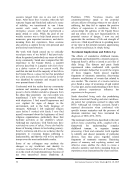
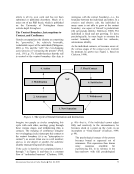
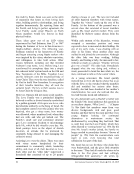
As the individual contacts, or becomes aware of,
the various stages of the contact cycle, moment
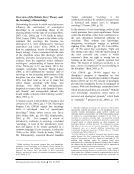
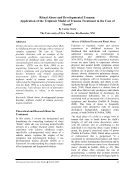
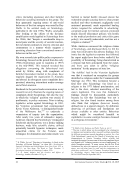
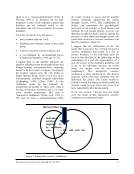
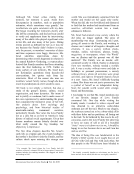
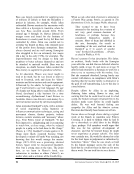
by moment, he grows (see Figure 1, based on
Clarkson, 1999).
Figure 1. The cycle of Gestalt formation and destruction.
Imagine two people as circles completing this
cycle with each other, meeting, going through
these various stages, and withdrawing (this is
contact). The merging of confluence (imagine
two overlapping circles) interrupts this contact at
the contact boundary (it is an “interruption to
contact”), as occurs when one is a cult member
and so, to one degree or another, the authentic
identity stops growing and developing.
If the cycle is therefore not completed (items 1
through 7 in Figure 1) and there is a constant
flow of “unfinished business” (Clarkson, 1999,
p. 48)—that is, if the individual cannot adjust
fully and creatively to the circumstances, he
becomes stuck at a point on the cycle, in an
incomplete or “fixed Gestalt” (Clarkson, 1999,
p. 49).
The psychological energy of the person
becomes bound or repressed out of
awareness. This repression then drains
away resources available for
experiencing life, in its richness in the
here-and-now with full psychological
Self
3. Mobilization
7. Withdrawal 2. Awareness
1. New Sensation
4. Action 5. Final Contact
6. Satisfaction
article is all my own work and has not been
submitted or published elsewhere. Much of it
arises out of my PhD thesis, which is published
on the University of Nottingham theses
website.depth throughout.
The Contact Boundary, Interruptions to
Contact, and Confluence
Gestalt conceptualizes the identity as comprising
the “personality,” the relatively knowable,
verbalizable aspect of the individual (Philippson,
2001, p. 38), and the “self,” the ever-changing
active process of “contacting the present” (Perls
et al., 1951, p. 37). Gestalt theorizes that the self
is created at the contact boundary (the skin is
analogous with the contact boundary)—i.e., the
boundary between the individual and others. In a
coercive and abusive cult, the individual in
many cases is not able to grow at the contact
boundary one aspect of himself is predominant
(the cult pseudo identity Jenkinson, 2008). The
individual is fixed and not growing. To leave
psychologically, he must begin to reinstate the
contact boundary and build his authentic,
autonomous identity.
As the individual contacts, or becomes aware of,
the various stages of the contact cycle, moment
by moment, he grows (see Figure 1, based on
Clarkson, 1999).
Figure 1. The cycle of Gestalt formation and destruction.
Imagine two people as circles completing this
cycle with each other, meeting, going through
these various stages, and withdrawing (this is
contact). The merging of confluence (imagine
two overlapping circles) interrupts this contact at
the contact boundary (it is an “interruption to
contact”), as occurs when one is a cult member
and so, to one degree or another, the authentic
identity stops growing and developing.
If the cycle is therefore not completed (items 1
through 7 in Figure 1) and there is a constant
flow of “unfinished business” (Clarkson, 1999,
p. 48)—that is, if the individual cannot adjust
fully and creatively to the circumstances, he
becomes stuck at a point on the cycle, in an
incomplete or “fixed Gestalt” (Clarkson, 1999,
p. 49).
The psychological energy of the person
becomes bound or repressed out of
awareness. This repression then drains
away resources available for
experiencing life, in its richness in the
here-and-now with full psychological
Self
3. Mobilization
7. Withdrawal 2. Awareness
1. New Sensation
4. Action 5. Final Contact
6. Satisfaction