100 International Journal of Cultic Studies ■ Vol. 10, 2019
face aux restrictions du libre arbitre.
L’imprécision et les désaccords au sein de ces
débats entravent le développement de la théorie
relative au lavage de cerveau, en tant que
concept utile, scientifique et sociologique.
Deutsch
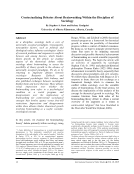
Kontextualisierende Debatten über
Gehirnwäsche innerhalb der Disziplin der
Soziologie
Stephen A. Kent und Kelsey Lindquist
Als Disziplin fehlt der Soziologie ein Kern
universell akzeptierter Paradigmen.
Infolgedessen beeinflussen nichtkognitive
Faktoren wie politische und ideologische Werte
die Wahl der Forschungsprobleme und die
Reaktion von Soziologen auf Konflikte
zwischen und unter Theorien, was das
Wachstum der Theorie behindert. In diesem
Artikel untersuchen wir Aspekte der
theoretischen Debatte innerhalb der Soziologie
über Gehirnwäsche, um die Möglichkeit eines
Wachstums der Theorie ohne allgemein
akzeptierte Paradigmen zu bewerten. Wir tun
dies, indem wir zu wichtigen Debatten zwischen
dem Soziologen Benjamin Zablocki und dem
transpersonalen Psychologen Dick Anthony
zurückkehren und auch den Austausch zwischen
den Soziologen Stephen Kent und Lorne
Dawson veröffentlicht haben. Diese Debatten
offenbaren Ungenauigkeiten darüber, ob sich der
Begriff der Gehirnwäsche auf einen psychischen
Zustand oder ein soziales Programm bezieht,
und Unstimmigkeiten über die Auswirkungen
der Gehirnwäsche auf kontroverse soziologische
Konzepte, bei denen es um
Handlungsspielräume gegenüber
Einschränkungen der Willensfreiheit geht.
Ungenauigkeiten und
Meinungsverschiedenheiten in diesen Debatten
behindern das theoretische Wachstum bezüglich
der Gehirnwäsche als nützliches,
wissenschaftliches und soziologisches Konzept.
Polski
Kontekstualizacja dyskusji o praniu mózgu w
ramach dyscypliny socjologii
Stephen A. Kent i Kelsey Lindquist
Dyscyplinie socjologii brakuje kluczowych,
powszechnie akceptowanych paradygmatów. W
rezultacie czynniki niekognitywne, takie jak
wartości polityczne i ideologiczne, oddziałują na
podejmowany przez socjologów wybór
problemów badawczych oraz formułowane
odpowiedzi dotyczące sprzeczności między
teoriami, co hamuje rozwój tychże. W
niniejszym artykule badamy aspekty
socjologicznej debaty akademickiej na temat
prania mózgu, by ocenić możliwość rozwoju tej
teorii w sytuacji braku uniwersalnie
akceptowanych paradygmatów. Czynimy to
poprzez powrót do ważnych dyskusji między
socjologiem Benjaminem Zablockim i
psychologiem transpersonalnym Dickiem
Anthonym, jak też do opublikowanej wymiany
zdań pomiędzy socjologami Stephenem Kentem
i Lornem Dawsonem. Dyskusje te ujawniają
brak jednomyślności co do tego, czy określenie
„pranie mózgu” odnosi się do psychologicznych
uwarunkowań, czy do programu społecznego,
jak również różnice poglądów co do implikacji
prania mózgu dla kontrowersyjnych pojęć
socjologicznych, obejmujących sprawczość, ale
i ograniczenie wolnej woli. Brak jednomyślności
oraz dostrzegalne w trakcie wspomnianych
debat rozbieżności hamują rozwój teorii o praniu
mózgu jako użytecznego, naukowego konceptu
socjologicznego.
Homeopathy As a Form of Practical
Magic
Jonathan Simmons
English
Homeopathy is generally thought of as a form of
complementary and alternative medicine (CAM)
developed in the late 1700s. Although
homeopathic medicine is little more than a
placebo from a scientific perspective, advocates
of the treatments have nonetheless influenced
medical practice, research, and public health. In
this article, I examine homeopathy and its
significance as a form of practical magic and
part of the occulture or “cultic milieu,” which
refers to a spectrum of mainstream beliefs and
practices that herald an ongoing reenchantment
face aux restrictions du libre arbitre.
L’imprécision et les désaccords au sein de ces
débats entravent le développement de la théorie
relative au lavage de cerveau, en tant que
concept utile, scientifique et sociologique.
Deutsch
Kontextualisierende Debatten über
Gehirnwäsche innerhalb der Disziplin der
Soziologie
Stephen A. Kent und Kelsey Lindquist
Als Disziplin fehlt der Soziologie ein Kern
universell akzeptierter Paradigmen.
Infolgedessen beeinflussen nichtkognitive
Faktoren wie politische und ideologische Werte
die Wahl der Forschungsprobleme und die
Reaktion von Soziologen auf Konflikte
zwischen und unter Theorien, was das
Wachstum der Theorie behindert. In diesem
Artikel untersuchen wir Aspekte der
theoretischen Debatte innerhalb der Soziologie
über Gehirnwäsche, um die Möglichkeit eines
Wachstums der Theorie ohne allgemein
akzeptierte Paradigmen zu bewerten. Wir tun
dies, indem wir zu wichtigen Debatten zwischen
dem Soziologen Benjamin Zablocki und dem
transpersonalen Psychologen Dick Anthony
zurückkehren und auch den Austausch zwischen
den Soziologen Stephen Kent und Lorne
Dawson veröffentlicht haben. Diese Debatten
offenbaren Ungenauigkeiten darüber, ob sich der
Begriff der Gehirnwäsche auf einen psychischen
Zustand oder ein soziales Programm bezieht,
und Unstimmigkeiten über die Auswirkungen
der Gehirnwäsche auf kontroverse soziologische
Konzepte, bei denen es um
Handlungsspielräume gegenüber
Einschränkungen der Willensfreiheit geht.
Ungenauigkeiten und
Meinungsverschiedenheiten in diesen Debatten
behindern das theoretische Wachstum bezüglich
der Gehirnwäsche als nützliches,
wissenschaftliches und soziologisches Konzept.
Polski
Kontekstualizacja dyskusji o praniu mózgu w
ramach dyscypliny socjologii
Stephen A. Kent i Kelsey Lindquist
Dyscyplinie socjologii brakuje kluczowych,
powszechnie akceptowanych paradygmatów. W
rezultacie czynniki niekognitywne, takie jak
wartości polityczne i ideologiczne, oddziałują na
podejmowany przez socjologów wybór
problemów badawczych oraz formułowane
odpowiedzi dotyczące sprzeczności między
teoriami, co hamuje rozwój tychże. W
niniejszym artykule badamy aspekty
socjologicznej debaty akademickiej na temat
prania mózgu, by ocenić możliwość rozwoju tej
teorii w sytuacji braku uniwersalnie
akceptowanych paradygmatów. Czynimy to
poprzez powrót do ważnych dyskusji między
socjologiem Benjaminem Zablockim i
psychologiem transpersonalnym Dickiem
Anthonym, jak też do opublikowanej wymiany
zdań pomiędzy socjologami Stephenem Kentem
i Lornem Dawsonem. Dyskusje te ujawniają
brak jednomyślności co do tego, czy określenie
„pranie mózgu” odnosi się do psychologicznych
uwarunkowań, czy do programu społecznego,
jak również różnice poglądów co do implikacji
prania mózgu dla kontrowersyjnych pojęć
socjologicznych, obejmujących sprawczość, ale
i ograniczenie wolnej woli. Brak jednomyślności
oraz dostrzegalne w trakcie wspomnianych
debat rozbieżności hamują rozwój teorii o praniu
mózgu jako użytecznego, naukowego konceptu
socjologicznego.
Homeopathy As a Form of Practical
Magic
Jonathan Simmons
English
Homeopathy is generally thought of as a form of
complementary and alternative medicine (CAM)
developed in the late 1700s. Although
homeopathic medicine is little more than a
placebo from a scientific perspective, advocates
of the treatments have nonetheless influenced
medical practice, research, and public health. In
this article, I examine homeopathy and its
significance as a form of practical magic and
part of the occulture or “cultic milieu,” which
refers to a spectrum of mainstream beliefs and
practices that herald an ongoing reenchantment