Cultic Studies Journal, Vol. 11, No. 1, 1994, Page 9
Experts).
Thinking that one is God is ridiculous (83% of Critics agree 26% of Experts).
Morality is a matter of personal preference (11% of Critics agree 22% of Experts).
Beneficial and Harmful Practices
The authors were interested in the two panels‟ views regarding 39 particular practices
involving a child, teenager, or youth. We had taken these items verbatim from either
periodicals and brochures, newspaper clippings, or our direct personal knowledge (Dubrow-
Eichel &Dubrow-Eichel, 1989 Langone, 1989). These practices were associated with the New
Age as well as with cultic and occult groups. Which practices would the panels consider
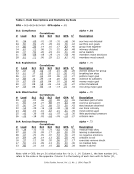
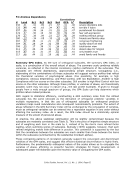
beneficial or harmful? (See Table 4.) The Critics rated 11 practices as very harmful and 15 as
harmful. The only statement they rated as beneficial, with the Experts concurring, was “High
school group stages a peace rally on athletic field.” (This alludes to a controversy in
Pennsylvania between a school administration, supported by its community, and students,
supported by the ACLU.) Thus, both panels distinguished a civil liberties issue from practices
they considered destructive.
The Expert panel did not differ significantly from the Critics on seven practices that they also
considered very harmful and on one practice that fell in the harmful range. They rated only
one practice beneficial.
The following statement was taken almost verbatim from an advertisement in a New Age
periodical: “A coed with PMS and frequent digestive upsets has bought a book and is following
its program which claims that “Many of the common ailments of modern life ...can be
dramatically improved or completely corrected without drugs or invasive medical procedures.”
Half of the Critics but fewer than one tenth of the Experts checked this hazardous medical
procedure as harmful or very harmful.
Inspection of the practices presented in Table 4 suggests that whereas the Critics considered
those we would classify as cultic, occult, or New Age rather uniformly as harmful, the Experts
were more selective. That is, they were negative--though slightly less than the Critics--about
a number of cultic and occult practices, as well as recruitment drives in schools by Baptists
and, as might be expected, they were slightly (but not strongly) positive about New Age
practices. Dole (1993) has reported that in written comments by a number of Experts, they
distinguished benign, sensitive, humane New Agers from exploitative, money-driven con
artists who used similar language.
The Critics rated very harmful a personal improvement course offered to Army recruits by
Scientology and brainwashing by the Creative Community Project they rated harmful a TM
course “to improve your grades” and an aggressive recruitment drive in the schools by
Jehovah‟s Witnesses--three of which are often associated with cultic practices. The Creative
Community Project, for example, was a front for the Unification Church which was exposed in
recent litigation as applying undue influence upon Molko and other converts (Nievod, 1993).
Both panels considered harmful or very harmful such occult practices as ritual sex abuse,
Satanism, animal sacrifice, and witchcraft. The Critics rated the following New Age practices
as very harmful or harmful, but the Experts on average placed them in the 3.00 to 3.99 range
(cannot say or somewhat beneficial) no more than a third of the Expert panel considered
them harmful or very harmful:
A community college student consults a psychic.
A woman promises college students to channel ascended masters.
Mafu sends messages through his channeler to a high school group.
A high school social studies teacher offers a course in global mind change.
A social worker reads Tarot cards to truants.
Children use extrasensory perception, hypnotic procedures, past-life regression,
Experts).
Thinking that one is God is ridiculous (83% of Critics agree 26% of Experts).
Morality is a matter of personal preference (11% of Critics agree 22% of Experts).
Beneficial and Harmful Practices
The authors were interested in the two panels‟ views regarding 39 particular practices
involving a child, teenager, or youth. We had taken these items verbatim from either
periodicals and brochures, newspaper clippings, or our direct personal knowledge (Dubrow-
Eichel &Dubrow-Eichel, 1989 Langone, 1989). These practices were associated with the New
Age as well as with cultic and occult groups. Which practices would the panels consider
beneficial or harmful? (See Table 4.) The Critics rated 11 practices as very harmful and 15 as
harmful. The only statement they rated as beneficial, with the Experts concurring, was “High
school group stages a peace rally on athletic field.” (This alludes to a controversy in
Pennsylvania between a school administration, supported by its community, and students,
supported by the ACLU.) Thus, both panels distinguished a civil liberties issue from practices
they considered destructive.
The Expert panel did not differ significantly from the Critics on seven practices that they also
considered very harmful and on one practice that fell in the harmful range. They rated only
one practice beneficial.
The following statement was taken almost verbatim from an advertisement in a New Age
periodical: “A coed with PMS and frequent digestive upsets has bought a book and is following
its program which claims that “Many of the common ailments of modern life ...can be
dramatically improved or completely corrected without drugs or invasive medical procedures.”
Half of the Critics but fewer than one tenth of the Experts checked this hazardous medical
procedure as harmful or very harmful.
Inspection of the practices presented in Table 4 suggests that whereas the Critics considered
those we would classify as cultic, occult, or New Age rather uniformly as harmful, the Experts
were more selective. That is, they were negative--though slightly less than the Critics--about
a number of cultic and occult practices, as well as recruitment drives in schools by Baptists
and, as might be expected, they were slightly (but not strongly) positive about New Age
practices. Dole (1993) has reported that in written comments by a number of Experts, they
distinguished benign, sensitive, humane New Agers from exploitative, money-driven con
artists who used similar language.
The Critics rated very harmful a personal improvement course offered to Army recruits by
Scientology and brainwashing by the Creative Community Project they rated harmful a TM
course “to improve your grades” and an aggressive recruitment drive in the schools by
Jehovah‟s Witnesses--three of which are often associated with cultic practices. The Creative
Community Project, for example, was a front for the Unification Church which was exposed in
recent litigation as applying undue influence upon Molko and other converts (Nievod, 1993).
Both panels considered harmful or very harmful such occult practices as ritual sex abuse,
Satanism, animal sacrifice, and witchcraft. The Critics rated the following New Age practices
as very harmful or harmful, but the Experts on average placed them in the 3.00 to 3.99 range
(cannot say or somewhat beneficial) no more than a third of the Expert panel considered
them harmful or very harmful:
A community college student consults a psychic.
A woman promises college students to channel ascended masters.
Mafu sends messages through his channeler to a high school group.
A high school social studies teacher offers a course in global mind change.
A social worker reads Tarot cards to truants.
Children use extrasensory perception, hypnotic procedures, past-life regression,