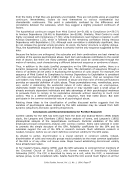
Cultic Studies Journal, Vol. 11, No. 1, 1994, Page 7
Results and Discussion
Characteristics of New Age
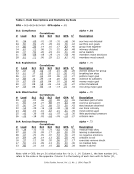
Of 10 characteristics presented to the panels, 4 were supported strongly by most of the Critics
and 1 by the Experts (see Table 1*). Neither panel rated on average any criteria as not
characteristic.
The Critics, much more strongly than the Experts, considered characteristic of the New Age
“inadequate scientific data regarding effectiveness,” and “Create zealous promoters.” At least
three quarters of all respondents in both panels agreed about the characteristics “Eclectic
collection of psychological and spiritual techniques” and “Rooted in Eastern mysticism.”
These findings confirm the difficulty in defining the New Age movement but support
agreement about its eclecticism and Eastern origins (Lewis &Melton, 1992).
As in our Delphic study (Dole et al., 1990), the Critics were sensitive to the commercialism
they linked to the New Age, considered it cultic, and were skeptical of its claims. According to
Dole‟s qualitative study (Dole, 1993), the questionnaire omitted items that would have
characterized it as humane and tolerant.
Scientific Study
When the two panels were asked to rate six statements on their importance in a scientific
study of the effectiveness of a New Age program, Critics and Experts did not differ
significantly in agreeing that on average sources of funding, beliefs of the investigators, peer
review if published, behavioral measures, and use of a control group were important (rated
4.00 or above). These data are not presented in table form.
Beneficial and Harmful Terms
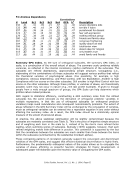
Of 82 terms associated with New Age, cult, and occult, the Critics rated 15 as harmful or very
harmful, but the Experts only 1 --fundamentalism (see Table 2). The Critics rated three
terms beneficial and the Experts eight. Only one item “psychology” attained an average above
4.00, although consciousness was close (3.94) among the Critics. Note that CUT and Church
Universal and Triumphant, which refer to the same religious group, were presented twice as a
check on reliability. The Critics were more consistent in their ratings than the Experts, who
gave CUT a more neutral rating, perhaps because of unfamiliarity.
The anticult orientation of the Critics appears to be reflected in their negative responses to
Scientology, Dianetics, cult, CARP, est, CUT, Lifespring, the Forum, Hunger Project, and TM.
Three New Age terms “Ramtha, channeling, and levitation” were included in the harmful
grouping. Only fundamentalism was rated harmful by the Experts, and it was the only
strongly rated term about which the two panels did not differ significantly. These findings
reflect the specific items about which the Critics were most strongly less tolerant than the
Experts as reported previously (Dole, 1993 Dole et al., 1993).
Statements Rated Agree and Disagree
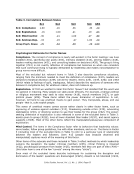
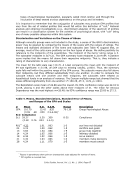
Both panels were asked to rate their agreement or disagreement with 59 statements. The
Critics averaged strongly agree on 2 items and agree on 7, strongly disagree on 8 and
disagree on 13, whereas the Experts supported 2 statements at the 4.00 average level or
more, rated 1 statement disagree (see Table 3). The panels differed significantly on all of
these 33 statements however, there was no item on which both panels took an extreme
position.
*Because of their length, all tables are placed at the end of the article.
Results and Discussion
Characteristics of New Age
Of 10 characteristics presented to the panels, 4 were supported strongly by most of the Critics
and 1 by the Experts (see Table 1*). Neither panel rated on average any criteria as not
characteristic.
The Critics, much more strongly than the Experts, considered characteristic of the New Age
“inadequate scientific data regarding effectiveness,” and “Create zealous promoters.” At least
three quarters of all respondents in both panels agreed about the characteristics “Eclectic
collection of psychological and spiritual techniques” and “Rooted in Eastern mysticism.”
These findings confirm the difficulty in defining the New Age movement but support
agreement about its eclecticism and Eastern origins (Lewis &Melton, 1992).
As in our Delphic study (Dole et al., 1990), the Critics were sensitive to the commercialism
they linked to the New Age, considered it cultic, and were skeptical of its claims. According to
Dole‟s qualitative study (Dole, 1993), the questionnaire omitted items that would have
characterized it as humane and tolerant.
Scientific Study
When the two panels were asked to rate six statements on their importance in a scientific
study of the effectiveness of a New Age program, Critics and Experts did not differ
significantly in agreeing that on average sources of funding, beliefs of the investigators, peer
review if published, behavioral measures, and use of a control group were important (rated
4.00 or above). These data are not presented in table form.
Beneficial and Harmful Terms
Of 82 terms associated with New Age, cult, and occult, the Critics rated 15 as harmful or very
harmful, but the Experts only 1 --fundamentalism (see Table 2). The Critics rated three
terms beneficial and the Experts eight. Only one item “psychology” attained an average above
4.00, although consciousness was close (3.94) among the Critics. Note that CUT and Church
Universal and Triumphant, which refer to the same religious group, were presented twice as a
check on reliability. The Critics were more consistent in their ratings than the Experts, who
gave CUT a more neutral rating, perhaps because of unfamiliarity.
The anticult orientation of the Critics appears to be reflected in their negative responses to
Scientology, Dianetics, cult, CARP, est, CUT, Lifespring, the Forum, Hunger Project, and TM.
Three New Age terms “Ramtha, channeling, and levitation” were included in the harmful
grouping. Only fundamentalism was rated harmful by the Experts, and it was the only
strongly rated term about which the two panels did not differ significantly. These findings
reflect the specific items about which the Critics were most strongly less tolerant than the
Experts as reported previously (Dole, 1993 Dole et al., 1993).
Statements Rated Agree and Disagree
Both panels were asked to rate their agreement or disagreement with 59 statements. The
Critics averaged strongly agree on 2 items and agree on 7, strongly disagree on 8 and
disagree on 13, whereas the Experts supported 2 statements at the 4.00 average level or
more, rated 1 statement disagree (see Table 3). The panels differed significantly on all of
these 33 statements however, there was no item on which both panels took an extreme
position.
*Because of their length, all tables are placed at the end of the article.