Cultic Studies Journal, Vol. 11, No. 1, 1994, Page 55
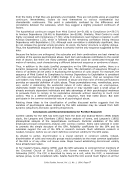
The second aspect of respect for the person/Autonomy summarizes the person‟s right to
make decisions independent of the interests and dictates of others. These issues of conformity
and compliance are found throughout the literature and reflect the authoritarian features of
most cultic groups.
The Identity aspect of personhood concerns the inner integration of the person and integrity
as a member of a family, community, and culture. Violation of the rights of people to define
themselves is frequently described in the literature (see especially Yeakley, 1988), with the
person‟s identity generally being preempted to serve the group‟s goals and daily needs.
Dignity, the final aspect of personhood, concerns the person‟s right to feel worthwhile in the
eyes of others, to feel ?equal? in the sense enunciated in the Declaration of Independence
(?all men are created equal??that is, with equal inherent worth). The destruction of the
person‟s sense of inherent worth is common to most forms of psychological abuse.
The four aspects of respect, then, appeal to the legitimacy of the person as an end, rather
than as a means to be exploited. Langone‟s theoretical formulation of psychological abuse
derives from his work with former members of cultic groups, which, being exploitatively
manipulative, place the abuse-respect distinction in bold relief. Other clinical and empirical
investigations clearly place abuse at the heart of the controversy surrounding the cult
phenomenon.
Given this background and our assumption that abuse is the essence of a cult, it is reasonable
to proceed to a scientific study of the nature of the abuse in cultic groups. We need a
quantitative measure of abuse that can be applied to any group by anyone with experience of
the group. Development of such a scale is the purpose of this study.
Method
Introductory Comments
Development of a measure of psychological abuse could begin in either of two ways.
Descriptive items could be selected that discriminate between groups commonly considered
abusive (e.g., cults) and groups commonly considered nonabusive. Discriminant function
analysis is the statistical method of choice for this kind of item analysis (Ghiselli, Campbell, &
Zedeck, 1981). This method is frequently used, for example, in research on psychiatric
diagnosis. The approach assumes, however, that accepted validity criteria exist--for example,
the diagnostic decisions of expert clinicians. Unfortunately, there are no equivalent
authoritative diagnostic criteria for cults. Therefore, a measure of the psychological abuse
associated with cults must first focus on describing what is meant by cultic abuse.
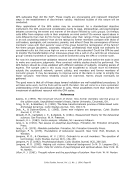
Clinical studies, philosophical analyses, and surveys of personal and expert experience can
help explicate definitional issues and assumptions, as well as provide potential items for
scales. Accumulated observations must be systematically organized, however, before
sophisticated scientific theories can be developed or derivative hypotheses tested empirically.
Factor analysis is the appropriate method for this approach.
As Kerlinger (1973) states: ?Factor analysis is a method for determining the number and
nature of the underlying variables among larger numbers of measures ...Factor analysis
serves the cause of scientific parsimony ...It tells us, in effect, what tests or measures belong
together--which ones virtually measure the same thing? (p. 659). Gorsuch (1983) adds that
the aim of factor analysis is to ?summarize the interrelationships among the variables in a
concise but accurate manner as an aid in conceptualization? (p. 2).
Thus, factor analysis can enable us to distill the varieties of abuse by separating numerical
themes. Delineation of the combinations and permutations of these varieties may, in turn,
help us to empirically elaborate the dimensions, meaning, and nature of cultic abuse.
The second aspect of respect for the person/Autonomy summarizes the person‟s right to
make decisions independent of the interests and dictates of others. These issues of conformity
and compliance are found throughout the literature and reflect the authoritarian features of
most cultic groups.
The Identity aspect of personhood concerns the inner integration of the person and integrity
as a member of a family, community, and culture. Violation of the rights of people to define
themselves is frequently described in the literature (see especially Yeakley, 1988), with the
person‟s identity generally being preempted to serve the group‟s goals and daily needs.
Dignity, the final aspect of personhood, concerns the person‟s right to feel worthwhile in the
eyes of others, to feel ?equal? in the sense enunciated in the Declaration of Independence
(?all men are created equal??that is, with equal inherent worth). The destruction of the
person‟s sense of inherent worth is common to most forms of psychological abuse.
The four aspects of respect, then, appeal to the legitimacy of the person as an end, rather
than as a means to be exploited. Langone‟s theoretical formulation of psychological abuse
derives from his work with former members of cultic groups, which, being exploitatively
manipulative, place the abuse-respect distinction in bold relief. Other clinical and empirical
investigations clearly place abuse at the heart of the controversy surrounding the cult
phenomenon.
Given this background and our assumption that abuse is the essence of a cult, it is reasonable
to proceed to a scientific study of the nature of the abuse in cultic groups. We need a
quantitative measure of abuse that can be applied to any group by anyone with experience of
the group. Development of such a scale is the purpose of this study.
Method
Introductory Comments
Development of a measure of psychological abuse could begin in either of two ways.
Descriptive items could be selected that discriminate between groups commonly considered
abusive (e.g., cults) and groups commonly considered nonabusive. Discriminant function
analysis is the statistical method of choice for this kind of item analysis (Ghiselli, Campbell, &
Zedeck, 1981). This method is frequently used, for example, in research on psychiatric
diagnosis. The approach assumes, however, that accepted validity criteria exist--for example,
the diagnostic decisions of expert clinicians. Unfortunately, there are no equivalent
authoritative diagnostic criteria for cults. Therefore, a measure of the psychological abuse
associated with cults must first focus on describing what is meant by cultic abuse.
Clinical studies, philosophical analyses, and surveys of personal and expert experience can
help explicate definitional issues and assumptions, as well as provide potential items for
scales. Accumulated observations must be systematically organized, however, before
sophisticated scientific theories can be developed or derivative hypotheses tested empirically.
Factor analysis is the appropriate method for this approach.
As Kerlinger (1973) states: ?Factor analysis is a method for determining the number and
nature of the underlying variables among larger numbers of measures ...Factor analysis
serves the cause of scientific parsimony ...It tells us, in effect, what tests or measures belong
together--which ones virtually measure the same thing? (p. 659). Gorsuch (1983) adds that
the aim of factor analysis is to ?summarize the interrelationships among the variables in a
concise but accurate manner as an aid in conceptualization? (p. 2).
Thus, factor analysis can enable us to distill the varieties of abuse by separating numerical
themes. Delineation of the combinations and permutations of these varieties may, in turn,
help us to empirically elaborate the dimensions, meaning, and nature of cultic abuse.