Cultic Studies Journal, Vol. 11, No. 1, 1994, Page 54
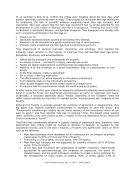
The Group Psychological Abuse Scale:
A Measure of the Varieties of Cultic Abuse
William V. Chambers, Ph.D.
University College, Mercer University
Michael D. Langone, Ph.D.
American Family Foundation
Arthur A. Dole, Ph.D.
University of Pennsylvania
James W. Grice, M.A.
University of New Mexico
Abstract
The Group Psychological Abuse (GPA) scale was developed from a factor analysis of
308 former cult members‟ characterizations of their groups. Four subscales were
derived: Compliance, Exploitation, Mind Control, and Anxious Dependency. Reliability
and validity findings suggest the GPA should be useful in characterizing the varieties
of abuse and in differentiating cults from innocuous groups.
The major apprehension surrounding cults is not that they represent new religious creeds,
dissenting political views, or alternative therapeutic methods. The driving concern is that
these groups tend to abuse their members, and sometimes nonmembers, unlike bona fide
new religious (and other) movements, which treat members and outsiders with relative
respect.
How much do we really know about abuse in cults? From experiential, clinical, and
philosophical perspectives, we know quite a lot. From the viewpoint of scientific theory, based
on quantitative measurements, we know less. A few steps toward quantitative measurement
of abuse have been taken, however. Dole and Dubrow-Eichel (1985) used a Delphi strategy to
study experts‟ perceptions of cults. They collected descriptions of numerous dangerous
practices found among cults. Ratings of the practices by experts showed that abuses by cults
could be quantitatively differentiated. The Dole and Dubrow-Eichel study thus provided
precedence for further quantitative studies of abuse in cults.
Some years after the Dole and Dubrow-Eichel (1985) study, Langone and Chambers (1991)
conducted a factor analysis of former cult members‟ interpretations of terms used in cultic
studies. Five dimensions of meaningfulness and terminological acceptability were found: Mind
Control, Social Manipulation, Group Intensity, Trauma, and Abuse. The former cult members
rated the Abuse and Trauma dimensions as most meaningful and acceptable to people leaving
cults. The views of the former cult members thus concurred with those of Dole and
Dubrow-Eichel in emphasizing the significance of abuse and trauma in cultic groups.
Taking the lead offered by Dole and Dubrow-Eichel (1985), as well as by the subjects in the
factor analysis study, Langone (1992) developed a theoretical model of abuse, with the idea
of respect for the person as the central concern and contrast to abuse. The respect-versus-
abuse model emphasizes four aspects of personhood: Mind, Autonomy, Identity, and Dignity
(MAID). These aspects may be construed as needs in a psychological sense or as rights in a
philosophical sense.
Disrespect for Mind concerns the violation of the person‟s right to pursue truth and goodness
through reality testing, logical thinking, and objective inquiry. These violations of respect are
often described in the literature as mind control, coercive persuasion, or thought reform
(Langone, 1993 Lifton, 1961 Schein, Schneier, &Baker, 1961).
The Group Psychological Abuse Scale:
A Measure of the Varieties of Cultic Abuse
William V. Chambers, Ph.D.
University College, Mercer University
Michael D. Langone, Ph.D.
American Family Foundation
Arthur A. Dole, Ph.D.
University of Pennsylvania
James W. Grice, M.A.
University of New Mexico
Abstract
The Group Psychological Abuse (GPA) scale was developed from a factor analysis of
308 former cult members‟ characterizations of their groups. Four subscales were
derived: Compliance, Exploitation, Mind Control, and Anxious Dependency. Reliability
and validity findings suggest the GPA should be useful in characterizing the varieties
of abuse and in differentiating cults from innocuous groups.
The major apprehension surrounding cults is not that they represent new religious creeds,
dissenting political views, or alternative therapeutic methods. The driving concern is that
these groups tend to abuse their members, and sometimes nonmembers, unlike bona fide
new religious (and other) movements, which treat members and outsiders with relative
respect.
How much do we really know about abuse in cults? From experiential, clinical, and
philosophical perspectives, we know quite a lot. From the viewpoint of scientific theory, based
on quantitative measurements, we know less. A few steps toward quantitative measurement
of abuse have been taken, however. Dole and Dubrow-Eichel (1985) used a Delphi strategy to
study experts‟ perceptions of cults. They collected descriptions of numerous dangerous
practices found among cults. Ratings of the practices by experts showed that abuses by cults
could be quantitatively differentiated. The Dole and Dubrow-Eichel study thus provided
precedence for further quantitative studies of abuse in cults.
Some years after the Dole and Dubrow-Eichel (1985) study, Langone and Chambers (1991)
conducted a factor analysis of former cult members‟ interpretations of terms used in cultic
studies. Five dimensions of meaningfulness and terminological acceptability were found: Mind
Control, Social Manipulation, Group Intensity, Trauma, and Abuse. The former cult members
rated the Abuse and Trauma dimensions as most meaningful and acceptable to people leaving
cults. The views of the former cult members thus concurred with those of Dole and
Dubrow-Eichel in emphasizing the significance of abuse and trauma in cultic groups.
Taking the lead offered by Dole and Dubrow-Eichel (1985), as well as by the subjects in the
factor analysis study, Langone (1992) developed a theoretical model of abuse, with the idea
of respect for the person as the central concern and contrast to abuse. The respect-versus-
abuse model emphasizes four aspects of personhood: Mind, Autonomy, Identity, and Dignity
(MAID). These aspects may be construed as needs in a psychological sense or as rights in a
philosophical sense.
Disrespect for Mind concerns the violation of the person‟s right to pursue truth and goodness
through reality testing, logical thinking, and objective inquiry. These violations of respect are
often described in the literature as mind control, coercive persuasion, or thought reform
(Langone, 1993 Lifton, 1961 Schein, Schneier, &Baker, 1961).