Cultic Studies Journal, Vol. 11, No. 1, 1994, Page 71
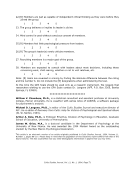
22.[R] Members are just as capable of independent critical thinking as they were before they
joined the group.
1 2 3 4 5
23. The group believes or implies its leader is divine.
1 2 3 4 5
24. Mind control is used without conscious consent of members.
1 2 3 4 5
25.[R] Members feel little psychological pressure from leaders.
1 2 3 4 5
26.[R] The group‟s leader(s) rarely criticize members.
1 2 3 4 5
27. Recruiting members is a major goal of the group.
1 2 3 4 5
28. Members are expected to consult with leaders about most decisions, including those
concerning work, child rearing, whether or not to visit relatives, etc.
1 2 3 4 5
Note: [R] items are reversed in scoring by finding the absolute difference between the rating
and the number 6. Do not include the [R] designations when administering the test.
At this time the GPA Scale should be used only as a research instrument. We request that
researchers wishing to use the GPA Scale contact Dr. Langone (AFF, P.O. Box 2265, Bonita
Springs, FL 33959).
***********************
William V. Chambers, Ph.D., is a statistical consultant and assistant professor at University
College, Mercer University. He is coauthor with James Grice of CASPER, a software package
for psychometric analysis.
Michael D. Langone, Ph.D., is editor of the Cultic Studies Journal and executive director of
AFF. He is editor of Recovery from Cults: Help for Victims of Psychological and Spiritual Abuse
(W. W. Norton, 1993).
Arthur A. Dole, Ph.D., is Professor Emeritus, Division of Psychology in Education, Graduate
School of Education, University of Pennsylvania.
James W. Grice, M.A., is a doctoral candidate in the Department of Psychology at the
University of New Mexico. He was awarded the 1994 Mariani Award as the outstanding
student by the New Mexico Psychological Association.
This article is an electronic version of an article originally published in Cultic Studies Journal, 1994, Volume 11,
Number 1, pages 88-117. Please keep in mind that the pagination of this electronic reprint differs from that of the
bound volume. This fact could affect how you enter bibliographic information in papers that you may write.
22.[R] Members are just as capable of independent critical thinking as they were before they
joined the group.
1 2 3 4 5
23. The group believes or implies its leader is divine.
1 2 3 4 5
24. Mind control is used without conscious consent of members.
1 2 3 4 5
25.[R] Members feel little psychological pressure from leaders.
1 2 3 4 5
26.[R] The group‟s leader(s) rarely criticize members.
1 2 3 4 5
27. Recruiting members is a major goal of the group.
1 2 3 4 5
28. Members are expected to consult with leaders about most decisions, including those
concerning work, child rearing, whether or not to visit relatives, etc.
1 2 3 4 5
Note: [R] items are reversed in scoring by finding the absolute difference between the rating
and the number 6. Do not include the [R] designations when administering the test.
At this time the GPA Scale should be used only as a research instrument. We request that
researchers wishing to use the GPA Scale contact Dr. Langone (AFF, P.O. Box 2265, Bonita
Springs, FL 33959).
***********************
William V. Chambers, Ph.D., is a statistical consultant and assistant professor at University
College, Mercer University. He is coauthor with James Grice of CASPER, a software package
for psychometric analysis.
Michael D. Langone, Ph.D., is editor of the Cultic Studies Journal and executive director of
AFF. He is editor of Recovery from Cults: Help for Victims of Psychological and Spiritual Abuse
(W. W. Norton, 1993).
Arthur A. Dole, Ph.D., is Professor Emeritus, Division of Psychology in Education, Graduate
School of Education, University of Pennsylvania.
James W. Grice, M.A., is a doctoral candidate in the Department of Psychology at the
University of New Mexico. He was awarded the 1994 Mariani Award as the outstanding
student by the New Mexico Psychological Association.
This article is an electronic version of an article originally published in Cultic Studies Journal, 1994, Volume 11,
Number 1, pages 88-117. Please keep in mind that the pagination of this electronic reprint differs from that of the
bound volume. This fact could affect how you enter bibliographic information in papers that you may write.