Cultic Studies Journal, Vol. 11, No. 1, 1994, Page 51
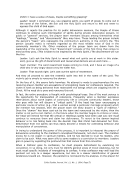
Victim: I have a sense of claws, maybe something grasping?
Leader: Good! I command you, you grasping spirit, you spirit of greed, to come out in
the name of the Father, the Son and the Holy Spirit and return to hell and never to
oppress this child of God again.
Although it rejects the practice for its public deliverance sessions, the People of Praise
continues to endorse such interrogation of spirits during private deliverance prayers. In
public or “general” services, the prayer team members discuss among themselves what
“leadings,” “senses,” and “discernments” they may have. Those leading the prayer include
the person‟s “head,” who represents the community‟s authority in the victim‟s life. This
person (usually male) is normally regarded as the most reliable voice of God in the
community member‟s life. Other members of the prayer team are drawn from the
leadership of the community. Their “discernment” consists of the first thing that comes to
mind as they pray. (This is taken to be inspired by the Holy Spirit.) The discernment will run
like this:
Leader: Let‟s ask the Holy Spirit to reveal what evil spirits are at work in this sister.
Lord, give us the gift of discernment and reveal what demons are at work here....
Team member: The word resentment keeps coming to mind, and I have an image of a
child who is very angry about a toy her sister has.
Leader: That sounds right. Let‟s cast out the spirit of resentment.
And they all proceed to cast the resentful spirit into hell in the name of the Lord. The
victim‟s job is simply to renounce the demon.
On the face of it, this seems fairly harmless. No attempt is made to psychoanalyze the one
receiving prayer. Neither are accusations of wrongdoing made nor confessions required. The
victim is seen as being delivered from malevolent evil beings which are crippling his life in
Christ. All he need do is pray and renounce this evil.
In fact, the entire procedure is fraught with psychological traps. One of the most serious is
the opportunity for manipulation of conscience. Frequently when a member expresses
reservations about some aspect of community life or criticizes community leaders, those
who pray with her will discern a “critical spirit.” If the head has been encouraging a
particular course of action (e.g., that a woman accept a particular marriage proposal) which
the member has resisted, then the prayer team will likely discern a “spirit of rebellion.”
Once the “demon” has been cast out by the team and renounced by the victim, then the
matter is not put to rest. Rather, in the future when the member begins to criticize or rebel,
her head will remind her that the critical or rebellious spirits have been cast out she must
continue to renounce them and claim her deliverance. To revert to the demon-inspired
behavior is to risk falling back into the devilish trap that Christ had delivered her from.
Deliverance from evil spirits can thus easily become a means for controlling behavior and
manipulation of consciences.
In trying to understand the power of this process, it is important to interpret the prayer of
deliverance according to the member‟s conceptual framework, not one‟s own. The member
knows he is not expert in spiritual matters, and he has learned to trust his leaders, who
claim to be such. What may seem silly to some readers is a conviction to members. Leaders
gain in power by exploiting the profound fear that comes from this conviction.
When a Catholic goes to confession, he must prepare beforehand by examining his
conscience. In so doing, not only must he identify general areas of moral weakness, but he
must recall specific incidents of wrongdoing to confess. A wise confessor may well lead the
penitent not only to a deeper repentance, but also to a clearer identification of general
tendencies toward sin. However, the penitent is not bound by his analysis. In the prayer for
Victim: I have a sense of claws, maybe something grasping?
Leader: Good! I command you, you grasping spirit, you spirit of greed, to come out in
the name of the Father, the Son and the Holy Spirit and return to hell and never to
oppress this child of God again.
Although it rejects the practice for its public deliverance sessions, the People of Praise
continues to endorse such interrogation of spirits during private deliverance prayers. In
public or “general” services, the prayer team members discuss among themselves what
“leadings,” “senses,” and “discernments” they may have. Those leading the prayer include
the person‟s “head,” who represents the community‟s authority in the victim‟s life. This
person (usually male) is normally regarded as the most reliable voice of God in the
community member‟s life. Other members of the prayer team are drawn from the
leadership of the community. Their “discernment” consists of the first thing that comes to
mind as they pray. (This is taken to be inspired by the Holy Spirit.) The discernment will run
like this:
Leader: Let‟s ask the Holy Spirit to reveal what evil spirits are at work in this sister.
Lord, give us the gift of discernment and reveal what demons are at work here....
Team member: The word resentment keeps coming to mind, and I have an image of a
child who is very angry about a toy her sister has.
Leader: That sounds right. Let‟s cast out the spirit of resentment.
And they all proceed to cast the resentful spirit into hell in the name of the Lord. The
victim‟s job is simply to renounce the demon.
On the face of it, this seems fairly harmless. No attempt is made to psychoanalyze the one
receiving prayer. Neither are accusations of wrongdoing made nor confessions required. The
victim is seen as being delivered from malevolent evil beings which are crippling his life in
Christ. All he need do is pray and renounce this evil.
In fact, the entire procedure is fraught with psychological traps. One of the most serious is
the opportunity for manipulation of conscience. Frequently when a member expresses
reservations about some aspect of community life or criticizes community leaders, those
who pray with her will discern a “critical spirit.” If the head has been encouraging a
particular course of action (e.g., that a woman accept a particular marriage proposal) which
the member has resisted, then the prayer team will likely discern a “spirit of rebellion.”
Once the “demon” has been cast out by the team and renounced by the victim, then the
matter is not put to rest. Rather, in the future when the member begins to criticize or rebel,
her head will remind her that the critical or rebellious spirits have been cast out she must
continue to renounce them and claim her deliverance. To revert to the demon-inspired
behavior is to risk falling back into the devilish trap that Christ had delivered her from.
Deliverance from evil spirits can thus easily become a means for controlling behavior and
manipulation of consciences.
In trying to understand the power of this process, it is important to interpret the prayer of
deliverance according to the member‟s conceptual framework, not one‟s own. The member
knows he is not expert in spiritual matters, and he has learned to trust his leaders, who
claim to be such. What may seem silly to some readers is a conviction to members. Leaders
gain in power by exploiting the profound fear that comes from this conviction.
When a Catholic goes to confession, he must prepare beforehand by examining his
conscience. In so doing, not only must he identify general areas of moral weakness, but he
must recall specific incidents of wrongdoing to confess. A wise confessor may well lead the
penitent not only to a deeper repentance, but also to a clearer identification of general
tendencies toward sin. However, the penitent is not bound by his analysis. In the prayer for