Cultic Studies Journal, Vol. 11, No. 1, 1994, Page 11
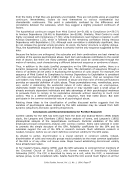
Since the present series of studies was sponsored by an educational and research group that
is critical of cults (the American Family Foundation), we think there is need for further studies.
Such studies might be conducted by researchers with other orientations. They might employ
other methodologies that reveal the diversity, fluidity, and dynamic characteristics of the New
Age point of view and that sample other New Age constituencies. Furthermore, we need to
know more about how cultic groups misuse New Age practices and concepts (Garvey, 1993).
Despite the variability and confusion of the Judeo-Christian and New Age paradigms as they
reveal themselves in individual lives, these paradigms are clearly distinct in their essence. At
their cores they seem to be incompatible. And they most definitely are competing for
adherents in today‟s religious marketplace. If they are to compete fairly, however, they must
understand each other better than is now the case. We hope that the series of studies of
which this article is one component will advance mutual understanding and respect by at
minimum demonstrating how little genuine understanding currently exists.
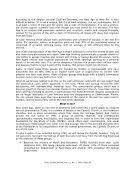
Table 1. Criteria Defining the New Age Rated Characteristic by Critics Versus
Experts: Means, Standard Deviations, and Percentages
Criteria Critics (n=58) Experts (n=85)
X SD %X SD %
Inadequate scientific data
regarding effectiveness
4.41 0.80 88* 3.39 1.04 55
Create zealous promoters 4.29 0.81 85* 3.26 1.16 51
Eclectic collection of
psychological and spiritual
techniques
4.29 0.96 89 4.11 0.71 87
Rooted in Eastern mysti-
cism
4.09 0.75 84 3.86 0.78 76
Note: *p .01
Each criterion statement was rated 5”very characteristic 4”characteristic 3”cannot say
2”not characteristic or 1”not at all characteristic. Table includes only statements with means
from 4.00 to 5.00 (characteristic and very characteristic) for at least one group. No means
were below 2.00. Characteristic and very characteristic percentages are shown in the %
column. The number responding varies slightly.
Since the present series of studies was sponsored by an educational and research group that
is critical of cults (the American Family Foundation), we think there is need for further studies.
Such studies might be conducted by researchers with other orientations. They might employ
other methodologies that reveal the diversity, fluidity, and dynamic characteristics of the New
Age point of view and that sample other New Age constituencies. Furthermore, we need to
know more about how cultic groups misuse New Age practices and concepts (Garvey, 1993).
Despite the variability and confusion of the Judeo-Christian and New Age paradigms as they
reveal themselves in individual lives, these paradigms are clearly distinct in their essence. At
their cores they seem to be incompatible. And they most definitely are competing for
adherents in today‟s religious marketplace. If they are to compete fairly, however, they must
understand each other better than is now the case. We hope that the series of studies of
which this article is one component will advance mutual understanding and respect by at
minimum demonstrating how little genuine understanding currently exists.
Table 1. Criteria Defining the New Age Rated Characteristic by Critics Versus
Experts: Means, Standard Deviations, and Percentages
Criteria Critics (n=58) Experts (n=85)
X SD %X SD %
Inadequate scientific data
regarding effectiveness
4.41 0.80 88* 3.39 1.04 55
Create zealous promoters 4.29 0.81 85* 3.26 1.16 51
Eclectic collection of
psychological and spiritual
techniques
4.29 0.96 89 4.11 0.71 87
Rooted in Eastern mysti-
cism
4.09 0.75 84 3.86 0.78 76
Note: *p .01
Each criterion statement was rated 5”very characteristic 4”characteristic 3”cannot say
2”not characteristic or 1”not at all characteristic. Table includes only statements with means
from 4.00 to 5.00 (characteristic and very characteristic) for at least one group. No means
were below 2.00. Characteristic and very characteristic percentages are shown in the %
column. The number responding varies slightly.