Cultic Studies Journal, Vol. 11, No. 1, 1994, Page 20
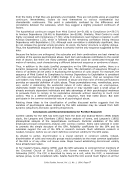
God’s Company: New Age Ethics and
the Bank of Credit and Commerce International
Dr. Paul Heelas
Department of Religious Studies
University of Lancaster, England
Abstract
The New Age movement, which is tied to the monist tradition of the East, is
characterized by an expressive style of ethical evaluation, which, in contrast to the
authoritative mode that depends on external prescriptions and proscriptions, looks
within the person for wisdom because God is believed to lie within each person. The
scandals and financial downfall of the Bank of Credit and Commerce International is
attributed in large part to the consequences of this expressive ethic operating within
the business world. “Management by intuition” resulted in a relative absence of
formal controls and accountability systems, which certain managers exploited for
personal financial gain. A question is raised about the possible long-term
consequences of this expressive ethic for India, where Human Resource Development
is increasingly formulated in terms of the expressive ethic.
It might seem extraordinary that this infamous bank has anything to do with New Age values.
Before showing that this is indeed the case and, furthermore, that such values and ethical
“structuring” have almost certainly played a major role in the bank‟s downfall--I pave the way
by introducing the distinctive style of ethical evaluation which reigns within the New Age
“movement” of the contemporary West and elsewhere.
New Age Ethicality
The term “styles of ethical evaluation” is taken from Steven Tipton (1982), who constructs a
typology of different ways of obtaining moral decisions. (The typology, it can be noted, is only
contingently related to the particular context of what might be right or wrong.)
The expressive style is of immediate concern. In contrast to the authoritative mode, where
moral decisions are made in terms of the commandments of external authority sources, such
as the traditional Christian (that is, theistic) God, the expressive mode entails looking within
for wisdom. An act is right, as Tipton puts it, because it is “the most ...honest expression of
one‟s self” (1982, p. 283). In contrast to the utilitarian mode, which also has an individualistic
foundationalism, the expressive style is not simply informed by what the agent might happen
to want. An act is not right merely because it satisfies whatever the agent feels like having
an act is right only when it is informed by the truth that supposedly lies within. And this might
not be the same act as that which is sought by the “superficial” or utilitarian mode of being.
The expressive ethic is central to the New Age precisely because the key belief of this
“movement” is that God, or that which is perfect, lies within us all. The idea is that we have
been contaminated by external sources of authority--our parents, our teachers, the capitalist
system, and so on. Since these external inputs have let us down, preventing us from realizing
our true potential, we must organize our lives by finding out our true nature, then acting
accordingly. In short, being grounded in the true Self, the expressive ethic supposedly
provides the sole basis for valid moral life. Externally grounded ethicality, including what the
socially contaminated utilitarian aspect of the person might demand, is rejected on the
grounds that this source is divorced from the natural wisdom that lies within.
God’s Company: New Age Ethics and
the Bank of Credit and Commerce International
Dr. Paul Heelas
Department of Religious Studies
University of Lancaster, England
Abstract
The New Age movement, which is tied to the monist tradition of the East, is
characterized by an expressive style of ethical evaluation, which, in contrast to the
authoritative mode that depends on external prescriptions and proscriptions, looks
within the person for wisdom because God is believed to lie within each person. The
scandals and financial downfall of the Bank of Credit and Commerce International is
attributed in large part to the consequences of this expressive ethic operating within
the business world. “Management by intuition” resulted in a relative absence of
formal controls and accountability systems, which certain managers exploited for
personal financial gain. A question is raised about the possible long-term
consequences of this expressive ethic for India, where Human Resource Development
is increasingly formulated in terms of the expressive ethic.
It might seem extraordinary that this infamous bank has anything to do with New Age values.
Before showing that this is indeed the case and, furthermore, that such values and ethical
“structuring” have almost certainly played a major role in the bank‟s downfall--I pave the way
by introducing the distinctive style of ethical evaluation which reigns within the New Age
“movement” of the contemporary West and elsewhere.
New Age Ethicality
The term “styles of ethical evaluation” is taken from Steven Tipton (1982), who constructs a
typology of different ways of obtaining moral decisions. (The typology, it can be noted, is only
contingently related to the particular context of what might be right or wrong.)
The expressive style is of immediate concern. In contrast to the authoritative mode, where
moral decisions are made in terms of the commandments of external authority sources, such
as the traditional Christian (that is, theistic) God, the expressive mode entails looking within
for wisdom. An act is right, as Tipton puts it, because it is “the most ...honest expression of
one‟s self” (1982, p. 283). In contrast to the utilitarian mode, which also has an individualistic
foundationalism, the expressive style is not simply informed by what the agent might happen
to want. An act is not right merely because it satisfies whatever the agent feels like having
an act is right only when it is informed by the truth that supposedly lies within. And this might
not be the same act as that which is sought by the “superficial” or utilitarian mode of being.
The expressive ethic is central to the New Age precisely because the key belief of this
“movement” is that God, or that which is perfect, lies within us all. The idea is that we have
been contaminated by external sources of authority--our parents, our teachers, the capitalist
system, and so on. Since these external inputs have let us down, preventing us from realizing
our true potential, we must organize our lives by finding out our true nature, then acting
accordingly. In short, being grounded in the true Self, the expressive ethic supposedly
provides the sole basis for valid moral life. Externally grounded ethicality, including what the
socially contaminated utilitarian aspect of the person might demand, is rejected on the
grounds that this source is divorced from the natural wisdom that lies within.