Cultic Studies Journal, Vol. 11, No. 1, 1994, Page 10
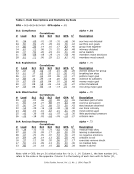
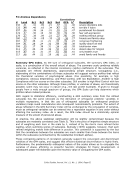
subliminal message tapes, chanting, meditation, levitation, and crystals to increase
their effectiveness.
On the other hand, Experts rated harmful a practice that some associate with the New Age
denial of medical treatment to a 6-year-old on the advice of “her spirit ancestor,” and Experts
were ambivalent about the college sophomore who “drops out to live near a 40-year-old
woman who claims contact with a 35,000-year-old wise man.” Yet, again demonstrating
greater variability than Critics would expect, as much as one third of the Experts agreed with
the Critics on many of the preceding.
Thus, this selected group of Experts were moderately favorable and discriminating in their
judgments about the New Age movement, rather than zealous and fanatical. As reported in
Dole‟s (1993) analysis of the written comments, a number of Experts argued that the
practices presented on the questionnaire were slanted toward the extreme and bizarre and
that we had neglected some of the New Age‟s positive, optimistic, and deeply religious
aspects. These accusations raise the possibility for us that the periodicals, books, and
brochures we quoted may not be truly representative of current New Age thought. For
example, we failed to include items about the conservation, animal rights, and native people‟s
movements which Lewis (1992)--published after data collection--identified as New Age
emphases in the 1990s. We did not account for “the process of transformation which the New
Age community is constantly experiencing” (Lewis, 1992, p. 11). On the other hand, we are
not sure there is one distinct community.
New Age Redefined
As a counterpoint to the Critics‟ definition of the New Age given at the beginning of this paper,
we propose the following as a definition that we believe most Experts would agree with--and
probably most Critics:
The New Age movement is an alternative religious paradigm that is rooted in Eastern
mysticism, eclectic in its practices and beliefs, tolerant (or undiscerning, depending
upon one‟s perspective) of nontraditional practices and beliefs, and optimistic about
humanity‟s capacity to bring about a great evolutionary leap in consciousness.
Within this diverse movement one can find many who fit the stereotype of the Critics. But this
stereotype applies only to a minority the majority is much more varied. Some are occult
“flakes” who are as likely to be criticized by members of the Expert panel as by the Critics.
Some are thoughtful intellectuals who, though rejecting fundamental tenets of the Judeo-
Christian tradition, are neither moral nor epistemological relativists. And some, as with many
who ostensibly call themselves Jews or Christians, concentrate their attention on specific
causes (e.g., animal rights, environmentalism, or increasing respect for Native American
culture) and don‟t think much about religious and philosophical issues. This group‟s religious
beliefs, though “New Age” in basic outline, may be as confused and inconsistent as the
personal belief systems of many Christians and Jews.
Concluding Comments
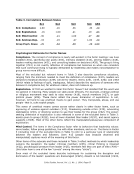
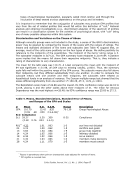
This study concentrated on the extreme views held by selected specialists termed Critics and
Experts. By and large the most strongly endorsed items were consistent with our findings
when quantitative (Dole et al. 1990, 1993) and qualitative (Dole, 1993) methods were applied
to the survey responses. These strongly held terms, statements, and practices permit a
clearer and more specific comparison of the two panels. They illustrate some of the particular
items supporting the general finding: that the Critics were almost uniformly negative about
cults, the occult, as well as the New Age, while the Experts tended to support the New Age
rather mildly, rejected the occult, and were somewhat tolerant of cults.
subliminal message tapes, chanting, meditation, levitation, and crystals to increase
their effectiveness.
On the other hand, Experts rated harmful a practice that some associate with the New Age
denial of medical treatment to a 6-year-old on the advice of “her spirit ancestor,” and Experts
were ambivalent about the college sophomore who “drops out to live near a 40-year-old
woman who claims contact with a 35,000-year-old wise man.” Yet, again demonstrating
greater variability than Critics would expect, as much as one third of the Experts agreed with
the Critics on many of the preceding.
Thus, this selected group of Experts were moderately favorable and discriminating in their
judgments about the New Age movement, rather than zealous and fanatical. As reported in
Dole‟s (1993) analysis of the written comments, a number of Experts argued that the
practices presented on the questionnaire were slanted toward the extreme and bizarre and
that we had neglected some of the New Age‟s positive, optimistic, and deeply religious
aspects. These accusations raise the possibility for us that the periodicals, books, and
brochures we quoted may not be truly representative of current New Age thought. For
example, we failed to include items about the conservation, animal rights, and native people‟s
movements which Lewis (1992)--published after data collection--identified as New Age
emphases in the 1990s. We did not account for “the process of transformation which the New
Age community is constantly experiencing” (Lewis, 1992, p. 11). On the other hand, we are
not sure there is one distinct community.
New Age Redefined
As a counterpoint to the Critics‟ definition of the New Age given at the beginning of this paper,
we propose the following as a definition that we believe most Experts would agree with--and
probably most Critics:
The New Age movement is an alternative religious paradigm that is rooted in Eastern
mysticism, eclectic in its practices and beliefs, tolerant (or undiscerning, depending
upon one‟s perspective) of nontraditional practices and beliefs, and optimistic about
humanity‟s capacity to bring about a great evolutionary leap in consciousness.
Within this diverse movement one can find many who fit the stereotype of the Critics. But this
stereotype applies only to a minority the majority is much more varied. Some are occult
“flakes” who are as likely to be criticized by members of the Expert panel as by the Critics.
Some are thoughtful intellectuals who, though rejecting fundamental tenets of the Judeo-
Christian tradition, are neither moral nor epistemological relativists. And some, as with many
who ostensibly call themselves Jews or Christians, concentrate their attention on specific
causes (e.g., animal rights, environmentalism, or increasing respect for Native American
culture) and don‟t think much about religious and philosophical issues. This group‟s religious
beliefs, though “New Age” in basic outline, may be as confused and inconsistent as the
personal belief systems of many Christians and Jews.
Concluding Comments
This study concentrated on the extreme views held by selected specialists termed Critics and
Experts. By and large the most strongly endorsed items were consistent with our findings
when quantitative (Dole et al. 1990, 1993) and qualitative (Dole, 1993) methods were applied
to the survey responses. These strongly held terms, statements, and practices permit a
clearer and more specific comparison of the two panels. They illustrate some of the particular
items supporting the general finding: that the Critics were almost uniformly negative about
cults, the occult, as well as the New Age, while the Experts tended to support the New Age
rather mildly, rejected the occult, and were somewhat tolerant of cults.