Cultic Studies Journal, Vol. 11, No. 1, 1994, Page 8
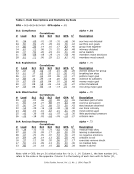
If, as reported in Dole et al. (1993), the Critics were negative about the New Age, what
aspects specifically concerned them strongly? They singled out mandated New Age techniques
for employees, the lack of scientific evidence supporting most New Age concepts, and
channeling. They also agreed that the New Age movement had “a strong potential for the
development of cultic modes of relating” and that it is dangerous. “Thinking that one is God”
is ridiculous, a narcissistic delusion, and spiritual arrogance. They disagreed very strongly with
such conceptions attributed to the New Age as
There is no sin.
Spiritually advanced people succeed at everything they attempt.
Mankind is at the threshold of a great evolutionary leap of consciousness.
If people really understood the New Age they would become part of it.
They disapproved of spiritual exercises, channeling, and astrology. They rejected the
following, taken verbatim in the majority of instances from self-identified New Age books,
periodicals, brochures, and advertisements:
Failure can be avoided if one understands life properly.
An energy or force ...will lead to a happy, peaceful new world.
People are totally responsible for everything that has happened to them.
Mankind is at the threshold of a great evolutionary leap of consciousness to new
beliefs.
In the final analysis, reality is agreement.
Sin is simply a learning experience.
The effectiveness of an action depends on the person evaluating it.
Truth depends solely on the individual‟s perspective.
When people disagree they almost always agree at a deeper level.
If everyone had his consciousness raised, the world would be at peace.
In other words, the Critics gave almost no support to statements reflecting moral relativism or
belief in powerful forces and heightened consciousness as paths to happiness and peace.
Incidentally, a nonsense statement about “holistic channeling of the kundalini” drew the
rather typical rejection by the critics in contrast to the “neutral/cannot say” response of the
Experts.
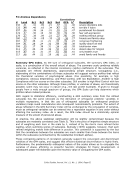
Although the Experts on average avoided the extremes of agreement or disagreement, they
did agree that “Raising individual consciousness is necessary to save the world,” and
“Fundamental breakthrough insights tap an innate capacity of the unconscious which all can
learn to apply” and they rejected “Life has no purpose.” Thus, the Expert panel seemed
rather optimistic they were neutral (2.80) in respect to the cult-associated Forum, which the
Critics considered a “rip-off.”
That there was considerable variation in Experts‟ ratings of statements (and, therefore, more
discernment than Critics might be inclined to attribute to Experts) is revealed by the
substantial minority, and in one case a majority, of Experts who agreed with Critics on items
such as the following:
New Age techniques when mandated for all employees are an invasion of privacy
(rated agree by 97% of Critics and 71% of Experts).
Channeling is a fraud (86% of Critics agree 20% of Experts).
Most New Age concepts are not supported by scientific evidence (91% of Critics
agree 33% of Experts).
In the New Age movement the combination of Eastern mysticism, experimental
approaches to psychotechnology, the emphasis on experience, the desire for
transformation, and the profit motivation combine to create a strong potential for
the development of cultic modes of relating (72% of Critics agree 47% of
If, as reported in Dole et al. (1993), the Critics were negative about the New Age, what
aspects specifically concerned them strongly? They singled out mandated New Age techniques
for employees, the lack of scientific evidence supporting most New Age concepts, and
channeling. They also agreed that the New Age movement had “a strong potential for the
development of cultic modes of relating” and that it is dangerous. “Thinking that one is God”
is ridiculous, a narcissistic delusion, and spiritual arrogance. They disagreed very strongly with
such conceptions attributed to the New Age as
There is no sin.
Spiritually advanced people succeed at everything they attempt.
Mankind is at the threshold of a great evolutionary leap of consciousness.
If people really understood the New Age they would become part of it.
They disapproved of spiritual exercises, channeling, and astrology. They rejected the
following, taken verbatim in the majority of instances from self-identified New Age books,
periodicals, brochures, and advertisements:
Failure can be avoided if one understands life properly.
An energy or force ...will lead to a happy, peaceful new world.
People are totally responsible for everything that has happened to them.
Mankind is at the threshold of a great evolutionary leap of consciousness to new
beliefs.
In the final analysis, reality is agreement.
Sin is simply a learning experience.
The effectiveness of an action depends on the person evaluating it.
Truth depends solely on the individual‟s perspective.
When people disagree they almost always agree at a deeper level.
If everyone had his consciousness raised, the world would be at peace.
In other words, the Critics gave almost no support to statements reflecting moral relativism or
belief in powerful forces and heightened consciousness as paths to happiness and peace.
Incidentally, a nonsense statement about “holistic channeling of the kundalini” drew the
rather typical rejection by the critics in contrast to the “neutral/cannot say” response of the
Experts.
Although the Experts on average avoided the extremes of agreement or disagreement, they
did agree that “Raising individual consciousness is necessary to save the world,” and
“Fundamental breakthrough insights tap an innate capacity of the unconscious which all can
learn to apply” and they rejected “Life has no purpose.” Thus, the Expert panel seemed
rather optimistic they were neutral (2.80) in respect to the cult-associated Forum, which the
Critics considered a “rip-off.”
That there was considerable variation in Experts‟ ratings of statements (and, therefore, more
discernment than Critics might be inclined to attribute to Experts) is revealed by the
substantial minority, and in one case a majority, of Experts who agreed with Critics on items
such as the following:
New Age techniques when mandated for all employees are an invasion of privacy
(rated agree by 97% of Critics and 71% of Experts).
Channeling is a fraud (86% of Critics agree 20% of Experts).
Most New Age concepts are not supported by scientific evidence (91% of Critics
agree 33% of Experts).
In the New Age movement the combination of Eastern mysticism, experimental
approaches to psychotechnology, the emphasis on experience, the desire for
transformation, and the profit motivation combine to create a strong potential for
the development of cultic modes of relating (72% of Critics agree 47% of