Cultic Studies Journal, Vol. 11, No. 1, 1994, Page 64
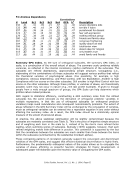
#254), information and time are controlled (#261, #290), a childlike dependency is enforced
(#301).
We had considered naming this factor “manipulation” but decided the term was too general.
The items in this factor seem to be pointing to a special kind of manipulation in which the
manipulator seeks not only compliance on some dimension (as would an ordinary con man)
but personal dominance as well. Given that the second- and third-highest loadings were
“mind control used” (#24) and “group used coercive persuasion” (#11), we concluded that
“mind control” was an appropriate label for this factor.
Anxious Dependency. At first, the items in this factor seemed rather disparate, and we
wondered if the factor had a coherent meaning. Terms that came to mind included
“exclusivity,” “dependency,” “isolation,” “totalism,” and “fear.” Eventually, “anxious
dependency” seemed most effectively to summarize this factor. This conclusion was based
partly on clinical observations, partly on empirical findings (Martin, Langone, Dole, &Wiltrout,
1992), and partly on theoretical reasoning. An article by Craig and Weathers (1990) on
archetypal dependency in cult members was particularly helpful in illuminating the
psychological dynamics reflected in the simple and complex items of the subscales.
Craig and Weathers pointed out that the dependency of the member on the group extends
beyond physical levels to deep psychological and spiritual needs. This dependency resembles
the unconditional archetypal bond between an infant and a parent. Upon leaving the group,
the member is thrown into severe separation anxiety. The highest-loading item in the
subscale (leaving group means eternal damnation, #07) reflects both the absolute
dependency on the group and the anxiety associated with that dependency. Although
dependency is often associated with anxiety (because one tends to fear losing that on which
one is dependent), this connection is not always necessary (e.g., one may realistically depend
on a person for certain things and feel reasonably secure in that relationship). In a cult
situation, however, dependency can be absolute and fear tends to color all experiences
(except perhaps in the early “honeymoon” phase of recruitment/ seduction).
As a way of consolidating absolute dependency, negative emotions toward the group (#08)
are rejected, thus contributing to the numinosity of the archetypal possession (Jung, 1972,
1973 Stein, 1984). The archetypal inflation of the leader reaches its ultimate rarefied
expression in the leader‟s supposed divinity (#23). Through apotheosis, the leader becomes
like an all-powerful parent. The member, although mortal, is among the elite children of god.
Between the divine and the elite mortal, however, stands an infinite “competency gulf,”
untraversable by the ever-groping mere mortal. Smaller distances are perhaps found when an
abusing husband indoctrinates his wife to believe that she could never make it without him
(Tobias &Lalich, 1994).
The archetypal base of cultic dependency is further consolidated by the assumption that critics
of the group are under an evil power (#10) and, therefore, are to be feared and avoided by
those remaining dependent on the group. In extreme cases, not even the medical
establishment is to be trusted (#05 and #15).
Most of the excluded items also reflect an explicit or implicit anxious dependency--for
example, items #257 (punishment for dissent), #315 (only leaders true), and #317 (avoid
family and friends), which among the complex items have the three highest loadings on this
factor.
An empirical definition of cult. Emerging from this analysis is an empirically based
definition of cultism that seems to be concise and consistent with the views of most clinicians
who have worked with cult victims:
Cults are groups that often exploit members psychologically and/or financially,
typically by making members comply with leadership‟s demands through certain
#254), information and time are controlled (#261, #290), a childlike dependency is enforced
(#301).
We had considered naming this factor “manipulation” but decided the term was too general.
The items in this factor seem to be pointing to a special kind of manipulation in which the
manipulator seeks not only compliance on some dimension (as would an ordinary con man)
but personal dominance as well. Given that the second- and third-highest loadings were
“mind control used” (#24) and “group used coercive persuasion” (#11), we concluded that
“mind control” was an appropriate label for this factor.
Anxious Dependency. At first, the items in this factor seemed rather disparate, and we
wondered if the factor had a coherent meaning. Terms that came to mind included
“exclusivity,” “dependency,” “isolation,” “totalism,” and “fear.” Eventually, “anxious
dependency” seemed most effectively to summarize this factor. This conclusion was based
partly on clinical observations, partly on empirical findings (Martin, Langone, Dole, &Wiltrout,
1992), and partly on theoretical reasoning. An article by Craig and Weathers (1990) on
archetypal dependency in cult members was particularly helpful in illuminating the
psychological dynamics reflected in the simple and complex items of the subscales.
Craig and Weathers pointed out that the dependency of the member on the group extends
beyond physical levels to deep psychological and spiritual needs. This dependency resembles
the unconditional archetypal bond between an infant and a parent. Upon leaving the group,
the member is thrown into severe separation anxiety. The highest-loading item in the
subscale (leaving group means eternal damnation, #07) reflects both the absolute
dependency on the group and the anxiety associated with that dependency. Although
dependency is often associated with anxiety (because one tends to fear losing that on which
one is dependent), this connection is not always necessary (e.g., one may realistically depend
on a person for certain things and feel reasonably secure in that relationship). In a cult
situation, however, dependency can be absolute and fear tends to color all experiences
(except perhaps in the early “honeymoon” phase of recruitment/ seduction).
As a way of consolidating absolute dependency, negative emotions toward the group (#08)
are rejected, thus contributing to the numinosity of the archetypal possession (Jung, 1972,
1973 Stein, 1984). The archetypal inflation of the leader reaches its ultimate rarefied
expression in the leader‟s supposed divinity (#23). Through apotheosis, the leader becomes
like an all-powerful parent. The member, although mortal, is among the elite children of god.
Between the divine and the elite mortal, however, stands an infinite “competency gulf,”
untraversable by the ever-groping mere mortal. Smaller distances are perhaps found when an
abusing husband indoctrinates his wife to believe that she could never make it without him
(Tobias &Lalich, 1994).
The archetypal base of cultic dependency is further consolidated by the assumption that critics
of the group are under an evil power (#10) and, therefore, are to be feared and avoided by
those remaining dependent on the group. In extreme cases, not even the medical
establishment is to be trusted (#05 and #15).
Most of the excluded items also reflect an explicit or implicit anxious dependency--for
example, items #257 (punishment for dissent), #315 (only leaders true), and #317 (avoid
family and friends), which among the complex items have the three highest loadings on this
factor.
An empirical definition of cult. Emerging from this analysis is an empirically based
definition of cultism that seems to be concise and consistent with the views of most clinicians
who have worked with cult victims:
Cults are groups that often exploit members psychologically and/or financially,
typically by making members comply with leadership‟s demands through certain