Cultic Studies Journal, Vol. 11, No. 1, 1994, Page 65
types of psychological manipulation, popularly called mind control, and through the
inculcation of deep-seated anxious dependency on the group and its leaders.
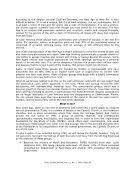
It is important to remember that the conjugation of subscales may produce GPA profiles that
vary from the set of related profiles that would fall within this definition of “cult.” Rational
analysis and empirical investigations (e.g., discriminant analysis) of the spectrum of profiles
can result in a classification system for the varieties of psychological abuse, with “cult” being
one of many possible categories within this system.
Discrimination and Variations on the Theme of Abuse
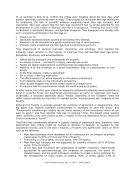
Although noncultic groups were not included in the study, a sense of the GPA‟s discriminatory
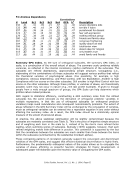
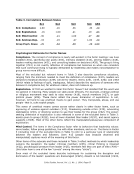
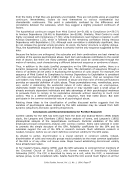
power may be gleaned by comparing the means of the scales with the ranges of ratings. The
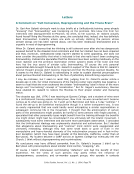
means and standard deviations of the items and subscales (see Table 4) suggest that, on
average, most of the cults score positively on the four types of abuse. We define positivity by
reference to the midpoints of the possibilities. The midpoint of the items‟ rating range is 3.
The subscales‟ midpoint is 3x7=21. The GPA summary scale midpoint is 21x4=84. A positive
score implies that the means fall above their respective midpoints. That is, they indicate a
rating of characteristic to very characteristic.
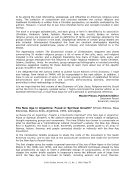
The mean for the GPA scale was 110.70. A t-test comparing this mean with the midpoint of
84 was significant: t=31.98, df=264 (due to missing values), p.0001. Thus, the summary
scale falls well within the positive range of the GPA scores. The subscale means also fell above
their midpoints, but they differed substantially from one another. In order to compare the
subscale means with one another and their midpoints, the subscales were treated as
hypothetical levels in an analysis of variance. The Duncan multiple-range test showed that the
scales differed significantly from one another: F=150.25, df=3, 1129, p.0001.
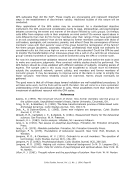
The Exploitation scale mean of 22.88 was the lowest. Its 95% confidence range was 22.18 to
23.59, placing it and the other scales above their midpoint of 21. The mean for Anxious
Dependency was the next highest: m=26.48 its 95% confidence range was 25.83 to 27.13.
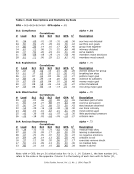
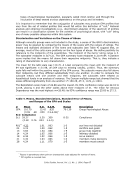
Table 4. Means, Standard Deviations, Standard Error of Means,
and Ranges of the GPA and Scales
#Mean S.D. S.E.M. Range Description
GPA 110.70 13.42 .835 70-139 Group Psychological Abuse
(3.95 .48 .030 2.5-4.96)*
Sc1: Compliance
Sc1 29.27 5.30 .309 8-35 Compliance
(4.18 0.76 .044 1.1-5)
R01** 4.22 1.01 .063 1-5 sex lives not dictated
04 4.19 1.00 .062 1-5 sacrifice own goals
13 3.82 1.34 .084 1-5 group lives together
14 4.24 1.05 .066 1-5 intimacy dictated
18 4.34 1.02 .064 1-5 serve leaders
21 4.35 1.04 .065 1-5 members make decisions
28 4.24 1.11 .070 1-5 members must consult
*Figures in parentheses show point on characteristic scale adjusted for number of items.
**?R? signifies a reversed item.
types of psychological manipulation, popularly called mind control, and through the
inculcation of deep-seated anxious dependency on the group and its leaders.
It is important to remember that the conjugation of subscales may produce GPA profiles that
vary from the set of related profiles that would fall within this definition of “cult.” Rational
analysis and empirical investigations (e.g., discriminant analysis) of the spectrum of profiles
can result in a classification system for the varieties of psychological abuse, with “cult” being
one of many possible categories within this system.
Discrimination and Variations on the Theme of Abuse
Although noncultic groups were not included in the study, a sense of the GPA‟s discriminatory
power may be gleaned by comparing the means of the scales with the ranges of ratings. The
means and standard deviations of the items and subscales (see Table 4) suggest that, on
average, most of the cults score positively on the four types of abuse. We define positivity by
reference to the midpoints of the possibilities. The midpoint of the items‟ rating range is 3.
The subscales‟ midpoint is 3x7=21. The GPA summary scale midpoint is 21x4=84. A positive
score implies that the means fall above their respective midpoints. That is, they indicate a
rating of characteristic to very characteristic.
The mean for the GPA scale was 110.70. A t-test comparing this mean with the midpoint of
84 was significant: t=31.98, df=264 (due to missing values), p.0001. Thus, the summary
scale falls well within the positive range of the GPA scores. The subscale means also fell above
their midpoints, but they differed substantially from one another. In order to compare the
subscale means with one another and their midpoints, the subscales were treated as
hypothetical levels in an analysis of variance. The Duncan multiple-range test showed that the
scales differed significantly from one another: F=150.25, df=3, 1129, p.0001.
The Exploitation scale mean of 22.88 was the lowest. Its 95% confidence range was 22.18 to
23.59, placing it and the other scales above their midpoint of 21. The mean for Anxious
Dependency was the next highest: m=26.48 its 95% confidence range was 25.83 to 27.13.
Table 4. Means, Standard Deviations, Standard Error of Means,
and Ranges of the GPA and Scales
#Mean S.D. S.E.M. Range Description
GPA 110.70 13.42 .835 70-139 Group Psychological Abuse
(3.95 .48 .030 2.5-4.96)*
Sc1: Compliance
Sc1 29.27 5.30 .309 8-35 Compliance
(4.18 0.76 .044 1.1-5)
R01** 4.22 1.01 .063 1-5 sex lives not dictated
04 4.19 1.00 .062 1-5 sacrifice own goals
13 3.82 1.34 .084 1-5 group lives together
14 4.24 1.05 .066 1-5 intimacy dictated
18 4.34 1.02 .064 1-5 serve leaders
21 4.35 1.04 .065 1-5 members make decisions
28 4.24 1.11 .070 1-5 members must consult
*Figures in parentheses show point on characteristic scale adjusted for number of items.
**?R? signifies a reversed item.