Cultic Studies Journal, Vol. 11, No. 1, 1994, Page 58
Results
Principal components analysis with varimax rotation revealed four interpretable factors, each
with eigenvalues greater than 3. The analysis was restricted to components with eigenvalues
greater than 3 (as opposed to the Kaiser criterion of 1) because the smaller components
contained few items loading substantially (.30 or larger) and because the items failed to be
conceptually interpretable. Eigenvalues for the first four components were 20.21, 5.33, 3.72,
and 3.64 respectively, accounting for 29.4% of the total variance. Four is probably an
underestimate of the number of dimensions of abuse. Our conservative selection, however,
provides more confidence in the validity of the dimensions that we do interpret.
The strategy for scale development was to choose items that loaded substantially on the
factors, assuming that the scales made up of such items would reflect the factors from which
they were chosen. The scale scores were the sum of the ratings originally given on the item
by the subject.
Seventy-five of the 112 items loaded substantially on one or more of the four retained
factors. The large number of substantial loadings facilitated identification of the factors. The
fact that most items loaded on more than one factor, however, considerably narrowed the
pool of items for inclusion in the scales. We sought to use items that loaded substantially on
only one of the four factors in order to increase the unidimensionality, and thus
interpretability, of the scales. An equal number of items per factor/subscale were chosen in
order to facilitate scale comparisons.
We settled on 7 items per subscale, with a total of 28 (or 4x7) items in the summary Group
Psychological Abuse (GPA) scale (see Appendix A). Thus, each subscale could produce scores
from 7 to 35, while the GPA index, as the summary index of psychological abuse, could range
from 28 to 140.
Analysis of the loadings of the items on the factors suggested the following labels:
Compliance, Exploitation, Mind Control, and Anxious Dependency (the rationale for these
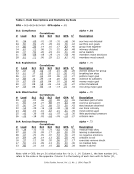
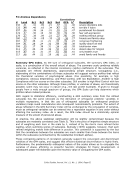
labels will be provided later). Table 1 includes the abbreviated items for each subscale.
Included is the loading of each item on its factor, the correlation of the items with the
subscale total scores, the correlation of the items with the summary GPA scale, and the
communalities (proportion of variance explained) for items across the four factors. (An
identical factor analysis based on these 28 items revealed the same factor structure. The four
factors accounted for 42% of the variance.)
Alpha coefficients are included for each subscale. Alpha for the GPA summary scale was .81.
Alphas for the subscales were .81 for Compliance .75 for Exploitation .70 for Mind Control
and .72 for Anxious Dependency. These reliabilities are sufficient for research purposes.
Results
Principal components analysis with varimax rotation revealed four interpretable factors, each
with eigenvalues greater than 3. The analysis was restricted to components with eigenvalues
greater than 3 (as opposed to the Kaiser criterion of 1) because the smaller components
contained few items loading substantially (.30 or larger) and because the items failed to be
conceptually interpretable. Eigenvalues for the first four components were 20.21, 5.33, 3.72,
and 3.64 respectively, accounting for 29.4% of the total variance. Four is probably an
underestimate of the number of dimensions of abuse. Our conservative selection, however,
provides more confidence in the validity of the dimensions that we do interpret.
The strategy for scale development was to choose items that loaded substantially on the
factors, assuming that the scales made up of such items would reflect the factors from which
they were chosen. The scale scores were the sum of the ratings originally given on the item
by the subject.
Seventy-five of the 112 items loaded substantially on one or more of the four retained
factors. The large number of substantial loadings facilitated identification of the factors. The
fact that most items loaded on more than one factor, however, considerably narrowed the
pool of items for inclusion in the scales. We sought to use items that loaded substantially on
only one of the four factors in order to increase the unidimensionality, and thus
interpretability, of the scales. An equal number of items per factor/subscale were chosen in
order to facilitate scale comparisons.
We settled on 7 items per subscale, with a total of 28 (or 4x7) items in the summary Group
Psychological Abuse (GPA) scale (see Appendix A). Thus, each subscale could produce scores
from 7 to 35, while the GPA index, as the summary index of psychological abuse, could range
from 28 to 140.
Analysis of the loadings of the items on the factors suggested the following labels:
Compliance, Exploitation, Mind Control, and Anxious Dependency (the rationale for these
labels will be provided later). Table 1 includes the abbreviated items for each subscale.
Included is the loading of each item on its factor, the correlation of the items with the
subscale total scores, the correlation of the items with the summary GPA scale, and the
communalities (proportion of variance explained) for items across the four factors. (An
identical factor analysis based on these 28 items revealed the same factor structure. The four
factors accounted for 42% of the variance.)
Alpha coefficients are included for each subscale. Alpha for the GPA summary scale was .81.
Alphas for the subscales were .81 for Compliance .75 for Exploitation .70 for Mind Control
and .72 for Anxious Dependency. These reliabilities are sufficient for research purposes.