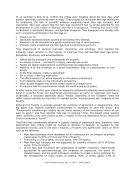
Cultic Studies Journal, Vol. 11, No. 1, 1994, Page 48
More Than the Devil’s Due
Adrian J. Reimers, Ph.D.
Free Again in Christ
South Bend, Indiana
Abstract
Although mainstream religious groups tend to discount or minimize belief in the devil
and evil spirits, fundamentalists, charismatics, shepherding/discipleship groups, and
Bible-based cults do not. Indeed, in some groups, an emphasis on the devil and/or
evil spirits becomes a tool for the manipulation of consciences. In the People of
Praise, which this article uses as an example, a heightened fear of the devil or evil
spirits can be used to (a) put pressure on wavering members to stay in the group,
(b) elevate the importance of the group and its leaders, (c) enhance the leaders‟
control of the membership by reinforcing the notion that Satan can even work
through good people and only the leaders can discern his designs, and (d) undermine
members‟ confidence in their own judgment, especially about spiritual development.
The fears inculcated in members can cause considerable psychological distress when
they ultimately leave their groups.
I never knew I was a sexual pervert --not until the leader of our covenant community and
his wife prayed with me for deliverance. During this prayer in our living room the leader
discerned that for most of my life I had been unknowingly oppressed by an evil spirit, a
spirit of sexual perversion. I had never acted perversely. But our leader identified this
demon, which was crippling my life in the Holy Spirit and interfering with my ability to live
and to love. When he cast the demon out, then its hitherto undetected baneful influence
was gone from my life. Like every other member of our covenant community, I was made
dramatically and intimately aware of the deceptions and power of the devil to ruin my
Christian life.
Belief in the reality of the devil and of evil spirits dates from the very beginnings of
Christianity, but is now largely forgotten among Western Christians. Christians today rarely
hear their parish priest or minister refer to the devil or to spiritual combat with him. Many
regard evil spirits as little more than vestiges of a more primitive, unenlightened
Christianity. In fundamentalist circles, on the other hand, as well as in charismatic
movements within both Catholic and Protestant churches, firm belief in the reality of and
dangers represented by evil spirits persists. And in Bible-based cults,
shepherding/discipleship groups, and covenant communities this emphasis-or rather one
form of this emphasis-has become a tool for the manipulation of consciences.
In the wake of a powerful conversion experience, belief in the devil often becomes part and
parcel of a newfound faith in Christianity as a religion of the supernatural and the
miraculous. With this comes a certain mistrust of the institutional Church, which should
have taught about the devil but did not. A defect of faith is thus seen in the home parish.
The pastor has nothing to say about the devil therefore, I must learn from someone else
who knows and understands. Charismatic leaders purport to provide much expertise, which
institutional leaders lack.
Classically, the work of Satan has been understood-from the early Church Fathers to C.S.
Lewis‟s Screwtape Letters--to consist of temptations to sin. The devil‟s principal activity is
not to ruin our plans and frustrate our desires but to induce us to sin. It matters not
whether the sin be a spectacular one of mass murder or a quiet one of pride. The devil
tempts to sin. In the light of this, Christian teachers have recommended certain antidotes to
More Than the Devil’s Due
Adrian J. Reimers, Ph.D.
Free Again in Christ
South Bend, Indiana
Abstract
Although mainstream religious groups tend to discount or minimize belief in the devil
and evil spirits, fundamentalists, charismatics, shepherding/discipleship groups, and
Bible-based cults do not. Indeed, in some groups, an emphasis on the devil and/or
evil spirits becomes a tool for the manipulation of consciences. In the People of
Praise, which this article uses as an example, a heightened fear of the devil or evil
spirits can be used to (a) put pressure on wavering members to stay in the group,
(b) elevate the importance of the group and its leaders, (c) enhance the leaders‟
control of the membership by reinforcing the notion that Satan can even work
through good people and only the leaders can discern his designs, and (d) undermine
members‟ confidence in their own judgment, especially about spiritual development.
The fears inculcated in members can cause considerable psychological distress when
they ultimately leave their groups.
I never knew I was a sexual pervert --not until the leader of our covenant community and
his wife prayed with me for deliverance. During this prayer in our living room the leader
discerned that for most of my life I had been unknowingly oppressed by an evil spirit, a
spirit of sexual perversion. I had never acted perversely. But our leader identified this
demon, which was crippling my life in the Holy Spirit and interfering with my ability to live
and to love. When he cast the demon out, then its hitherto undetected baneful influence
was gone from my life. Like every other member of our covenant community, I was made
dramatically and intimately aware of the deceptions and power of the devil to ruin my
Christian life.
Belief in the reality of the devil and of evil spirits dates from the very beginnings of
Christianity, but is now largely forgotten among Western Christians. Christians today rarely
hear their parish priest or minister refer to the devil or to spiritual combat with him. Many
regard evil spirits as little more than vestiges of a more primitive, unenlightened
Christianity. In fundamentalist circles, on the other hand, as well as in charismatic
movements within both Catholic and Protestant churches, firm belief in the reality of and
dangers represented by evil spirits persists. And in Bible-based cults,
shepherding/discipleship groups, and covenant communities this emphasis-or rather one
form of this emphasis-has become a tool for the manipulation of consciences.
In the wake of a powerful conversion experience, belief in the devil often becomes part and
parcel of a newfound faith in Christianity as a religion of the supernatural and the
miraculous. With this comes a certain mistrust of the institutional Church, which should
have taught about the devil but did not. A defect of faith is thus seen in the home parish.
The pastor has nothing to say about the devil therefore, I must learn from someone else
who knows and understands. Charismatic leaders purport to provide much expertise, which
institutional leaders lack.
Classically, the work of Satan has been understood-from the early Church Fathers to C.S.
Lewis‟s Screwtape Letters--to consist of temptations to sin. The devil‟s principal activity is
not to ruin our plans and frustrate our desires but to induce us to sin. It matters not
whether the sin be a spectacular one of mass murder or a quiet one of pride. The devil
tempts to sin. In the light of this, Christian teachers have recommended certain antidotes to