Cultic Studies Journal, Vol. 6, No. 1, 1989, Page 81
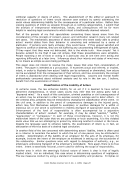
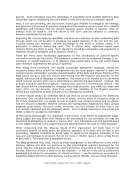
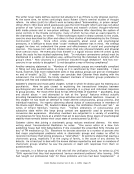
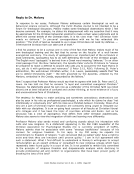
Many of Professor Malony‟s colleagues-in-interest have also received monetary and
other forms of assistance from these “strange bedfellows.” Respected professionals and
academicians have questioned whether such alliances do not in fact erode the scientific
objectivity and credibility that Malony talks about (see Irving Louis Horowitz, ed.,
Science, Sin, and Scholarship). He castigates me for aligning with the so-called “anti-cult”
movement while he accepts professional fees from a new religious group which regularly
deplores the psychiatric profession and whose leaders have been found guilty of
serious crimes. He is the “objective” psychologist who “takes his religion seriously”
while I am seen as the sociologist who promotes my personal value judgments
“disguised in scientific jargon.” Let him who is without bias cast the first stone!
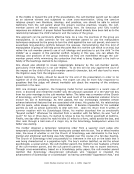
While I may (and do) question Professor Malony‟s judgment both as a psychologist and
as a Christian believer with regard to his continuing association with “strange
bedfellows,” I want to affirm his right to those associations and his right to question the
scientific validity of the research and expert testimony of those persons whom he terms
“anti-cult social behavioral scientists.” But I totally reject his implied, if not stated,
conclusions that those of us who differ from him are less than scholarly in our work, or
are not supportive of religious liberty, or are somehow anti-religious in our orientation.
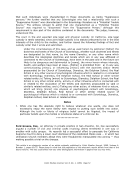
In conclusion, I should like to reiterate for Professor Malony and the readers of the Cultic
Studies Journal something I stated in my book The Lure of the Cults &New Religions (p. 35):
“A negative evaluation of any given group does not mean a lack of commitment on the part
of the author to religious freedom and the right of any group to freely promote its beliefs. ...
The same First amendment which provides freedom of religion for all, however, also protects
the right of free speech, including the right to critique and disagree with the religious beliefs
and practices of others. Negative evaluation is not a synonym for attack and opposing opinion
should not be reinterpreted as „anti-religious‟ or cited as evidence of intolerance...”
Ronald Enroth
Professor of Sociology Westmont College
Santa Barbara, California
Many of Professor Malony‟s colleagues-in-interest have also received monetary and
other forms of assistance from these “strange bedfellows.” Respected professionals and
academicians have questioned whether such alliances do not in fact erode the scientific
objectivity and credibility that Malony talks about (see Irving Louis Horowitz, ed.,
Science, Sin, and Scholarship). He castigates me for aligning with the so-called “anti-cult”
movement while he accepts professional fees from a new religious group which regularly
deplores the psychiatric profession and whose leaders have been found guilty of
serious crimes. He is the “objective” psychologist who “takes his religion seriously”
while I am seen as the sociologist who promotes my personal value judgments
“disguised in scientific jargon.” Let him who is without bias cast the first stone!
While I may (and do) question Professor Malony‟s judgment both as a psychologist and
as a Christian believer with regard to his continuing association with “strange
bedfellows,” I want to affirm his right to those associations and his right to question the
scientific validity of the research and expert testimony of those persons whom he terms
“anti-cult social behavioral scientists.” But I totally reject his implied, if not stated,
conclusions that those of us who differ from him are less than scholarly in our work, or
are not supportive of religious liberty, or are somehow anti-religious in our orientation.
In conclusion, I should like to reiterate for Professor Malony and the readers of the Cultic
Studies Journal something I stated in my book The Lure of the Cults &New Religions (p. 35):
“A negative evaluation of any given group does not mean a lack of commitment on the part
of the author to religious freedom and the right of any group to freely promote its beliefs. ...
The same First amendment which provides freedom of religion for all, however, also protects
the right of free speech, including the right to critique and disagree with the religious beliefs
and practices of others. Negative evaluation is not a synonym for attack and opposing opinion
should not be reinterpreted as „anti-religious‟ or cited as evidence of intolerance...”
Ronald Enroth
Professor of Sociology Westmont College
Santa Barbara, California