Cultic Studies Journal, Vol. 6, No. 1, 1989, Page 80
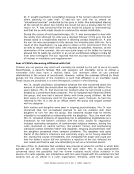
Reply to Dr. Malony
In response to my essay, Professor Malony addresses certain theological as well as
behavioral science concerns. Although the Cultic Studies Journal is not intended to be a
forum for theological discussion, Malony makes some theological observations which I feel
deserve comment. For example, he states his disagreement with my assertion that it may
be appropriate for the Christian behavioral scientist to make certain value judgments and to
affirm the central beliefs of the Christian faith. It is his view that “the Christian faith
needs no defense.” In personal correspondence with me he has reiterated this
position: “The truth of God as revealed to us in Jesus Christ does not need my defense. ...
I feel that the Christian faith can take care of itself.”
I find his position to be a curious one in view of the fact that Malony makes much of his
own theological training and the fact that he serves on the faculty of a well-known
evangelical seminary. The study of apologetics is an important part of the curriculum in
most seminaries. Apologetics has to do with defending the truth of the Christian gospel.
The English word “apologetic” is derived from a Greek word meaning “defense.” In an often
cited passage from the New Testament, the Apostle Peter exhorts Christians to “always
be prepared to make a defense to anyone who calls you to account for the hope that is in
you, yet do it with gentleness and reverence” (I Peter 3:15, RSV). Following St. Peter‟s
admonition, the well-known Christian writer, C.S. Lewis, passionately asserts that “We
are to defend Christianity itself --the faith preached by the Apostles, attested by the
Martyrs, embodied in the Creeds, expounded by the fathers.”
Now I suspect that Professor Malony would say that he agrees with both St. Peter and C.S.
Lewis. He has told me that he remains “a loyal and committed evangelical Christian.”
However, his statements about his own role as a defender of the Christian faith (as noted
above) are at best indicative of confused and unclear thinking, at worst evidence of a fuzzy
and unconventional form of Christianity.
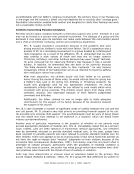
The tendency for Malony to make confusing and sometimes contradictory observations can
also be seen in his role as professional psychologist, a role which he claims he does “not
intentionally or consciously mix” with his roles as a Christian believer. Ironically, those of us
who are a part of Christian higher education are constantly being urged to integrate our
faith with our disciplines. It is an on-going focal concern of all faculty at Christian liberal
arts colleges and it has been the topic of countless articles and books. Just as he
obviously has a view of apologetics that differs from other Christian academicians,
Malony also seems to view the integration of faith and learning very differently.
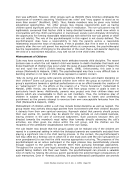
Professor Malony also sends mixed and confusing signals about his interaction with
cults and new religions. In a statement appearing in the Fall 1989 newsletter of the
Christian Association for Psychological Studies (he is currently president of CAPS),
Malony admits that he associates with some “strange bedfellows” because of his
concern for religious freedom. In his reply to my CSJ essay he repeats his
commitment to freedom of religion: “I am convinced that so-called „cults‟ have a right to
exist and that they are innocent until proven guilty.” I am in full agreement with
such a statement. What I find difficult to understand is Malony‟s willingness to accept
remuneration as an expert witness or consultant to new religious groups which have
repeatedly been found guilty in a court of law. Is it not possible to remain fully committed
to the principle of religious freedom and dispassionate analysis while declining to
provide professional aid and comfort to organizations that have been proven guilty of
breaking the laws of the land?
Reply to Dr. Malony
In response to my essay, Professor Malony addresses certain theological as well as
behavioral science concerns. Although the Cultic Studies Journal is not intended to be a
forum for theological discussion, Malony makes some theological observations which I feel
deserve comment. For example, he states his disagreement with my assertion that it may
be appropriate for the Christian behavioral scientist to make certain value judgments and to
affirm the central beliefs of the Christian faith. It is his view that “the Christian faith
needs no defense.” In personal correspondence with me he has reiterated this
position: “The truth of God as revealed to us in Jesus Christ does not need my defense. ...
I feel that the Christian faith can take care of itself.”
I find his position to be a curious one in view of the fact that Malony makes much of his
own theological training and the fact that he serves on the faculty of a well-known
evangelical seminary. The study of apologetics is an important part of the curriculum in
most seminaries. Apologetics has to do with defending the truth of the Christian gospel.
The English word “apologetic” is derived from a Greek word meaning “defense.” In an often
cited passage from the New Testament, the Apostle Peter exhorts Christians to “always
be prepared to make a defense to anyone who calls you to account for the hope that is in
you, yet do it with gentleness and reverence” (I Peter 3:15, RSV). Following St. Peter‟s
admonition, the well-known Christian writer, C.S. Lewis, passionately asserts that “We
are to defend Christianity itself --the faith preached by the Apostles, attested by the
Martyrs, embodied in the Creeds, expounded by the fathers.”
Now I suspect that Professor Malony would say that he agrees with both St. Peter and C.S.
Lewis. He has told me that he remains “a loyal and committed evangelical Christian.”
However, his statements about his own role as a defender of the Christian faith (as noted
above) are at best indicative of confused and unclear thinking, at worst evidence of a fuzzy
and unconventional form of Christianity.
The tendency for Malony to make confusing and sometimes contradictory observations can
also be seen in his role as professional psychologist, a role which he claims he does “not
intentionally or consciously mix” with his roles as a Christian believer. Ironically, those of us
who are a part of Christian higher education are constantly being urged to integrate our
faith with our disciplines. It is an on-going focal concern of all faculty at Christian liberal
arts colleges and it has been the topic of countless articles and books. Just as he
obviously has a view of apologetics that differs from other Christian academicians,
Malony also seems to view the integration of faith and learning very differently.
Professor Malony also sends mixed and confusing signals about his interaction with
cults and new religions. In a statement appearing in the Fall 1989 newsletter of the
Christian Association for Psychological Studies (he is currently president of CAPS),
Malony admits that he associates with some “strange bedfellows” because of his
concern for religious freedom. In his reply to my CSJ essay he repeats his
commitment to freedom of religion: “I am convinced that so-called „cults‟ have a right to
exist and that they are innocent until proven guilty.” I am in full agreement with
such a statement. What I find difficult to understand is Malony‟s willingness to accept
remuneration as an expert witness or consultant to new religious groups which have
repeatedly been found guilty in a court of law. Is it not possible to remain fully committed
to the principle of religious freedom and dispassionate analysis while declining to
provide professional aid and comfort to organizations that have been proven guilty of
breaking the laws of the land?