Cultic Studies Journal, Vol. 6, No. 1, 1989, Page 37
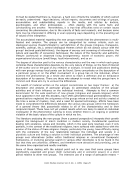
concealed from the recruit are not only central portions of the group‟s ideology, but the
meaning and object of the exercises in which he participates from the start --a meaning
and an object which are not apparent to one who is not professionally trained.
The Committee is aware of the considerable similarity existing between commonly accepted
methods of mental therapy and some of the therapeutic educational services offered in the
framework of the above mentioned organizations. Within this context situations may evolve
in which the consumers lack the tools required to examine and evaluate the nature of the
therapeutic/educational services given them. These services usually are not rendered by
competent professionals recognized in their discipline, but by individuals who are not under
the supervision of any accepted regulatory system in our society.
Some of the new groups have established front organizations, both for the purpose of
recruiting members and as a means for promoting public relations and raising funds. By
careful use of names and public presentation that camouflage their real identity, these
groups act in the name of widely accepted ideals coupled with misleading claims. A number
of groups invite, at their own expense, noted public figures and representatives of the
media to conferences on subjects of science and humanities. Their main object is apparently
to make connections which may benefit them in the future and improve their image.
It should be noted, however, that a few groups do indeed contribute to accepted social and
public causes.
The Relationship Between the Individual and Society
Partial or total dissociation from previous reference groups or from cultural roots is a
common phenomenon in the history of mankind, and in particular in the modern era. The
transition from one stage to another in the cycle of life (from childhood through adulthood
to old age) is accompanied in various cultures by signs of breaking away of one sort or
another. The young boy undergoing initiation rites may leave his mother and her children
and move in with the men. A woman who has come of age and marries may leave her
family and sometimes even her tribe, her people, and her previous place of inhabitance.
Natural disasters, wars, cultural revolutions, and social changes have from time immemorial
caused the upheaval of social structures and the distancing of family. Young Zionists who
immigrated to Israel abandoned their culture, language, parents, and families.
In the new groups, the break is not only a by-product of the individual‟s moving from one
culture to another. Some of the groups deliberately create the break as part of their policy,
as a means, or as a goal. The recruit‟s communication channels are gradually blocked and
neutralized, and increasingly replaced by communication channels within the new group.
This process can be achieved both by physical severance (for example, isolation,
monopolizing the individual‟s time) as well as psychological and communicative methods.
Obviously, the danger of this process is that the individual‟s capacity to judge, his
autonomy, and his ability to make a choice may be significantly impaired.
In some of the new groups it is possible to talk of a state of complete and utter break
between the individual who joins and previous social groupings. The greater the break from
previous natural reference groups, the more the individual is assimilated into the new
group. We are witness to a combination, in varying proportions in each group, of different
kinds of severance. The severance, even if only temporary, may in certain cases cause
difficulties in the relationship between the individual and his family and make it more
difficult for the individual who wishes to leave the group and return to former frameworks.
This severance also erodes the moral-cultural-communicative basis common to members of
the society at large. Veteran members in the new groups may develop commitment and
primary allegiance to the group or organization and its leader(s). This phenomenon has
concealed from the recruit are not only central portions of the group‟s ideology, but the
meaning and object of the exercises in which he participates from the start --a meaning
and an object which are not apparent to one who is not professionally trained.
The Committee is aware of the considerable similarity existing between commonly accepted
methods of mental therapy and some of the therapeutic educational services offered in the
framework of the above mentioned organizations. Within this context situations may evolve
in which the consumers lack the tools required to examine and evaluate the nature of the
therapeutic/educational services given them. These services usually are not rendered by
competent professionals recognized in their discipline, but by individuals who are not under
the supervision of any accepted regulatory system in our society.
Some of the new groups have established front organizations, both for the purpose of
recruiting members and as a means for promoting public relations and raising funds. By
careful use of names and public presentation that camouflage their real identity, these
groups act in the name of widely accepted ideals coupled with misleading claims. A number
of groups invite, at their own expense, noted public figures and representatives of the
media to conferences on subjects of science and humanities. Their main object is apparently
to make connections which may benefit them in the future and improve their image.
It should be noted, however, that a few groups do indeed contribute to accepted social and
public causes.
The Relationship Between the Individual and Society
Partial or total dissociation from previous reference groups or from cultural roots is a
common phenomenon in the history of mankind, and in particular in the modern era. The
transition from one stage to another in the cycle of life (from childhood through adulthood
to old age) is accompanied in various cultures by signs of breaking away of one sort or
another. The young boy undergoing initiation rites may leave his mother and her children
and move in with the men. A woman who has come of age and marries may leave her
family and sometimes even her tribe, her people, and her previous place of inhabitance.
Natural disasters, wars, cultural revolutions, and social changes have from time immemorial
caused the upheaval of social structures and the distancing of family. Young Zionists who
immigrated to Israel abandoned their culture, language, parents, and families.
In the new groups, the break is not only a by-product of the individual‟s moving from one
culture to another. Some of the groups deliberately create the break as part of their policy,
as a means, or as a goal. The recruit‟s communication channels are gradually blocked and
neutralized, and increasingly replaced by communication channels within the new group.
This process can be achieved both by physical severance (for example, isolation,
monopolizing the individual‟s time) as well as psychological and communicative methods.
Obviously, the danger of this process is that the individual‟s capacity to judge, his
autonomy, and his ability to make a choice may be significantly impaired.
In some of the new groups it is possible to talk of a state of complete and utter break
between the individual who joins and previous social groupings. The greater the break from
previous natural reference groups, the more the individual is assimilated into the new
group. We are witness to a combination, in varying proportions in each group, of different
kinds of severance. The severance, even if only temporary, may in certain cases cause
difficulties in the relationship between the individual and his family and make it more
difficult for the individual who wishes to leave the group and return to former frameworks.
This severance also erodes the moral-cultural-communicative basis common to members of
the society at large. Veteran members in the new groups may develop commitment and
primary allegiance to the group or organization and its leader(s). This phenomenon has