Cultic Studies Journal, Vol. 6, No. 1, 1989, Page 12
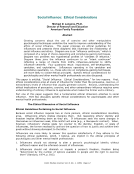
Social Influence: Ethical Considerations
Michael D. Langone, Ph.D.
Director of Research and Education
American Family Foundation
Abstract
Growing concerns about the use of coercive and other manipulative
psychological techniques underline the need to improve understanding of the
ethics of social influence. This paper proposes six ethical guidelines for
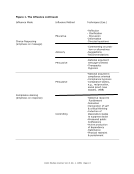
influencers and presents three diagrams that illuminate the relationship of
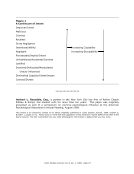
social influence and ethics. Diagram one is an “influence continuum,” which is
composed of a range of choice-respecting and compliance-gaining techniques.
Diagram two presents two hypothetical profiles of “climates of influence.”
Diagram three joins the influence continuum to an “intent continuum”
reflecting a range of intents from 100% influencee-centered to 100%
influencer-centered. Four quadrants result: inspirational, self-development,
caretaker, and exploitative. Influencers operating in the caretaker and
exploitative quadrants, i.e., those who rely on compliance-gaining techniques,
are more likely to violate ethical principles. Specific ethical considerations for
psychologists and other mental health professionals are also discussed.
This paper is entitled, “Social Influence: Ethical Considerations,” for two reasons. First,
ethical considerations arise at levels of influence far milder than the persuasive, coercive, or
extraordinary levels of influence that usually generate concern. Second, understanding the
ethical implications of persuasive, coercive, and other extraordinary influence requires some
understanding of ordinary influence to appreciate what makes the former extra ordinary.
Part one of this paper suggests that a fundamental ethical dimension attaches to social
influence. Part two discusses specific ethical considerations for psychologists and other
mental health professionals.
The Ethical Dimension of Social Influence
Ethical Guidelines Pertaining to Social Influence
Because social influence requires two or more persons, ethical considerations inevitably
arise. Influencing others implies changing them. But respecting others‟ identity and
freedom implies affirming them as they are. If influencees seek the same changes in
themselves as influencers seek, little conflict will arise (e.g., a therapeutic contract). When,
however, influencers‟ change goals run counter to the identity, freedom, or goals of
influencees, the former necessarily confront the question of how to justify and achieve their
goals without showing disrespect to the latter.
Influencers are more likely to answer this question satisfactorily if they adhere to the
following ethical guidelines, which, I believe, are implicit in the ethical principles of
psychologists and other mental health professionals
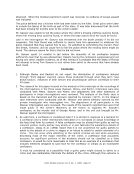
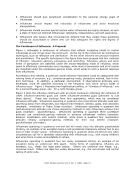
1. Influencers should not attempt to alter a person‟s psychological identity without
sufficient reason and the informed consent of influencees.
2. Influencers should not diminish or impede a person‟s freedom, freedom being
“determined by the number of options available to people and the right to exercise
them” (Bandura, 1974, p. 815).
Social Influence: Ethical Considerations
Michael D. Langone, Ph.D.
Director of Research and Education
American Family Foundation
Abstract
Growing concerns about the use of coercive and other manipulative
psychological techniques underline the need to improve understanding of the
ethics of social influence. This paper proposes six ethical guidelines for
influencers and presents three diagrams that illuminate the relationship of
social influence and ethics. Diagram one is an “influence continuum,” which is
composed of a range of choice-respecting and compliance-gaining techniques.
Diagram two presents two hypothetical profiles of “climates of influence.”
Diagram three joins the influence continuum to an “intent continuum”
reflecting a range of intents from 100% influencee-centered to 100%
influencer-centered. Four quadrants result: inspirational, self-development,
caretaker, and exploitative. Influencers operating in the caretaker and
exploitative quadrants, i.e., those who rely on compliance-gaining techniques,
are more likely to violate ethical principles. Specific ethical considerations for
psychologists and other mental health professionals are also discussed.
This paper is entitled, “Social Influence: Ethical Considerations,” for two reasons. First,
ethical considerations arise at levels of influence far milder than the persuasive, coercive, or
extraordinary levels of influence that usually generate concern. Second, understanding the
ethical implications of persuasive, coercive, and other extraordinary influence requires some
understanding of ordinary influence to appreciate what makes the former extra ordinary.
Part one of this paper suggests that a fundamental ethical dimension attaches to social
influence. Part two discusses specific ethical considerations for psychologists and other
mental health professionals.
The Ethical Dimension of Social Influence
Ethical Guidelines Pertaining to Social Influence
Because social influence requires two or more persons, ethical considerations inevitably
arise. Influencing others implies changing them. But respecting others‟ identity and
freedom implies affirming them as they are. If influencees seek the same changes in
themselves as influencers seek, little conflict will arise (e.g., a therapeutic contract). When,
however, influencers‟ change goals run counter to the identity, freedom, or goals of
influencees, the former necessarily confront the question of how to justify and achieve their
goals without showing disrespect to the latter.
Influencers are more likely to answer this question satisfactorily if they adhere to the
following ethical guidelines, which, I believe, are implicit in the ethical principles of
psychologists and other mental health professionals
1. Influencers should not attempt to alter a person‟s psychological identity without
sufficient reason and the informed consent of influencees.
2. Influencers should not diminish or impede a person‟s freedom, freedom being
“determined by the number of options available to people and the right to exercise
them” (Bandura, 1974, p. 815).