Cultic Studies Journal, Vol. 6, No. 1, 1989, Page 71
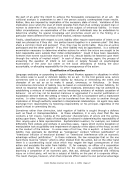
A Different Gospel. D. R. McConnell. Hendrickson, 190 pp. $7.95 paper. Reprinted
with permission from Christianity Today, March 3, 1989.
The fastest-growing segment of the modern Pentecostal/charismatic movement in America
today is made up of independent, local “Faith” or “Word” Churches. Distinct from the classic
Pentecostal denominations and the charismatic fellowships with mainline denominations,
these local churches, numbering in the thousands, have virtually all appeared within the last
20 years.
D.R. McConnell, of Oral Roberts University, believes that this vast, amorphous network of
churches is at a crossroads, created by a crisis in theology. Within the next five years, the
author contends, charismatic leadership must choose either to return to evangelical
orthodoxy, repudiating the damaging errors of the “Faith Formula” movement, or be
engulfed with a kind of teaching that can best be described as “cultic” (though McConnell
makes clear he is not prepared to declare the Faith movement a cult in the classic sense of
that term).
Faith Formula theology --attributed to a constellation of proponents such as Kenneth Hagin,
Kenneth Copeland, Fred Price, Charles Capps, and Robert Tilton --is marked by the belief
that a believer‟s verbal assertion of a desired objective, affirmed in faith, requires God to
bring that objective into being. Extreme forms of this teaching have led followers to believe
that wealth and health are the badges of faith. At the heart of the theology is the
assumption that God is required to behave in a particular way on command. For these
followers, God becomes akin to a “cosmic bellhop,” rather than the Sovereign of the
Universe. Faith teaching has become so pervasive, McConnell writes, that many
noncharismatics believe it is the authentic representation of what the entire charismatic
movement espouses.
McConnell‟s approach in A Different Gospel is to explore with care the historical influences
that have shaped Faith teaching, a task no one else has adequately accomplished. And
although he engages in careful historiography, McConnell announces in his preface that he
is not content to stand in neutral detachment as a historian normally would. Rather, out of
concern for the charismatic movement, he aims to expose the underlying errors that
threaten its theological integrity.
McConnell believes that to imply that the roots of the Faith teaching stem from the
Pentecostal movement is inaccurate, and is a distinct disservice to Pentecostals. Here he
chides Bruce Barron, in his Health and Wealth Gospel (IVP), for making this error.
McConnell‟s central thesis is that the roots of the Faith message come from other sources.
The author argues convincingly that Kenneth Hagin did not originate the teachings that bear
his name, though he was the formative influence in shaping the Faith churches. Rather, as
McConnell carefully documents, Hagin has plagiarized extensively from others, most notably
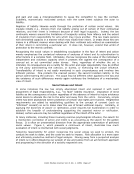
E.W. Kenyon. The first five chapters of A Different Gospel trace the historical influences
that shaped Kenyon‟s thought.
Kenyon, in fact, was strongly influenced by metaphysical cults, including Unity (New
Thought), Unitarianism, and Christian Science. A common thread in this influence on
Kenyon appears to be “mind over matter.” He introduced the concept of “Revelation
Knowledge” as a fresh way of knowing truth, superior to what he calls “Sense Knowledge.”
Some extreme Faith teachers advocate that esoteric experiences may furnish additional
truth to supplement scriptural revelation, thereby implying that such contemporary
“revelations” have apparent equal validity to the Scriptures. McConnell employs an entire
chapter to expose the cultic elements in this notion, which he refers to as a “new
gnosticism.”
A Different Gospel. D. R. McConnell. Hendrickson, 190 pp. $7.95 paper. Reprinted
with permission from Christianity Today, March 3, 1989.
The fastest-growing segment of the modern Pentecostal/charismatic movement in America
today is made up of independent, local “Faith” or “Word” Churches. Distinct from the classic
Pentecostal denominations and the charismatic fellowships with mainline denominations,
these local churches, numbering in the thousands, have virtually all appeared within the last
20 years.
D.R. McConnell, of Oral Roberts University, believes that this vast, amorphous network of
churches is at a crossroads, created by a crisis in theology. Within the next five years, the
author contends, charismatic leadership must choose either to return to evangelical
orthodoxy, repudiating the damaging errors of the “Faith Formula” movement, or be
engulfed with a kind of teaching that can best be described as “cultic” (though McConnell
makes clear he is not prepared to declare the Faith movement a cult in the classic sense of
that term).
Faith Formula theology --attributed to a constellation of proponents such as Kenneth Hagin,
Kenneth Copeland, Fred Price, Charles Capps, and Robert Tilton --is marked by the belief
that a believer‟s verbal assertion of a desired objective, affirmed in faith, requires God to
bring that objective into being. Extreme forms of this teaching have led followers to believe
that wealth and health are the badges of faith. At the heart of the theology is the
assumption that God is required to behave in a particular way on command. For these
followers, God becomes akin to a “cosmic bellhop,” rather than the Sovereign of the
Universe. Faith teaching has become so pervasive, McConnell writes, that many
noncharismatics believe it is the authentic representation of what the entire charismatic
movement espouses.
McConnell‟s approach in A Different Gospel is to explore with care the historical influences
that have shaped Faith teaching, a task no one else has adequately accomplished. And
although he engages in careful historiography, McConnell announces in his preface that he
is not content to stand in neutral detachment as a historian normally would. Rather, out of
concern for the charismatic movement, he aims to expose the underlying errors that
threaten its theological integrity.
McConnell believes that to imply that the roots of the Faith teaching stem from the
Pentecostal movement is inaccurate, and is a distinct disservice to Pentecostals. Here he
chides Bruce Barron, in his Health and Wealth Gospel (IVP), for making this error.
McConnell‟s central thesis is that the roots of the Faith message come from other sources.
The author argues convincingly that Kenneth Hagin did not originate the teachings that bear
his name, though he was the formative influence in shaping the Faith churches. Rather, as
McConnell carefully documents, Hagin has plagiarized extensively from others, most notably
E.W. Kenyon. The first five chapters of A Different Gospel trace the historical influences
that shaped Kenyon‟s thought.
Kenyon, in fact, was strongly influenced by metaphysical cults, including Unity (New
Thought), Unitarianism, and Christian Science. A common thread in this influence on
Kenyon appears to be “mind over matter.” He introduced the concept of “Revelation
Knowledge” as a fresh way of knowing truth, superior to what he calls “Sense Knowledge.”
Some extreme Faith teachers advocate that esoteric experiences may furnish additional
truth to supplement scriptural revelation, thereby implying that such contemporary
“revelations” have apparent equal validity to the Scriptures. McConnell employs an entire
chapter to expose the cultic elements in this notion, which he refers to as a “new
gnosticism.”