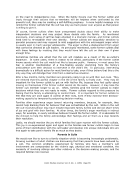
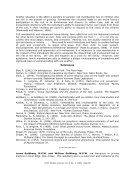
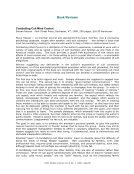
Cultic Studies Journal, Vol. 6, No. 1, 1989, Page 48
Litigating Child Custody with Religious Cults
Ford Greene, Esq.
San Anselmo, California
Abstract
Litigating child-custody or visitation disputes is a complex endeavor. Because
of the special protection the law accords religious beliefs, attorneys must
carefully collect relevant facts and use appropriate language. Without
questioning the truth or falsehood of a group‟s religious doctrines, attorneys
should try to demonstrate that the group‟s practices are physically or
psychologically detrimental to the child. Information from a variety of
sources, including teachers, school psychologists, social workers, therapists,
etc., should be considered. Several case examples are discussed.
Litigating a child-custody or visitation dispute involving a religious group presents certain
difficulties which must be recognized and handled properly. Ignore them and you will
become bogged down in the “LaBrea Tar Pit” of religious liberty disputation and do a great
disservice to clients by giving the other side a chance to obscure the real issues. As it is,
attorneys and their clients have two strikes against them before they even begin: the
universal tendency to show deference to religious groups and beliefs and a general disbelief
that ideological molding or thought reform --not simply normal social conditioning --exists.
But if attorneys can refrain from questioning the truth or falsity of a religious doctrine --
which cannot be litigated --and avoid being drawn into a “heresy” trial --which cannot be
successful --they can win a cult-related child custody dispute for a non-cult-member
spouse.
Religious activities are by law generally granted greater protection than secular ones in
matters related to the well-being of children, and more exacting judicial standards of factual
determination and burdens of proof are demanded. Fortunately, however, religious
protection is less extensive where minors are concerned. In California law, to which the
present discussion applies, a parent‟s religious ideology and practice must be
accommodated unless the best interests of the child require otherwise.
In California, a standard more exacting than the one which ordinarily refers to “the best
interests of the child” is applicable when one challenges the impact of a religious
practice/ideology on the well-being of a minor: one must affirmatively show that the
practice is “detrimental” to the mental, emotional, or physical health of the child, that, in
fact, such practices hurt the child. Further, proof must be made not simply by “a
preponderance of the evidence,” but by “clear and convincing evidence.”
The first step is to collect facts about the child‟s behavior by interviewing in detail the client
and all persons in frequent and continuing contact with the child. The goal is to determine
all of the facts of the child‟s behavioral features before, during, and after the cult influence
was brought to bear. Often the contrast is clear, with the healthier features dominating
pre-cult associations, and “acting out” and other unhealthy features coequal with the cult
influence. A temporary restraining order keeping the child from the cult parent will allow a
behavioral analysis of the child which may well demonstrate this.
Anyone with considerable first-hand contact with the child --teachers, school psychologists,
after school adult supervisors, social workers, therapists, and the like --can be a fertile
source of valuable information stemming from interactions with both the child and the
Litigating Child Custody with Religious Cults
Ford Greene, Esq.
San Anselmo, California
Abstract
Litigating child-custody or visitation disputes is a complex endeavor. Because
of the special protection the law accords religious beliefs, attorneys must
carefully collect relevant facts and use appropriate language. Without
questioning the truth or falsehood of a group‟s religious doctrines, attorneys
should try to demonstrate that the group‟s practices are physically or
psychologically detrimental to the child. Information from a variety of
sources, including teachers, school psychologists, social workers, therapists,
etc., should be considered. Several case examples are discussed.
Litigating a child-custody or visitation dispute involving a religious group presents certain
difficulties which must be recognized and handled properly. Ignore them and you will
become bogged down in the “LaBrea Tar Pit” of religious liberty disputation and do a great
disservice to clients by giving the other side a chance to obscure the real issues. As it is,
attorneys and their clients have two strikes against them before they even begin: the
universal tendency to show deference to religious groups and beliefs and a general disbelief
that ideological molding or thought reform --not simply normal social conditioning --exists.
But if attorneys can refrain from questioning the truth or falsity of a religious doctrine --
which cannot be litigated --and avoid being drawn into a “heresy” trial --which cannot be
successful --they can win a cult-related child custody dispute for a non-cult-member
spouse.
Religious activities are by law generally granted greater protection than secular ones in
matters related to the well-being of children, and more exacting judicial standards of factual
determination and burdens of proof are demanded. Fortunately, however, religious
protection is less extensive where minors are concerned. In California law, to which the
present discussion applies, a parent‟s religious ideology and practice must be
accommodated unless the best interests of the child require otherwise.
In California, a standard more exacting than the one which ordinarily refers to “the best
interests of the child” is applicable when one challenges the impact of a religious
practice/ideology on the well-being of a minor: one must affirmatively show that the
practice is “detrimental” to the mental, emotional, or physical health of the child, that, in
fact, such practices hurt the child. Further, proof must be made not simply by “a
preponderance of the evidence,” but by “clear and convincing evidence.”
The first step is to collect facts about the child‟s behavior by interviewing in detail the client
and all persons in frequent and continuing contact with the child. The goal is to determine
all of the facts of the child‟s behavioral features before, during, and after the cult influence
was brought to bear. Often the contrast is clear, with the healthier features dominating
pre-cult associations, and “acting out” and other unhealthy features coequal with the cult
influence. A temporary restraining order keeping the child from the cult parent will allow a
behavioral analysis of the child which may well demonstrate this.
Anyone with considerable first-hand contact with the child --teachers, school psychologists,
after school adult supervisors, social workers, therapists, and the like --can be a fertile
source of valuable information stemming from interactions with both the child and the