Cultic Studies Journal, Vol. 6, No. 1, 1989, Page 36
directed at a broad target populace. Since it has not yet been determined who is more or
less likely to join the new groups, the public at large is here regarded as potential
consumers, and the recruits at different stages of membership as consumers.
Particularly conspicuous is the practice of some of the groups of collecting funds from the
public on false pretenses. Members of some of the groups collect donations for their
organization without really identifying themselves, or stating some imaginary humanitarian
cause (for example, alleged help to refugees). This sort of deception is frequently justified
by the group on the basis of its ideology. Most of the groups withhold information from the
public at large, from potential recruits, and in not a few cases from some of the group
members as well. The information is camouflaged and exposed selectively to different
people.
Camouflaging of information is performed in two main spheres: a) the ideological-moral
contents of the group, its nature, its essence, and its aims, and b) the practice and learning
methodology used by the group. This situation makes obtaining true information about a
group almost impossible. Even if the Committee does not think that secrecy in itself is
wrong, there are reasonable grounds to assume that the groups use this secrecy to mislead
potential recruits and to attract them to stay for a prolonged period in the group whilst
withholding true information of the nature and duration of this stay. The recruit is actually
deprived of the ability to make an objective decision regarding his future.
Although secrecy and withholding of information may characterize other organizations as
well, these phenomena are emphasized in this section because extending the ranks
(recruiting new members) is an important and central task or mission of all of the new
groups and because, in a considerable number of cases, the recruits pay for the “services”
they receive. In the Committee‟s view, the potential consumer has a cardinal right to know
what it is that he is buying when speaking of courses and activities for a fee. This also
applies to groups which charge a fee in the form of membership dues.
In cultivating the desired image, some of the groups deliberately create obscurity in the way
they represent themselves to the public at large. They describe themselves variously as
religions, sciences, applied philosophies, study groups, therapy groups, social
revolutionaries, or any combination of the above. Moreover, the same groups may present
themselves in different ways to different audiences.
The course of a member‟s progress in a new group is often characterized by screening of
information relating to the essence of the ideology, learning, and practice procedures, the
degree and the nature of future involvement, duration of involvement, and amount of
monetary resources which will be required. All these, or a part of them, are revealed
gradually, at different stages of membership. “Study material” and ideas and techniques
related to what the group calls “more advanced stages” are deliberately concealed. Secrecy
within the groups is maintained not only by means of formal barriers, but also as a result of
the pressure for selective secrecy among the members at various stages of progress.
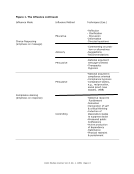
American legal authority R. Delgado (0.70), and other individuals studying the phenomenon
claim that the screening of information as such is only one aspect of a more complex
process. The knowledge imparted (or received) is reinforced throughout the course of the
conversion process in an inverse proportion to the individual‟s analytical capacity. The more
his mental and intellectual resistance wears down, so another horizon of the group‟s
ideology is revealed to him and the demand for involvement is increased. The decrease in
analytical capacity is brought about, according to this theory, through the operation of a
specific combined set of intensively employed techniques. The assertion put forth is that
since the information given and the ability to make judgments are the main elements of
conscious acceptance, the conversion process should not be perceived as “a voluntary act”.
According to this approach, what is actually at issue is a case of double deceit: what is
directed at a broad target populace. Since it has not yet been determined who is more or
less likely to join the new groups, the public at large is here regarded as potential
consumers, and the recruits at different stages of membership as consumers.
Particularly conspicuous is the practice of some of the groups of collecting funds from the
public on false pretenses. Members of some of the groups collect donations for their
organization without really identifying themselves, or stating some imaginary humanitarian
cause (for example, alleged help to refugees). This sort of deception is frequently justified
by the group on the basis of its ideology. Most of the groups withhold information from the
public at large, from potential recruits, and in not a few cases from some of the group
members as well. The information is camouflaged and exposed selectively to different
people.
Camouflaging of information is performed in two main spheres: a) the ideological-moral
contents of the group, its nature, its essence, and its aims, and b) the practice and learning
methodology used by the group. This situation makes obtaining true information about a
group almost impossible. Even if the Committee does not think that secrecy in itself is
wrong, there are reasonable grounds to assume that the groups use this secrecy to mislead
potential recruits and to attract them to stay for a prolonged period in the group whilst
withholding true information of the nature and duration of this stay. The recruit is actually
deprived of the ability to make an objective decision regarding his future.
Although secrecy and withholding of information may characterize other organizations as
well, these phenomena are emphasized in this section because extending the ranks
(recruiting new members) is an important and central task or mission of all of the new
groups and because, in a considerable number of cases, the recruits pay for the “services”
they receive. In the Committee‟s view, the potential consumer has a cardinal right to know
what it is that he is buying when speaking of courses and activities for a fee. This also
applies to groups which charge a fee in the form of membership dues.
In cultivating the desired image, some of the groups deliberately create obscurity in the way
they represent themselves to the public at large. They describe themselves variously as
religions, sciences, applied philosophies, study groups, therapy groups, social
revolutionaries, or any combination of the above. Moreover, the same groups may present
themselves in different ways to different audiences.
The course of a member‟s progress in a new group is often characterized by screening of
information relating to the essence of the ideology, learning, and practice procedures, the
degree and the nature of future involvement, duration of involvement, and amount of
monetary resources which will be required. All these, or a part of them, are revealed
gradually, at different stages of membership. “Study material” and ideas and techniques
related to what the group calls “more advanced stages” are deliberately concealed. Secrecy
within the groups is maintained not only by means of formal barriers, but also as a result of
the pressure for selective secrecy among the members at various stages of progress.
American legal authority R. Delgado (0.70), and other individuals studying the phenomenon
claim that the screening of information as such is only one aspect of a more complex
process. The knowledge imparted (or received) is reinforced throughout the course of the
conversion process in an inverse proportion to the individual‟s analytical capacity. The more
his mental and intellectual resistance wears down, so another horizon of the group‟s
ideology is revealed to him and the demand for involvement is increased. The decrease in
analytical capacity is brought about, according to this theory, through the operation of a
specific combined set of intensively employed techniques. The assertion put forth is that
since the information given and the ability to make judgments are the main elements of
conscious acceptance, the conversion process should not be perceived as “a voluntary act”.
According to this approach, what is actually at issue is a case of double deceit: what is