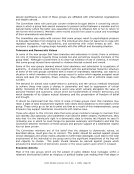
Cultic Studies Journal, Vol. 6, No. 1, 1989, Page 19
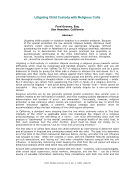
Legal Analysis of Intent As a Continuum Emphasizing Social Context
of Volition
Herbert L. Rosedale, Esq.
Parker Chapin Flattau &Klimpl
New York, NY
Abstract
Traditionally the legal system treats the concept of intent as a categorical, all-
or-nothing notion applied mechanistically in all areas of the law. In practice,
however, social values and context often overrule this view of intent, thereby,
in many cases, rendering a fictional quality to it. This conceptual weakness is
especially apparent in cases involving coercive psychological influence, where
the relationship between intent and an actor‟s liability (i.e., legal
responsibility for an action) and exculpability (i.e., diminished or nullified
liability due to special circumstances) is often unclear. This paper proposes a
continuum model of intent and suggests that a more open acknowledgment of
the role of social values and context in case analysis might prove fruitful.
Introduction
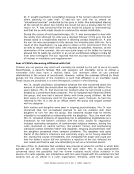
The concept of intent rears its head in so many areas of the law that it is difficult to
categorize and organize them coherently. In the criminal area, for example, intent is
central to evaluating actors‟ capacity, the voluntariness of their actions, and whether their
actions are so socially abhorrent that punishment is enhanced. In the civil area, issues
include the imposition of punitive damages for “malicious” acts, claims of exculpation
because of deception or coercion, questions relating to the implications of intent that may
be permissibly inferred from action, interpersonal consequences that may vitiate intent
through authoritarian control, and the legal implications of shared intent in a common plan
or enterprise. Finally, in certain situations social values affect the analysis of intent. For
example, legal responsibility for acts violating certain social values may be eliminated,
regardless of the intent, in order to protect other social values, e.g., absolving infants (i.e.,
minors) from responsibility for the consequences of certain of their actions, or nullifying the
responsibility for the consequences of an intentional act if committed under undue influence.
Thus, the analysis of intent involves two related but distinct legal concepts: liability and
exculpability. Liability refers to the law‟s deeming individuals responsible for the
consequences of their action. Exculpability refers to situations in which overriding social
values nullify or diminish the liability actors would have under other circumstances.
In approaching many of these areas, legal issues are traditionally phrased in absolute, all-
or-nothing terms. Using a mechanical test, an act is either determined to be willful, in
which case the actor is fully liable, or it is unintentional, in which case the actor may be
excused from civil responsibility. Testators (persons who have made a will), for example,
are deemed either to have sufficient capacity to understand the nature and consequences of
their action, or their will is a nullity. Either persons are excused from the consequences of
their act because they were defrauded and reasonably relied upon a misrepresentation, or
they bear the full legal consequences of their action.
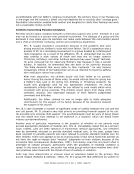
Such an approach is often simplistic. The compulsion to reach an all-or-nothing, yes-or-no
answer ignores the reality of complex or mixed motivation on the part of actors and the
importance of social values and context in reaching a legal conclusion, regardless of the
Legal Analysis of Intent As a Continuum Emphasizing Social Context
of Volition
Herbert L. Rosedale, Esq.
Parker Chapin Flattau &Klimpl
New York, NY
Abstract
Traditionally the legal system treats the concept of intent as a categorical, all-
or-nothing notion applied mechanistically in all areas of the law. In practice,
however, social values and context often overrule this view of intent, thereby,
in many cases, rendering a fictional quality to it. This conceptual weakness is
especially apparent in cases involving coercive psychological influence, where
the relationship between intent and an actor‟s liability (i.e., legal
responsibility for an action) and exculpability (i.e., diminished or nullified
liability due to special circumstances) is often unclear. This paper proposes a
continuum model of intent and suggests that a more open acknowledgment of
the role of social values and context in case analysis might prove fruitful.
Introduction
The concept of intent rears its head in so many areas of the law that it is difficult to
categorize and organize them coherently. In the criminal area, for example, intent is
central to evaluating actors‟ capacity, the voluntariness of their actions, and whether their
actions are so socially abhorrent that punishment is enhanced. In the civil area, issues
include the imposition of punitive damages for “malicious” acts, claims of exculpation
because of deception or coercion, questions relating to the implications of intent that may
be permissibly inferred from action, interpersonal consequences that may vitiate intent
through authoritarian control, and the legal implications of shared intent in a common plan
or enterprise. Finally, in certain situations social values affect the analysis of intent. For
example, legal responsibility for acts violating certain social values may be eliminated,
regardless of the intent, in order to protect other social values, e.g., absolving infants (i.e.,
minors) from responsibility for the consequences of certain of their actions, or nullifying the
responsibility for the consequences of an intentional act if committed under undue influence.
Thus, the analysis of intent involves two related but distinct legal concepts: liability and
exculpability. Liability refers to the law‟s deeming individuals responsible for the
consequences of their action. Exculpability refers to situations in which overriding social
values nullify or diminish the liability actors would have under other circumstances.
In approaching many of these areas, legal issues are traditionally phrased in absolute, all-
or-nothing terms. Using a mechanical test, an act is either determined to be willful, in
which case the actor is fully liable, or it is unintentional, in which case the actor may be
excused from civil responsibility. Testators (persons who have made a will), for example,
are deemed either to have sufficient capacity to understand the nature and consequences of
their action, or their will is a nullity. Either persons are excused from the consequences of
their act because they were defrauded and reasonably relied upon a misrepresentation, or
they bear the full legal consequences of their action.
Such an approach is often simplistic. The compulsion to reach an all-or-nothing, yes-or-no
answer ignores the reality of complex or mixed motivation on the part of actors and the
importance of social values and context in reaching a legal conclusion, regardless of the