Cultic Studies Journal, Vol. 6, No. 1, 1989, Page 10
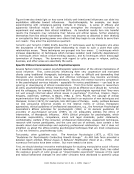
observed. When the medical examiner‟s report was received, no evidence of sexual assault
was indicated.
The police believed that a kitchen knife had been taken by the killer. Great pains were taken
to include the taking of the knife as part of the story. It was later discovered that the knife
had been missing for months prior to the victim‟s death.
Mr. Sawyer was unable to tell the police where the victim‟s missing clothing could be found,
where her missing keys could be found, or where the tape used to bind her could be found.
Late in the interrogation Mr. Sawyer was threatened with the death penalty if he did not
cooperate. This final threat was sufficient to coerce from him agreement to whatever the
police indicated that they wanted him to say. He admitted to committing the murder. Even
this threat, however, did not cause him to tell the police where the missing items might be
found. The obvious reason for this is that he did not know.
Mr. Sawyer spent 14 months in jail before the absurdity of his confession became
sufficiently clear that he was allowed bail. Despite having the confession suppressed and not
having any other credible evidence, as of this writing it is probable that the State of Florida
will attempt to bring Tom Sawyer to trial rather than admit to the errors that have already
been made.
Footnotes
1. Although Bedau and Radelet do not report the distribution of confessions induced
through “third degree” coercion versus those produced through what they term “less
brutal tactics”, instances of both torture and psychological coercion contribute to their
49 cases.
2. The research for this paper focused on the analysis of the transcripts of the recordings of
the interrogations in the three cases (Sawyer, Abney, and Reilly). Interviews were also
conducted with Mssrs. Sawyer and Abney and depositions and other testimony of
participants in these interrogations were reviewed. The analysis of the Reilly case is
based on the transcript and the account reported by Connery (1977). In the Weaver
case interviews were conducted with Mr. Weaver and others similarly coerced by the
private investigator who interrogated him. The depositions of all participants in the
Weaver interrogation were reviewed. The results of the research reported here were first
made public in this writer‟s testimony at the motion to suppress Mr. Sawyer‟s
confession, at the murder trial of George Abney, and in the civil suit brought by Mr.
Weaver against his interrogator.
3. As used here, a confession is considered false if it is elicited in response to a demand for
a confession and is either intentionally fabricated or is not based on actual knowledge of
the facts that form its content. A false confession may be elicited from guilty as well as
innocent parties. Guilty parties may wholly or in part fabricate the substantive details of
a confession. Inbau et al. (1986) report that it is not uncommon for guilty parties to
admit to the details of a crime in stages or to refuse to admit to certain elements of a
crime. This can occur while admitting to the central criminal act and while accurately
describing most of the major elements of the crime. A confession that accurately
accounts for significant portions of the evidence should not be classified as a false
confession. It would be more reasonable to treat this as an example of a confession that
includes elements designed to save face for the confessor or simply as an incomplete
confession.
It must be considered as a possibility that a guilty party might choose to admit to a
crime and also deliberately fabricate the details of the crime. Although this outcome is
observed. When the medical examiner‟s report was received, no evidence of sexual assault
was indicated.
The police believed that a kitchen knife had been taken by the killer. Great pains were taken
to include the taking of the knife as part of the story. It was later discovered that the knife
had been missing for months prior to the victim‟s death.
Mr. Sawyer was unable to tell the police where the victim‟s missing clothing could be found,
where her missing keys could be found, or where the tape used to bind her could be found.
Late in the interrogation Mr. Sawyer was threatened with the death penalty if he did not
cooperate. This final threat was sufficient to coerce from him agreement to whatever the
police indicated that they wanted him to say. He admitted to committing the murder. Even
this threat, however, did not cause him to tell the police where the missing items might be
found. The obvious reason for this is that he did not know.
Mr. Sawyer spent 14 months in jail before the absurdity of his confession became
sufficiently clear that he was allowed bail. Despite having the confession suppressed and not
having any other credible evidence, as of this writing it is probable that the State of Florida
will attempt to bring Tom Sawyer to trial rather than admit to the errors that have already
been made.
Footnotes
1. Although Bedau and Radelet do not report the distribution of confessions induced
through “third degree” coercion versus those produced through what they term “less
brutal tactics”, instances of both torture and psychological coercion contribute to their
49 cases.
2. The research for this paper focused on the analysis of the transcripts of the recordings of
the interrogations in the three cases (Sawyer, Abney, and Reilly). Interviews were also
conducted with Mssrs. Sawyer and Abney and depositions and other testimony of
participants in these interrogations were reviewed. The analysis of the Reilly case is
based on the transcript and the account reported by Connery (1977). In the Weaver
case interviews were conducted with Mr. Weaver and others similarly coerced by the
private investigator who interrogated him. The depositions of all participants in the
Weaver interrogation were reviewed. The results of the research reported here were first
made public in this writer‟s testimony at the motion to suppress Mr. Sawyer‟s
confession, at the murder trial of George Abney, and in the civil suit brought by Mr.
Weaver against his interrogator.
3. As used here, a confession is considered false if it is elicited in response to a demand for
a confession and is either intentionally fabricated or is not based on actual knowledge of
the facts that form its content. A false confession may be elicited from guilty as well as
innocent parties. Guilty parties may wholly or in part fabricate the substantive details of
a confession. Inbau et al. (1986) report that it is not uncommon for guilty parties to
admit to the details of a crime in stages or to refuse to admit to certain elements of a
crime. This can occur while admitting to the central criminal act and while accurately
describing most of the major elements of the crime. A confession that accurately
accounts for significant portions of the evidence should not be classified as a false
confession. It would be more reasonable to treat this as an example of a confession that
includes elements designed to save face for the confessor or simply as an incomplete
confession.
It must be considered as a possibility that a guilty party might choose to admit to a
crime and also deliberately fabricate the details of the crime. Although this outcome is