Cultic Studies Journal, Vol. 6, No. 1, 1989, Page 68
Book Reviews
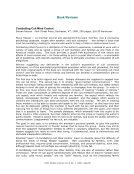
Combatting Cult Mind Control.
Steven Hassan. Park Street Press, Rochester, VT, 1988, 200 pages, $16.95 Hardcover.
Steve Hassan --ex-member activist and deprogramming team member, now a counseling
psychology graduate, sought after speaker, and exit counselor --has written a book that
must be mandatory reading for anyone who wants to help a friend or relative leave a cult.
Combatting Mind Control is a distillation of the author‟s experience, a decade of work with a
variety of cults and as varied a group of cult members and families as one finds in the
American middle class. The book provides a jargon-free explanation of the nature and
effects of mind control and --for those willing to put in a great deal of work --a serviceable
set of guidelines, with real-life examples, of how to stimulate voluntary re-evaluation of cult
allegiances.
Without suggesting any deficiencies in the author‟s explanation of cult conversion
techniques, or of the associated psychological processes, which are well presented, the best
and most original parts of the book are concerned with the “keys” to “unlocking cult mind
control” and the ways in which friends and families can develop a comprehensive plan to
bring these to bear.
The first key is to build rapport and trust. Sample dialogues are supplied to suggest how
this can be done. The second key is to employ “goal-oriented communications.” This
means not simply “being oneself” when interacting with the cult member, but rather always
keeping in mind the goal of getting the member to disengage from the group. In order to
do this, one must employ the next key, which consists of creating “models of identity.”
These are clear conceptions of different aspects of the cult member‟s personality: the pre-
cult aspect, with which friends and relatives are familiar the aspect which reflects the
typical, stereotyped member of the cult in question and the aspect which seems to
combine the individual‟s own basic personality with the cult overlay. The aim in creating
these models is to be able to discern and speak to the “real identity” so that keys four and
five can be deployed: getting the member in touch with his pre-cult personality, and then
inducing him to look at things from many different perspectives, set new goals, and realize
that it is possible to leave. The sample dialogues, which exemplify how this ought to be
done, sound a little unnatural, but their didactic tone has the virtue of making the author‟s
points clearer. Hassan‟s advice here on how to be indirect, and avoid the phobic barriers to
communication “programmed” by the cult, are valuable.
The goal, in any case, is to enhance the member‟s personal growth, to give him positive
reasons beyond his parents‟ or friends‟ wishes that he leave the group. Some may shrink
from the apparent manipulation needed to effect a voluntary departure, but the devices
Hassan suggests are really no more than loving, if systematized, ways to communicate and
stimulate independent reflection.
Potential “users” of Combatting Cult Mind Control have no illusions about the difficulty of
doing the kinds of things Hassan suggests. Exit counseling by families, even with
professional help, requires great concentration, fortitude, and personal stability even then,
although Hassan does not perhaps say enough about this, it may fail.
If Combatting Cult Mind Control has other defects, they are also of omission rather than
commission. While we can agree wholeheartedly with Hassan that on balance “people don‟t
join cults, cults recruit people,” are not “push” factors, such as the preexisting family
Book Reviews
Combatting Cult Mind Control.
Steven Hassan. Park Street Press, Rochester, VT, 1988, 200 pages, $16.95 Hardcover.
Steve Hassan --ex-member activist and deprogramming team member, now a counseling
psychology graduate, sought after speaker, and exit counselor --has written a book that
must be mandatory reading for anyone who wants to help a friend or relative leave a cult.
Combatting Mind Control is a distillation of the author‟s experience, a decade of work with a
variety of cults and as varied a group of cult members and families as one finds in the
American middle class. The book provides a jargon-free explanation of the nature and
effects of mind control and --for those willing to put in a great deal of work --a serviceable
set of guidelines, with real-life examples, of how to stimulate voluntary re-evaluation of cult
allegiances.
Without suggesting any deficiencies in the author‟s explanation of cult conversion
techniques, or of the associated psychological processes, which are well presented, the best
and most original parts of the book are concerned with the “keys” to “unlocking cult mind
control” and the ways in which friends and families can develop a comprehensive plan to
bring these to bear.
The first key is to build rapport and trust. Sample dialogues are supplied to suggest how
this can be done. The second key is to employ “goal-oriented communications.” This
means not simply “being oneself” when interacting with the cult member, but rather always
keeping in mind the goal of getting the member to disengage from the group. In order to
do this, one must employ the next key, which consists of creating “models of identity.”
These are clear conceptions of different aspects of the cult member‟s personality: the pre-
cult aspect, with which friends and relatives are familiar the aspect which reflects the
typical, stereotyped member of the cult in question and the aspect which seems to
combine the individual‟s own basic personality with the cult overlay. The aim in creating
these models is to be able to discern and speak to the “real identity” so that keys four and
five can be deployed: getting the member in touch with his pre-cult personality, and then
inducing him to look at things from many different perspectives, set new goals, and realize
that it is possible to leave. The sample dialogues, which exemplify how this ought to be
done, sound a little unnatural, but their didactic tone has the virtue of making the author‟s
points clearer. Hassan‟s advice here on how to be indirect, and avoid the phobic barriers to
communication “programmed” by the cult, are valuable.
The goal, in any case, is to enhance the member‟s personal growth, to give him positive
reasons beyond his parents‟ or friends‟ wishes that he leave the group. Some may shrink
from the apparent manipulation needed to effect a voluntary departure, but the devices
Hassan suggests are really no more than loving, if systematized, ways to communicate and
stimulate independent reflection.
Potential “users” of Combatting Cult Mind Control have no illusions about the difficulty of
doing the kinds of things Hassan suggests. Exit counseling by families, even with
professional help, requires great concentration, fortitude, and personal stability even then,
although Hassan does not perhaps say enough about this, it may fail.
If Combatting Cult Mind Control has other defects, they are also of omission rather than
commission. While we can agree wholeheartedly with Hassan that on balance “people don‟t
join cults, cults recruit people,” are not “push” factors, such as the preexisting family