Cultic Studies Journal, Vol. 6, No. 1, 1989, Page 70
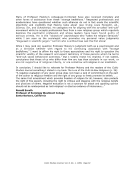
When she became pregnant, she asked the Bhagwan for guidance. He told her to enjoy the
pregnancy for several weeks, to feel it in its “fullness,” and then to have an abortion.
Attachment to a child would only interfere with enlightenment, he told her. He further
suggested that she be sterilized, like most women and men in the group. She did as told.
Not surprisingly, she often reacted to such arbitrary demands with anger, fear, frustration,
jealousy, and paranoia --but she stayed in the group. Sadly, like members of many cult-
like groups, Strelley came to see such emotions as only a sign of how attached she had
become to “unimportant” things. Thus, she struggled to accept all of the Bhagwan‟s
arbitrary decisions with humility and love. Slowly her ability to judge events based on her
own feelings was eroded --the “mindless man.”
Strelley was not just an ordinary member of this group. She was the personal assistant of
the pistol-packing Ma Sheela and part of the upper hierarchy of the cult. As such, she could
see just how far obedience to the Bhagwan could go as members participated in an
increasing list of illegal activities: tax evasion, wiretapping, drug running and even
attempted murder.
Strelley gave nine years of her life to this movement. She shed her orange garb only
shortly before the indictments were made, and the members were left to fend for
themselves.
Her book is not particularly well written or edited it is, however, an honest account of
abuse and exploitation. Years of trying to rid herself of “negative emotions” have obviously
taken their toll. Emotional detachment, the tone of this book, is just not appropriate when
recounting such dehumanizing experiences. She tells her tale with no trace of bitterness or
anger. Instead, she is wistful, even nostalgic, for the communal spirit, the “creative”
energy, the “efficient” organization, the “high” of being surrounded by people who radiate
positive emotions: all clearly a result of blind obedience to their leader. Her lack of
emotional outrage is disturbing.
“However good or bad your experience,” she writes, “it has something of ultimate value for
you, whether that means jumping to a higher level of consciousness or simply building up
your inner resources to tough out the worst that life can throw your way.” She uses such
twisted logic repeatedly to justify experiences that were painful. She was taught that there
must be value in it all. And that, it seems, is what she still desperately wants to believe.
Strelley‟s story is a sad testament to the power of techniques practiced in many cult-like
groups that convince people not to trust their own feelings and judgments. These natural
feelings --fear, anger and humiliation --are the warning systems of life --not problems to
be overcome. Distrusting such valid reactions to abusive cult-like practices enormously
increased her potential to be manipulated and exploited by others. Strelley‟s book helps us
see this danger even if she doesn‟t.
Linda James
Vanier College
Montreal
This article is an electronic version of an article originally published in Cultic Studies Journal, 1989, Volume 6,
Number 1, pages 102-105. Please keep in mind that the pagination of this electronic reprint differs from that of the
bound volume. This fact could affect how you enter bibliographic information in papers that you may write.
When she became pregnant, she asked the Bhagwan for guidance. He told her to enjoy the
pregnancy for several weeks, to feel it in its “fullness,” and then to have an abortion.
Attachment to a child would only interfere with enlightenment, he told her. He further
suggested that she be sterilized, like most women and men in the group. She did as told.
Not surprisingly, she often reacted to such arbitrary demands with anger, fear, frustration,
jealousy, and paranoia --but she stayed in the group. Sadly, like members of many cult-
like groups, Strelley came to see such emotions as only a sign of how attached she had
become to “unimportant” things. Thus, she struggled to accept all of the Bhagwan‟s
arbitrary decisions with humility and love. Slowly her ability to judge events based on her
own feelings was eroded --the “mindless man.”
Strelley was not just an ordinary member of this group. She was the personal assistant of
the pistol-packing Ma Sheela and part of the upper hierarchy of the cult. As such, she could
see just how far obedience to the Bhagwan could go as members participated in an
increasing list of illegal activities: tax evasion, wiretapping, drug running and even
attempted murder.
Strelley gave nine years of her life to this movement. She shed her orange garb only
shortly before the indictments were made, and the members were left to fend for
themselves.
Her book is not particularly well written or edited it is, however, an honest account of
abuse and exploitation. Years of trying to rid herself of “negative emotions” have obviously
taken their toll. Emotional detachment, the tone of this book, is just not appropriate when
recounting such dehumanizing experiences. She tells her tale with no trace of bitterness or
anger. Instead, she is wistful, even nostalgic, for the communal spirit, the “creative”
energy, the “efficient” organization, the “high” of being surrounded by people who radiate
positive emotions: all clearly a result of blind obedience to their leader. Her lack of
emotional outrage is disturbing.
“However good or bad your experience,” she writes, “it has something of ultimate value for
you, whether that means jumping to a higher level of consciousness or simply building up
your inner resources to tough out the worst that life can throw your way.” She uses such
twisted logic repeatedly to justify experiences that were painful. She was taught that there
must be value in it all. And that, it seems, is what she still desperately wants to believe.
Strelley‟s story is a sad testament to the power of techniques practiced in many cult-like
groups that convince people not to trust their own feelings and judgments. These natural
feelings --fear, anger and humiliation --are the warning systems of life --not problems to
be overcome. Distrusting such valid reactions to abusive cult-like practices enormously
increased her potential to be manipulated and exploited by others. Strelley‟s book helps us
see this danger even if she doesn‟t.
Linda James
Vanier College
Montreal
This article is an electronic version of an article originally published in Cultic Studies Journal, 1989, Volume 6,
Number 1, pages 102-105. Please keep in mind that the pagination of this electronic reprint differs from that of the
bound volume. This fact could affect how you enter bibliographic information in papers that you may write.