Cultic Studies Journal, Vol. 6, No. 1, 1989, Page 20
volitional capacity or desire of actors. The abandonment of the either-or approach to
resolution of questions of intent would advance case analysis by openly addressing the
social values determining liability for the consequences of a particular action. Rather than
viewing questions of intent as solvable through all-or-nothing categorization, I submit that
the analysis of interpersonal relationships, values, and consequences will be far more
helpful in reaching legal conclusions to which intent is traditionally deemed relevant.
Part of the genesis of my first speculations concerning these issues arose from the
consideration of the concepts of consent, waiver, and ratification raised in many cult-related
tort cases. The mechanistic assurance of those observers who seem easily able to predict
actors‟ mental states from their behavior is unnerving and evidenced by a series of
platitudes: If persons were really unhappy, they would leave. If they appear satisfied and
report no conflict or distress, they are not suffering any unconsenting infringement of rights.
If they report that they were not defrauded, that is the whole truth. How simple! Yet it
became evident to me that it was not simple, that these presentations were simplistic.
People reporting a set of facts or acting in a particular way at one time were acting and
reporting differently at a later time. Inferences about their intents and states of mind were
by no means as simple as were being portrayed.
This paper does not intend to resolve the many issues that arise from consideration of
intent. The paper is intended as a provocation. It examines actual and inferred, or implied,
intent, in order to illustrate how actors‟ liability can be enhanced or diminished, how actors
can be exculpated from the consequences of their actions, and how occasionally the concept
of intent is abandoned when dealing with legal responsibility. Lawyers and mental health
professionals concerned about volitional analysis and its role in the law can, I believe,
benefit from this examination of intent.
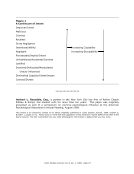
Classification of the Liability of Actors
In extreme cases, the law enhances liability for an act if it is deemed to have certain
abhorrent characteristics, in which cases courts may infer that the acting party had a
“depraved mind.” As a result of this conclusion, criminal penalties or civil consequences of
an action may be enhanced in order to express society‟s outrage and to deter others. In
the criminal area, penalties may be enhanced by changing the classification of the crime. In
the civil area, in addition to the award of compensatory damages to the injured party,
actors may find themselves subject to exemplary or punitive damages for a willful or
malicious act or one which is committed in reckless disregard of appropriate social values.
Enhancement of the level of responsibility is often accompanied by a pejorative
characterization of actors‟ conduct: for example, it may be called “wanton,” “willful,”
“aggravated,” or “outrageous.” In each of these circumstances, however, it is not the
malevolent intent of the actor that we are punishing or truly examining, it is the violated
social value that we are attempting to protect by deterring another‟s conduct in the future.
Despite the language used to enhance liability, the examination of intent is, in fact, an
obfuscation of the true basis of a desired legal conclusion.
In another field of the law concerned with determining actors‟ liability, intent is often used
as a criterion to ascertain the extent to which the act of one person may be attributed to
another. Determination of the liability of an employer for the acts of its employee, for
example, involves the intent of the employer as evidenced in setting out the boundaries of
the relationship. Similar questions arise with regard to delegation of authority, e.g., an
employee‟s unknowing transport of his employer‟s contraband. Here again, there is no true
intent. Intent is essentially fictional, a term used for defining the scope of responsibility.
Another area in which the seemingly fictional nature of intent is clear is that of legally
implied intent. For an individual, this case arises in determining questions of negligence.
The law measures conduct by using a standard of reasonability and prudence. It implies on
volitional capacity or desire of actors. The abandonment of the either-or approach to
resolution of questions of intent would advance case analysis by openly addressing the
social values determining liability for the consequences of a particular action. Rather than
viewing questions of intent as solvable through all-or-nothing categorization, I submit that
the analysis of interpersonal relationships, values, and consequences will be far more
helpful in reaching legal conclusions to which intent is traditionally deemed relevant.
Part of the genesis of my first speculations concerning these issues arose from the
consideration of the concepts of consent, waiver, and ratification raised in many cult-related
tort cases. The mechanistic assurance of those observers who seem easily able to predict
actors‟ mental states from their behavior is unnerving and evidenced by a series of
platitudes: If persons were really unhappy, they would leave. If they appear satisfied and
report no conflict or distress, they are not suffering any unconsenting infringement of rights.
If they report that they were not defrauded, that is the whole truth. How simple! Yet it
became evident to me that it was not simple, that these presentations were simplistic.
People reporting a set of facts or acting in a particular way at one time were acting and
reporting differently at a later time. Inferences about their intents and states of mind were
by no means as simple as were being portrayed.
This paper does not intend to resolve the many issues that arise from consideration of
intent. The paper is intended as a provocation. It examines actual and inferred, or implied,
intent, in order to illustrate how actors‟ liability can be enhanced or diminished, how actors
can be exculpated from the consequences of their actions, and how occasionally the concept
of intent is abandoned when dealing with legal responsibility. Lawyers and mental health
professionals concerned about volitional analysis and its role in the law can, I believe,
benefit from this examination of intent.
Classification of the Liability of Actors
In extreme cases, the law enhances liability for an act if it is deemed to have certain
abhorrent characteristics, in which cases courts may infer that the acting party had a
“depraved mind.” As a result of this conclusion, criminal penalties or civil consequences of
an action may be enhanced in order to express society‟s outrage and to deter others. In
the criminal area, penalties may be enhanced by changing the classification of the crime. In
the civil area, in addition to the award of compensatory damages to the injured party,
actors may find themselves subject to exemplary or punitive damages for a willful or
malicious act or one which is committed in reckless disregard of appropriate social values.
Enhancement of the level of responsibility is often accompanied by a pejorative
characterization of actors‟ conduct: for example, it may be called “wanton,” “willful,”
“aggravated,” or “outrageous.” In each of these circumstances, however, it is not the
malevolent intent of the actor that we are punishing or truly examining, it is the violated
social value that we are attempting to protect by deterring another‟s conduct in the future.
Despite the language used to enhance liability, the examination of intent is, in fact, an
obfuscation of the true basis of a desired legal conclusion.
In another field of the law concerned with determining actors‟ liability, intent is often used
as a criterion to ascertain the extent to which the act of one person may be attributed to
another. Determination of the liability of an employer for the acts of its employee, for
example, involves the intent of the employer as evidenced in setting out the boundaries of
the relationship. Similar questions arise with regard to delegation of authority, e.g., an
employee‟s unknowing transport of his employer‟s contraband. Here again, there is no true
intent. Intent is essentially fictional, a term used for defining the scope of responsibility.
Another area in which the seemingly fictional nature of intent is clear is that of legally
implied intent. For an individual, this case arises in determining questions of negligence.
The law measures conduct by using a standard of reasonability and prudence. It implies on