Cultic Studies Journal, Vol. 13, No. 1, 1996, page 7
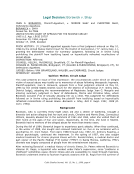
repress conscious memories of the abuse for years,” the district court concluded that
hypnosis is appropriate for the type of repression and loss of memory Borawick allegedly
experienced. Id. at 1505.
Before testimony induced by hypnosis would be admissible, however, the district court
determined that certain safeguards were necessary “not only to bolster a plaintiff‟s
legitimate claims for childhood sexual abuse, but also to protect a defendant against
devastating charges.” Id. These safeguards were that (1) the hypnotist be appropriately
qualified, (2) the hypnotist “avoid adding new elements to the subject‟s description,” (3) “a
permanent record be available to ensure against suggestive procedures,” and (4) there be
“other evidence to corroborate the hypnotically enhanced testimony.” Id. The linchpin of the
district court‟s ultimate decision to exclude Borawick‟s testimony was its finding as to the
first safeguard: that St. [*11] Regis was not qualified. n2 Id. at 1509 &n.5. The district
court did not address the third element, but noted that St. Regis was not able to produce
the reports that he claimed to have prepared contemporaneously, Id. at 1507. The district
court suggested, however, that the second safeguard was met in that there was “no
indication that St. Regis added new elements to plaintiff‟s descriptions while under
hypnosis.” Id. at 1508. Given these findings, particularly St. Regis‟s lack of qualifications,
the district court saw no need to decide whether the corroborating evidence Borawick
offered satisfied the fourth safeguard. Id. at 1508 n.5. With two of the four safeguards not
met, the district court granted the in limine motion to exclude Borawick‟s testimony of
sexual abuse.
n2 The court initially found the record devoid of any information regarding St.
Regis‟s qualifications and any safeguards he may have used in conducting the
hypnosis of Borawick. Borawick was given the opportunity to supplement the
record by deposing St. Regis and to offer any corroborating evidence. Id. at 1505.
[*12]
B. Borawick’s Claims
Borawick first contends that the district court erred in characterizing her recall of sexual
abuse as hypnotically refreshed. Rather, she asserts, these memories may have “unfolded
on their own” even without therapeutic hypnosis. Based on the timing and nature of the
recollections, however, we discern no basis for disturbing the district court‟s finding that the
memories were in fact refreshed by hypnosis.
The gravamen of Borawick‟s appeal is that even if her testimony were to be construed as
post-hypnotic, the district court erred in adopting its legal test in requiring both independent
corroborating evidence and a permanent record of the hypnosis. She also argues that the
district court clearly erred in concluding that St. Regis was not qualified as a hypnotist.
Instead, Borawick argues, she should be deemed competent to testify under Federal Rule of
Evidence 601, which reflects a strong presumption in favor of witness competency, and that
this circuit should adopt a rule of per se admissibility of testimony related to memories
following the use of hypnosis for therapeutic purposes.
C. Standard of Review
Before turning to the merits of this case, [*13] we address the appropriate standard of
review. Borawick argues that because the exclusionary rule resulted in her inability to
oppose the summary judgment motion, which led to her ultimate defeat on the summary
judgment motion, we should review the challenge de novo. The Shays contend that because
this is an evidentiary issue, the district court had broad discretion and we should therefore
review its decision for abuse of discretion.
repress conscious memories of the abuse for years,” the district court concluded that
hypnosis is appropriate for the type of repression and loss of memory Borawick allegedly
experienced. Id. at 1505.
Before testimony induced by hypnosis would be admissible, however, the district court
determined that certain safeguards were necessary “not only to bolster a plaintiff‟s
legitimate claims for childhood sexual abuse, but also to protect a defendant against
devastating charges.” Id. These safeguards were that (1) the hypnotist be appropriately
qualified, (2) the hypnotist “avoid adding new elements to the subject‟s description,” (3) “a
permanent record be available to ensure against suggestive procedures,” and (4) there be
“other evidence to corroborate the hypnotically enhanced testimony.” Id. The linchpin of the
district court‟s ultimate decision to exclude Borawick‟s testimony was its finding as to the
first safeguard: that St. [*11] Regis was not qualified. n2 Id. at 1509 &n.5. The district
court did not address the third element, but noted that St. Regis was not able to produce
the reports that he claimed to have prepared contemporaneously, Id. at 1507. The district
court suggested, however, that the second safeguard was met in that there was “no
indication that St. Regis added new elements to plaintiff‟s descriptions while under
hypnosis.” Id. at 1508. Given these findings, particularly St. Regis‟s lack of qualifications,
the district court saw no need to decide whether the corroborating evidence Borawick
offered satisfied the fourth safeguard. Id. at 1508 n.5. With two of the four safeguards not
met, the district court granted the in limine motion to exclude Borawick‟s testimony of
sexual abuse.
n2 The court initially found the record devoid of any information regarding St.
Regis‟s qualifications and any safeguards he may have used in conducting the
hypnosis of Borawick. Borawick was given the opportunity to supplement the
record by deposing St. Regis and to offer any corroborating evidence. Id. at 1505.
[*12]
B. Borawick’s Claims
Borawick first contends that the district court erred in characterizing her recall of sexual
abuse as hypnotically refreshed. Rather, she asserts, these memories may have “unfolded
on their own” even without therapeutic hypnosis. Based on the timing and nature of the
recollections, however, we discern no basis for disturbing the district court‟s finding that the
memories were in fact refreshed by hypnosis.
The gravamen of Borawick‟s appeal is that even if her testimony were to be construed as
post-hypnotic, the district court erred in adopting its legal test in requiring both independent
corroborating evidence and a permanent record of the hypnosis. She also argues that the
district court clearly erred in concluding that St. Regis was not qualified as a hypnotist.
Instead, Borawick argues, she should be deemed competent to testify under Federal Rule of
Evidence 601, which reflects a strong presumption in favor of witness competency, and that
this circuit should adopt a rule of per se admissibility of testimony related to memories
following the use of hypnosis for therapeutic purposes.
C. Standard of Review
Before turning to the merits of this case, [*13] we address the appropriate standard of
review. Borawick argues that because the exclusionary rule resulted in her inability to
oppose the summary judgment motion, which led to her ultimate defeat on the summary
judgment motion, we should review the challenge de novo. The Shays contend that because
this is an evidentiary issue, the district court had broad discretion and we should therefore
review its decision for abuse of discretion.