Cultic Studies Journal, Vol. 13, No. 1, 1996, page 6
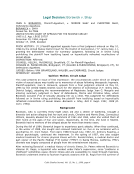
While Borawick‟s objections to the magistrate judge‟s initial and supplemental ruling were
pending before the district judge, the United States Supreme Court decided Daubert v.
Merrell Dow Pharmaceuticals, 125 L. Ed. 2d 469, 113 S. Ct. 2786 (1993). Accordingly, the
plaintiff moved for reconsideration of the in limine rulings [*7] on the ground that the
therapeutic use of hypnosis and her resultant testimony satisfied Daubert. Borawick
submitted as additional evidence copies of two letters purportedly received from her
younger sister in 1989. Both referenced sexual assault against the sister, and one expressly
identified the defendants as the perpetrators. Borawick also submitted two expert affidavits,
one from a board-certified psychiatrist, Matthew Klein, M.D., and one from a clinical and
forensic psychologist, Anne Pratt, M.D., as further support that the therapeutic use of
hypnosis is widely accepted in the mental health community and is used for treatment of
victims of sexual abuse. The defendants filed a reply and objection to plaintiff‟s objections,
including a letter dated August 1, 1992, also allegedly written by the younger sister, that
recanted her earlier allegations. Upon reconsideration, the magistrate judge adhered to her
earlier recommended ruling. Borawick, 842 F.Supp. at 1509. On January 10. 1994, the
district court adopted the magistrate judge‟s recommendation. Id. at 1501.
Shortly thereafter, the defendants moved for summary judgment. After the magistrate
judge issued a recommended [*8] ruling granting the defendants‟ motion, the plaintiff
refiled and the district court retained and denied a motion by Borawick dated February 10,
1993 to reopen discovery and to enlarge the time for taking depositions. On May 10, 1994,
final judgment was entered in favor of the defendants. Borawick appeals from this
judgment. n1
n1 The Record on Appeal includes both an original record from the district court
after oral argument and a supplemental record submitted pursuant to a stipulation
approved by the district judge.
Discussion
Borawick raises the following claims on appeal: (1) the district court erred in granting the in
limine motion because it applied the incorrect legal rule regarding the admissibility of
hypnotically refreshed testimony (2) the district court‟s ruling was inconsistent with the
holding in Daubert v. Merrell Dow Pharmaceuticals, 125 L. Ed. 2d 469, 113 S. Ct. 2786
(1993) (3) the district court violated Borawick‟s right to a jury trial in granting the in limine
motion, which resulted in a summary judgment [*9] in favor of the defendants (4) the
district court deprived her of due process in its rulings on Borawick‟s numerous motions.
1. Admissibility of Post-Hypnotic Testimony
This circuit has yet to address the admissibility of post-hypnotic testimony of memories
elicited as a result of hypnosis. While numerous state and federal courts have considered
this issue, nearly all of them dealt with recall in the context of hypnosis that was specifically
intended to enhance a memory of a particular known or suspected occurrence. The parties
have not cited, nor are we aware of, any case concerning the specific issue before us: the
admissibility of testimony about memories of childhood sexual abuse that are recalled for
the first time in adulthood following the use of hypnosis as part of psychotherapy.
A. District Court’s Approach
Judge Daly and Magistrate Judge Margolis were highly sensitive to the various concerns
surrounding post-hypnotic testimony. The district court recognized that, although most of
the case law concerns situations in which hypnosis was used to refresh a victim‟s or
witness‟s memory of a crime or accident, the hypnosis in this case was used for therapeutic
as opposed [*10] to investigative purposes. Borawick, 842 F. Supp. at 1503-05. Giving
credence to Borawick‟s claim that her “psychological injuries caused by childhood sexual
abuse are different than for victims of other torts, and that victims of sexual abuse may
While Borawick‟s objections to the magistrate judge‟s initial and supplemental ruling were
pending before the district judge, the United States Supreme Court decided Daubert v.
Merrell Dow Pharmaceuticals, 125 L. Ed. 2d 469, 113 S. Ct. 2786 (1993). Accordingly, the
plaintiff moved for reconsideration of the in limine rulings [*7] on the ground that the
therapeutic use of hypnosis and her resultant testimony satisfied Daubert. Borawick
submitted as additional evidence copies of two letters purportedly received from her
younger sister in 1989. Both referenced sexual assault against the sister, and one expressly
identified the defendants as the perpetrators. Borawick also submitted two expert affidavits,
one from a board-certified psychiatrist, Matthew Klein, M.D., and one from a clinical and
forensic psychologist, Anne Pratt, M.D., as further support that the therapeutic use of
hypnosis is widely accepted in the mental health community and is used for treatment of
victims of sexual abuse. The defendants filed a reply and objection to plaintiff‟s objections,
including a letter dated August 1, 1992, also allegedly written by the younger sister, that
recanted her earlier allegations. Upon reconsideration, the magistrate judge adhered to her
earlier recommended ruling. Borawick, 842 F.Supp. at 1509. On January 10. 1994, the
district court adopted the magistrate judge‟s recommendation. Id. at 1501.
Shortly thereafter, the defendants moved for summary judgment. After the magistrate
judge issued a recommended [*8] ruling granting the defendants‟ motion, the plaintiff
refiled and the district court retained and denied a motion by Borawick dated February 10,
1993 to reopen discovery and to enlarge the time for taking depositions. On May 10, 1994,
final judgment was entered in favor of the defendants. Borawick appeals from this
judgment. n1
n1 The Record on Appeal includes both an original record from the district court
after oral argument and a supplemental record submitted pursuant to a stipulation
approved by the district judge.
Discussion
Borawick raises the following claims on appeal: (1) the district court erred in granting the in
limine motion because it applied the incorrect legal rule regarding the admissibility of
hypnotically refreshed testimony (2) the district court‟s ruling was inconsistent with the
holding in Daubert v. Merrell Dow Pharmaceuticals, 125 L. Ed. 2d 469, 113 S. Ct. 2786
(1993) (3) the district court violated Borawick‟s right to a jury trial in granting the in limine
motion, which resulted in a summary judgment [*9] in favor of the defendants (4) the
district court deprived her of due process in its rulings on Borawick‟s numerous motions.
1. Admissibility of Post-Hypnotic Testimony
This circuit has yet to address the admissibility of post-hypnotic testimony of memories
elicited as a result of hypnosis. While numerous state and federal courts have considered
this issue, nearly all of them dealt with recall in the context of hypnosis that was specifically
intended to enhance a memory of a particular known or suspected occurrence. The parties
have not cited, nor are we aware of, any case concerning the specific issue before us: the
admissibility of testimony about memories of childhood sexual abuse that are recalled for
the first time in adulthood following the use of hypnosis as part of psychotherapy.
A. District Court’s Approach
Judge Daly and Magistrate Judge Margolis were highly sensitive to the various concerns
surrounding post-hypnotic testimony. The district court recognized that, although most of
the case law concerns situations in which hypnosis was used to refresh a victim‟s or
witness‟s memory of a crime or accident, the hypnosis in this case was used for therapeutic
as opposed [*10] to investigative purposes. Borawick, 842 F. Supp. at 1503-05. Giving
credence to Borawick‟s claim that her “psychological injuries caused by childhood sexual
abuse are different than for victims of other torts, and that victims of sexual abuse may