Cultic Studies Journal, Vol. 13, No. 1, 1996, page 66
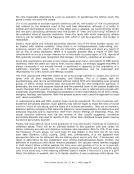
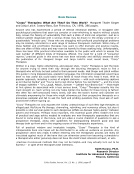
Prophets of the Apocalypse: David Koresh and Other American Messiahs.
Kenneth R. Samples, Erwin M. de Castro, Richard Abanes, &Robert J. Lyle. Baker
Books, Grand Rapids, MI, 1994, 222 pages.
The authors' stated goal is to present information about David Koresh and the Branch
Davidians and to show readers the dangers of religious cults that "overemphasize subjective
religious experience, spiritualize issues to justify their actions, make confusing and inflated
promises of fellowship, manipulate through emotion rather than substance, and encourage
others to 'just believe' rather than think critically." This they have done and a lot more.
The book begins with a very successful attempt to describe and offer explanations for the
seemingly incomprehensible behavior and beliefs of David Koresh and his followers. It
concludes by anticipating readers' questions about the historical origins of this group and
how it and other American-based cults can be placed in the larger social context of
American culture. The 70-page appendix is also worthy of attention. This book has a lot
going for it. It covers an enormous amount of territory in a language that is free of
academic jargon and thus easy to read. It is also impressive in its ability to discuss immoral,
unethical, and violent acts in a manner that does not sensationalize. This in itself is
praiseworthy.
By examining the life and personality of David Koresh, this book admirably succeeds in
helping us understand both Koresh's desire, and his subsequent ability, to take over the
leadership of a Branch Davidian group. We watch him create a renewed sense of purpose in
the members and gradually go on to create what appears to be the textbook cultic
conditions which could and ultimately did lead to the devastating suicide-murders of cult
followers and their leaders, this time outside of Waco, Texas, in 1993.
The book's power lies in the authors' choice to describe Koresh's group at the micro rather
than macro level. We are given concrete events and individual anecdotes gathered by the
authors through in-depth interviews with survivors and through quotes from Koresh's
speeches. This encourages the reader to get inside the minds and hearts of particular
individuals within the group and we slowly begin to understand on a visceral level how one
could be seduced and manipulated into such an extreme cultic relationship with a leader.
We feel the pressure and the control we experience the abuse and the fear but like
Koresh's victims we also experience the attraction and the appeal of Koresh, of his
charisma, and of the community spirit of the group. This book is a testament to the idea
that to understand the most bizarre cultic behavior one must not begin by examining the
end result but rather begin at the beginning and understand the gradual, progressive
changes in members' relationship to each other and to their leader. Reading this book, you
can feel their developing dependence, the slow undermining of critical facilities, the
progressive erosion of self-preservation instincts, the evolving transformation of individuals
from seekers of a more healthy and charitable Christian life to those capable of child abuse,
sexual exploitation, and violence to please a leader and adhere to his doctrine.
To the credit of the authors, the reader is also introduced to the development of the
personality of a cult leader. We watch a young man named Vernon Wayne Howell who in
searching for answers becomes David Koresh and develops into a dogmatic, power-hungry,
egotistical demagogue, incapable of accepting any negative feedback about his decisions
and thus able to act unchecked on his perversions.
For those familiar with the social-psychological dynamics that produced Jim Jones and
Jonestown, the resemblance is uncannily eerie. Although the origins of the Peoples Temple
and the Branch Davidians were different, the perverted dynamics of cultic power were
identical and produced similar results. Jones's group originated with him, while Koresh took
over a previously formed rather complacent group from the leadership of an older woman
Prophets of the Apocalypse: David Koresh and Other American Messiahs.
Kenneth R. Samples, Erwin M. de Castro, Richard Abanes, &Robert J. Lyle. Baker
Books, Grand Rapids, MI, 1994, 222 pages.
The authors' stated goal is to present information about David Koresh and the Branch
Davidians and to show readers the dangers of religious cults that "overemphasize subjective
religious experience, spiritualize issues to justify their actions, make confusing and inflated
promises of fellowship, manipulate through emotion rather than substance, and encourage
others to 'just believe' rather than think critically." This they have done and a lot more.
The book begins with a very successful attempt to describe and offer explanations for the
seemingly incomprehensible behavior and beliefs of David Koresh and his followers. It
concludes by anticipating readers' questions about the historical origins of this group and
how it and other American-based cults can be placed in the larger social context of
American culture. The 70-page appendix is also worthy of attention. This book has a lot
going for it. It covers an enormous amount of territory in a language that is free of
academic jargon and thus easy to read. It is also impressive in its ability to discuss immoral,
unethical, and violent acts in a manner that does not sensationalize. This in itself is
praiseworthy.
By examining the life and personality of David Koresh, this book admirably succeeds in
helping us understand both Koresh's desire, and his subsequent ability, to take over the
leadership of a Branch Davidian group. We watch him create a renewed sense of purpose in
the members and gradually go on to create what appears to be the textbook cultic
conditions which could and ultimately did lead to the devastating suicide-murders of cult
followers and their leaders, this time outside of Waco, Texas, in 1993.
The book's power lies in the authors' choice to describe Koresh's group at the micro rather
than macro level. We are given concrete events and individual anecdotes gathered by the
authors through in-depth interviews with survivors and through quotes from Koresh's
speeches. This encourages the reader to get inside the minds and hearts of particular
individuals within the group and we slowly begin to understand on a visceral level how one
could be seduced and manipulated into such an extreme cultic relationship with a leader.
We feel the pressure and the control we experience the abuse and the fear but like
Koresh's victims we also experience the attraction and the appeal of Koresh, of his
charisma, and of the community spirit of the group. This book is a testament to the idea
that to understand the most bizarre cultic behavior one must not begin by examining the
end result but rather begin at the beginning and understand the gradual, progressive
changes in members' relationship to each other and to their leader. Reading this book, you
can feel their developing dependence, the slow undermining of critical facilities, the
progressive erosion of self-preservation instincts, the evolving transformation of individuals
from seekers of a more healthy and charitable Christian life to those capable of child abuse,
sexual exploitation, and violence to please a leader and adhere to his doctrine.
To the credit of the authors, the reader is also introduced to the development of the
personality of a cult leader. We watch a young man named Vernon Wayne Howell who in
searching for answers becomes David Koresh and develops into a dogmatic, power-hungry,
egotistical demagogue, incapable of accepting any negative feedback about his decisions
and thus able to act unchecked on his perversions.
For those familiar with the social-psychological dynamics that produced Jim Jones and
Jonestown, the resemblance is uncannily eerie. Although the origins of the Peoples Temple
and the Branch Davidians were different, the perverted dynamics of cultic power were
identical and produced similar results. Jones's group originated with him, while Koresh took
over a previously formed rather complacent group from the leadership of an older woman