Cultic Studies Journal, Vol. 13, No. 1, 1996, page 19
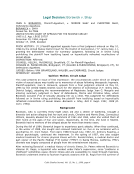
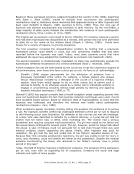
Based on these expressed concerns, judges throughout the country in the 1980s, beginning
with State v. Mack (1980), moved to exclude from courtrooms any posthypnotic
recollections--that is, testimony about memories that appeared during or after hypnosis had
been used (Scheflin &Shapiro, 1989 Laurence &Perry, 1988). Thus, the very use of
hypnosis was deemed automatically and inevitably to taint memory. By the mid-1980s, a
large majority of state courts forbade the introduction into evidence of such posthypnotic
recollection (Perry, Orne, London, &Orne, 1996).
The original per se exclusion rule proved to be too inflexible. For instance, because a person
who had been hypnotized was disqualified as a witness, that person was not even permitted
to state his or her name on the witness stand (People v. Shirley, 1982). Courts were
forced, for a variety of reasons, to provide exceptions.
The first exception corrected the disqualification problem by holding that a previously
hypnotized person could testify in court, but only concerning matters that had been
recorded before the hypnosis was used. Today, most state supreme courts that have
addressed the issue have adopted this modified per se exclusion rule (Giannelli, 1995).
The second exception is constitutionally mandated: no state may automatically exclude the
hypnotically refreshed recollections of a criminal defendant (Rock v. Arkansas, 1987).
A third exception has not yet been tested by the courts but it has the unanimous support of
all commentators, even those who favor a strict per se rule. As Perry et al. acknowledge:
Scheflin (1994) argues persuasively for the admission of evidence from a
previously hypnotized crime victim, for instance, a female patient who alleges
sexual relationships initiated by a therapist in the course of a hypnosis therapy
session. Here there would appear to be no other course but to permit such a
witness to testify to do otherwise would be a clarion call to individuals wishing to
engage in unconsenting sexuality without legal penalty by learning and applying
hypnotic induction techniques. (1996, p. 77)
Giannelli (1995) has argued correctly that a fourth exception exists regarding persons who
were not hypnotized despite the fact that hypnosis induction techniques were used. Courts
have accepted expert opinion, based on objective tests of hypnotizability, to show that the
hypnosis was ineffectual and therefore the witness may testify about posthypnotic
recollections (People v. Caro, 1988).
Other exceptions appear inevitable, thereby calling into question the existence of so porous
a rule. For example, Scheflin (1994) has challenged defenders of the per se rule to respond
to the following actual case illustration. No defender of the rule has yet met the challenge.
In a New York case described to Scheflin by a district attorney, a 4-year-old girl told her
mother that her father had, in effect, been molesting her. The mother had a serious
breakdown and required complete institutionalization. The girl was raised by her father and
the sexual abuse continued for several years. The girl, however, would no longer talk about
the abuse. A year of therapy could not persuade her to talk even though there was solid
medical evidence clearly supporting the abuse. Finally, after hypnosis was used for
relaxation, the girl told the sad and sordid tale of her father‟s repeated abuses of her.
Because New York excludes posthypnotic testimony, the girl was unable to tell her story in
court, and, therefore, could not identify her father as the perpetrator. Despite the medical
evidence corroborating the abuse, she remained in her father‟s custody. How is justice
served in this case?
Today, the field of forensic hypnosis is fighting for existence. The presence of the oppressive
per se rule, even with its expanding list of exceptions, threatens the social and legal
interests and rights of many people.
Based on these expressed concerns, judges throughout the country in the 1980s, beginning
with State v. Mack (1980), moved to exclude from courtrooms any posthypnotic
recollections--that is, testimony about memories that appeared during or after hypnosis had
been used (Scheflin &Shapiro, 1989 Laurence &Perry, 1988). Thus, the very use of
hypnosis was deemed automatically and inevitably to taint memory. By the mid-1980s, a
large majority of state courts forbade the introduction into evidence of such posthypnotic
recollection (Perry, Orne, London, &Orne, 1996).
The original per se exclusion rule proved to be too inflexible. For instance, because a person
who had been hypnotized was disqualified as a witness, that person was not even permitted
to state his or her name on the witness stand (People v. Shirley, 1982). Courts were
forced, for a variety of reasons, to provide exceptions.
The first exception corrected the disqualification problem by holding that a previously
hypnotized person could testify in court, but only concerning matters that had been
recorded before the hypnosis was used. Today, most state supreme courts that have
addressed the issue have adopted this modified per se exclusion rule (Giannelli, 1995).
The second exception is constitutionally mandated: no state may automatically exclude the
hypnotically refreshed recollections of a criminal defendant (Rock v. Arkansas, 1987).
A third exception has not yet been tested by the courts but it has the unanimous support of
all commentators, even those who favor a strict per se rule. As Perry et al. acknowledge:
Scheflin (1994) argues persuasively for the admission of evidence from a
previously hypnotized crime victim, for instance, a female patient who alleges
sexual relationships initiated by a therapist in the course of a hypnosis therapy
session. Here there would appear to be no other course but to permit such a
witness to testify to do otherwise would be a clarion call to individuals wishing to
engage in unconsenting sexuality without legal penalty by learning and applying
hypnotic induction techniques. (1996, p. 77)
Giannelli (1995) has argued correctly that a fourth exception exists regarding persons who
were not hypnotized despite the fact that hypnosis induction techniques were used. Courts
have accepted expert opinion, based on objective tests of hypnotizability, to show that the
hypnosis was ineffectual and therefore the witness may testify about posthypnotic
recollections (People v. Caro, 1988).
Other exceptions appear inevitable, thereby calling into question the existence of so porous
a rule. For example, Scheflin (1994) has challenged defenders of the per se rule to respond
to the following actual case illustration. No defender of the rule has yet met the challenge.
In a New York case described to Scheflin by a district attorney, a 4-year-old girl told her
mother that her father had, in effect, been molesting her. The mother had a serious
breakdown and required complete institutionalization. The girl was raised by her father and
the sexual abuse continued for several years. The girl, however, would no longer talk about
the abuse. A year of therapy could not persuade her to talk even though there was solid
medical evidence clearly supporting the abuse. Finally, after hypnosis was used for
relaxation, the girl told the sad and sordid tale of her father‟s repeated abuses of her.
Because New York excludes posthypnotic testimony, the girl was unable to tell her story in
court, and, therefore, could not identify her father as the perpetrator. Despite the medical
evidence corroborating the abuse, she remained in her father‟s custody. How is justice
served in this case?
Today, the field of forensic hypnosis is fighting for existence. The presence of the oppressive
per se rule, even with its expanding list of exceptions, threatens the social and legal
interests and rights of many people.