Cultic Studies Journal, Vol. 13, No. 1, 1996, page 36
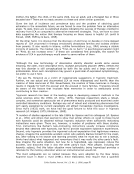
And I believe this was in 1961 in the summer and that we had been brought up to
the attic to play dress-up. And that we were in the attic and there were several
boxes of clothes in cardboard boxes that were old clothes that belonged to my
cousins and that there were other boxes up there. The walls I remember were not
finished and there was some exposed house insulation that was a pinkish salmon
color. There was a very, very large house fan built into the wall of the attic and
there were two wooden chairs.
Many of us spent time in such an attic room when we were children. If not, movies and
television shows make the scene easy to visualize. Ms. Borawick continues:
And th[en] she had my little sister and I take off our pants and our underpants and
th[en] she tied --she put the chairs facing each other and she had my sister and I
sit in the chairs and we were going to play some other game. And she tied us to
the chairs with what looked like pieces of cloth or like small scarves that were I
think like a pink color and some were white. And th[en] at some point in time she
untied me and had me lie prone on the attic floor in the center of the attic. And
then she inserted --tried to push this broomstick into me. And I remember that in
the course of this she held up, I think, a stuffed animal, I think it was like a stuffed
rabbit, told me that if I ever told anybody what happened, and I think she
squeezed the neck of the rabbit and said that‟s what was going to happen to me
and that this was just our little secret. And that was the conclusion. That‟s all I‟ve
remembered of that episode in the attic with the chairs and the broomstick.
(Plaintiff‟s deposition transcript from July 29, 1992, labeled as Exhibit D [a part of
the record not under seal] and included as part of the Plaintiff‟s Submission Re:
Ruling on Defendant‟s Motion in Limine submitted to the U.S. District Court, District
of Connecticut)
Given the richness of detail, certainty of memory, Matisse-like coloration, and normative
biases against the public disclosure of such information, a jury member might be hard-
pressed to disbelieve Ms. Borawick‟s account. It is only when the above passage is placed in
the context of devil-worshiping rituals conducted by Masons in black robes that the nature
of Ms. Borawick‟s deposition emerges as seeming fantasy, not historically accurate memory.
It is sobering to imagine what would have happened in this case without the satanic rituals,
especially when one recognizes that not all apparent fantasies include such bizarre
elements.
Hypnosis and the Creation of Unreliable Memories
Why does hypnosis produce such unreliable memories, even in subjects not particularly
responsive to the procedure (Carota Orne et al., 1996)? Several reasons have been
suggested, including (1) a lowering of critical judgment and reality orientation combined
with heightened suggestibility, and an attendant lowered criterion for calling a guess or
image a memory (Orne, Soskis, Dinges, &Carota Orne, 1984 Whitehouse, Dinges, Carota
Orne, &Orne, 1988) (2) increased vividness of recall and a resultant false sense of
familiarity (Dywan, 1995) (3) the belief of many hypnotists and subjects that hypnosis
allows one to transcend one‟s ordinary ability to remember (O‟Connell et al., 1970 Reiser,
1980) and (4) increased openness to fantasy and primary process thinking (Fromm, 1978-
79). With the possible exception of vividness of recall and increased openness to fantasy,
these factors are not strongly related to response to hypnotizability. Therefore, relatively
unhypnotizable subjects continue to display major cognitive distortions in recall after
hypnosis (Carota Orne et al., 1996). We shall examine these factors, starting with the
lowering of critical judgment, the factor that may underlie the others.
The lowering of critical judgment is central to hypnosis. Even the simplest and easiest
hypnotic suggestions require the subject to accept the logically absurd as possible. Hypnotic
And I believe this was in 1961 in the summer and that we had been brought up to
the attic to play dress-up. And that we were in the attic and there were several
boxes of clothes in cardboard boxes that were old clothes that belonged to my
cousins and that there were other boxes up there. The walls I remember were not
finished and there was some exposed house insulation that was a pinkish salmon
color. There was a very, very large house fan built into the wall of the attic and
there were two wooden chairs.
Many of us spent time in such an attic room when we were children. If not, movies and
television shows make the scene easy to visualize. Ms. Borawick continues:
And th[en] she had my little sister and I take off our pants and our underpants and
th[en] she tied --she put the chairs facing each other and she had my sister and I
sit in the chairs and we were going to play some other game. And she tied us to
the chairs with what looked like pieces of cloth or like small scarves that were I
think like a pink color and some were white. And th[en] at some point in time she
untied me and had me lie prone on the attic floor in the center of the attic. And
then she inserted --tried to push this broomstick into me. And I remember that in
the course of this she held up, I think, a stuffed animal, I think it was like a stuffed
rabbit, told me that if I ever told anybody what happened, and I think she
squeezed the neck of the rabbit and said that‟s what was going to happen to me
and that this was just our little secret. And that was the conclusion. That‟s all I‟ve
remembered of that episode in the attic with the chairs and the broomstick.
(Plaintiff‟s deposition transcript from July 29, 1992, labeled as Exhibit D [a part of
the record not under seal] and included as part of the Plaintiff‟s Submission Re:
Ruling on Defendant‟s Motion in Limine submitted to the U.S. District Court, District
of Connecticut)
Given the richness of detail, certainty of memory, Matisse-like coloration, and normative
biases against the public disclosure of such information, a jury member might be hard-
pressed to disbelieve Ms. Borawick‟s account. It is only when the above passage is placed in
the context of devil-worshiping rituals conducted by Masons in black robes that the nature
of Ms. Borawick‟s deposition emerges as seeming fantasy, not historically accurate memory.
It is sobering to imagine what would have happened in this case without the satanic rituals,
especially when one recognizes that not all apparent fantasies include such bizarre
elements.
Hypnosis and the Creation of Unreliable Memories
Why does hypnosis produce such unreliable memories, even in subjects not particularly
responsive to the procedure (Carota Orne et al., 1996)? Several reasons have been
suggested, including (1) a lowering of critical judgment and reality orientation combined
with heightened suggestibility, and an attendant lowered criterion for calling a guess or
image a memory (Orne, Soskis, Dinges, &Carota Orne, 1984 Whitehouse, Dinges, Carota
Orne, &Orne, 1988) (2) increased vividness of recall and a resultant false sense of
familiarity (Dywan, 1995) (3) the belief of many hypnotists and subjects that hypnosis
allows one to transcend one‟s ordinary ability to remember (O‟Connell et al., 1970 Reiser,
1980) and (4) increased openness to fantasy and primary process thinking (Fromm, 1978-
79). With the possible exception of vividness of recall and increased openness to fantasy,
these factors are not strongly related to response to hypnotizability. Therefore, relatively
unhypnotizable subjects continue to display major cognitive distortions in recall after
hypnosis (Carota Orne et al., 1996). We shall examine these factors, starting with the
lowering of critical judgment, the factor that may underlie the others.
The lowering of critical judgment is central to hypnosis. Even the simplest and easiest
hypnotic suggestions require the subject to accept the logically absurd as possible. Hypnotic