Cultic Studies Journal, Vol. 13, No. 1, 1996, page 67
whom he seduced. Through the use of mind-control techniques, he then revitalized the
group's energy by creating the now-familiar dynamics of elitism and end-time fantasies.
Koresh claimed an adolescent girl as a wife, moving on to bigamy, then to polygamy, and,
again reminiscent of Jones, ultimately declaring the marriages of his followers a sin and all
women as his. One cannot but be struck by the almost cookie-cutter mold from which the
most destructive cult leaders tend to come and the similar power-hungry, unethical,
immoral choices they make, unleashing their perversions on their followers and creating
doctrines to justify such abusive behavior.
All elements common to extremist cults are revealed to have been present in Koresh's
group including resistance by followers to his outrageous demands. But, in predictable cultic
fashion, the resultant threats and creation of fears in members discouraged further
vocalization of such criticisms and undermined desires to act on such thoughts. Fortunately
these stories by survivors bear testament to the fact that mind control is never total. Thus,
as a result of inner soul searching and often with the help of outsiders, many Davidians
succeeded in breaking away from the control of Koresh. It is their stories that form the
content of this part of the book.
The second part of the book is a fascinating overview of the roots of the Branch Davidians.
We are led through relevant American religious history, beginning with William Millers's
Millerites in the early 1800s. Miller's erroneous prediction of the end of the world on October
22, 1844, caused disillusioned followers to leave and many splinter groups to form. Some of
these coalesced into the Seventh Day Adventists in 1860, with Ellen G. White as their
unofficial leader. After her death in 1915, her legacy of the "spirit of prophecy" was
maintained by Victor Tasho Houteff. He broke from the Seventh Day Adventists and formed
that people can avoid being exploited. They argue that this type of education is necessary
and crucial. This book goes a long way toward contributing to that goal. For the cult novice
and the expert alike, Prophets of the Apocalypse should be read and take its place on your
bookshelf.
Linda James, M.A.
Professor of Psychology
Vanier College
Montreal, Quebec, Canada
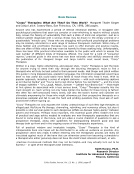
Take Me for a Ride: Coming of Age in a Destructive Cult. Mark Laxer. Outer
Rim Press (4431 Lehigh Road, #221 College Park, MD 20740), 1993, 192 pages.
“One flew east, one flew west, one flew over the cuckoo‟s nest.” This children‟s poem begins
Mark Laxer‟s autobiographical account of what happened during his seven years under the
influence of a cult leader and Laxer‟s subsequent years of recovery from the experience.
The cult of Rama (Frederick Lenz) began in the late 1970s when Lenz was yet a recruiter for
Sri Chinmoy, a controversial Indian meditation guru. Under Chinmoy, Lenz, known as
Atmananda for nearly 11 years, may have been Chinmoy‟s top recruiter. During that time
Lenz received his Ph.D. in English Literature, but his interests seemed to be more directed
toward seeking devotees than novels and plays. Laxer became one of Atmananda‟s closest
students and remained with him for a couple of years after Atmananda became Rama in
1983. Laxer broke with his guru only after his growing awareness that Lenz was more a
confidence artist than a true mystic became too much to ignore.
By the time Laxer left Rama‟s group, it had grown to several hundred students. In Laxer‟s
opinion, Lenz had diminished from enlightened teacher to a greedy and paranoid womanizer
who used religious themes and experiences to manipulate his students. Laxer no longer
believed that taking LSD with Lenz had any benefit. The drug experience merely left him
whom he seduced. Through the use of mind-control techniques, he then revitalized the
group's energy by creating the now-familiar dynamics of elitism and end-time fantasies.
Koresh claimed an adolescent girl as a wife, moving on to bigamy, then to polygamy, and,
again reminiscent of Jones, ultimately declaring the marriages of his followers a sin and all
women as his. One cannot but be struck by the almost cookie-cutter mold from which the
most destructive cult leaders tend to come and the similar power-hungry, unethical,
immoral choices they make, unleashing their perversions on their followers and creating
doctrines to justify such abusive behavior.
All elements common to extremist cults are revealed to have been present in Koresh's
group including resistance by followers to his outrageous demands. But, in predictable cultic
fashion, the resultant threats and creation of fears in members discouraged further
vocalization of such criticisms and undermined desires to act on such thoughts. Fortunately
these stories by survivors bear testament to the fact that mind control is never total. Thus,
as a result of inner soul searching and often with the help of outsiders, many Davidians
succeeded in breaking away from the control of Koresh. It is their stories that form the
content of this part of the book.
The second part of the book is a fascinating overview of the roots of the Branch Davidians.
We are led through relevant American religious history, beginning with William Millers's
Millerites in the early 1800s. Miller's erroneous prediction of the end of the world on October
22, 1844, caused disillusioned followers to leave and many splinter groups to form. Some of
these coalesced into the Seventh Day Adventists in 1860, with Ellen G. White as their
unofficial leader. After her death in 1915, her legacy of the "spirit of prophecy" was
maintained by Victor Tasho Houteff. He broke from the Seventh Day Adventists and formed
that people can avoid being exploited. They argue that this type of education is necessary
and crucial. This book goes a long way toward contributing to that goal. For the cult novice
and the expert alike, Prophets of the Apocalypse should be read and take its place on your
bookshelf.
Linda James, M.A.
Professor of Psychology
Vanier College
Montreal, Quebec, Canada
Take Me for a Ride: Coming of Age in a Destructive Cult. Mark Laxer. Outer
Rim Press (4431 Lehigh Road, #221 College Park, MD 20740), 1993, 192 pages.
“One flew east, one flew west, one flew over the cuckoo‟s nest.” This children‟s poem begins
Mark Laxer‟s autobiographical account of what happened during his seven years under the
influence of a cult leader and Laxer‟s subsequent years of recovery from the experience.
The cult of Rama (Frederick Lenz) began in the late 1970s when Lenz was yet a recruiter for
Sri Chinmoy, a controversial Indian meditation guru. Under Chinmoy, Lenz, known as
Atmananda for nearly 11 years, may have been Chinmoy‟s top recruiter. During that time
Lenz received his Ph.D. in English Literature, but his interests seemed to be more directed
toward seeking devotees than novels and plays. Laxer became one of Atmananda‟s closest
students and remained with him for a couple of years after Atmananda became Rama in
1983. Laxer broke with his guru only after his growing awareness that Lenz was more a
confidence artist than a true mystic became too much to ignore.
By the time Laxer left Rama‟s group, it had grown to several hundred students. In Laxer‟s
opinion, Lenz had diminished from enlightened teacher to a greedy and paranoid womanizer
who used religious themes and experiences to manipulate his students. Laxer no longer
believed that taking LSD with Lenz had any benefit. The drug experience merely left him