Cultic Studies Journal, Vol. 13, No. 1, 1996, page 17
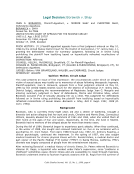
hand,” id. at 2799, the Court assigned trial judges “a gatekeeping role” for the admissibility
of scientific evidence. Id. at 2798.
We do not believe that Daubert is directly applicable to the issue here since Daubert [*44]
concerns the admissibility of data derived from scientific techniques or expert opinions. The
issue before us is whether Borawick is a competent witness, see Federal Practice, supra, §
6011, at 125-26, or whether her lay testimony is admissible, Valdez, 722 F.2d at 1200-B01.
Under either characterization, the question does not concern the admissibility of
experimental data or expert opinions. See id. But see Tuttle, 780 P.2d at 1211 (rejecting
the State‟s position that the issue only concerns the admissibility of testimony from a lay
eyewitness as opposed to an expert on the basis that “the hypnotically-enhanced testimony
given by the witness is the product of scientific intervention”).
Even though Daubert does not provide direct guidance, our decision today is informed by
the principles underlying the Supreme Court‟s holding. First, by loosening the strictures on
scientific evidence set by Frye, Daubert reinforces the idea that there should be a
presumption of admissibility of evidence. Second, it emphasizes the need for flexibility in
assessing whether evidence is admissible. Rather than using rigid “safeguards” for
determining whether testimony should [*45] be admitted, the Court‟s approach is to permit
the trial judge to weigh the various considerations pertinent to the issue in question. Third,
Daubert allows for the admissibility of scientific evidence, even if not generally accepted in
the relevant scientific community, provided its reliability has independent support. Finally,
the Court expressed its faith in the power of the adversary system to test “shaky but
admissible” evidence, Daubert, 113 S. Ct. at 2798, and advanced a bias in favor of
admitting evidence short of that solidly and indisputably proven to be reliable. Finally, we
note that, even if Daubert were of direct application, nothing in Daubert is inconsistent with
our outlined approach.
Conclusion
We have considered the Due Process and Seventh Amendment claims raised by Borawick
and conclude that they are meritless. Consequently, for the foregoing reasons we affirm the
district court‟s summary judgment in favor of defendants dismissing the complaint.
This article is an electronic version of an article originally published in Cultic Studies Journal, 1996, Volume 13,
Number 1, pages 2-25. Please keep in mind that the pagination of this electronic reprint differs from that of the
bound volume. This fact could affect how you enter bibliographic information in papers that you may write.
hand,” id. at 2799, the Court assigned trial judges “a gatekeeping role” for the admissibility
of scientific evidence. Id. at 2798.
We do not believe that Daubert is directly applicable to the issue here since Daubert [*44]
concerns the admissibility of data derived from scientific techniques or expert opinions. The
issue before us is whether Borawick is a competent witness, see Federal Practice, supra, §
6011, at 125-26, or whether her lay testimony is admissible, Valdez, 722 F.2d at 1200-B01.
Under either characterization, the question does not concern the admissibility of
experimental data or expert opinions. See id. But see Tuttle, 780 P.2d at 1211 (rejecting
the State‟s position that the issue only concerns the admissibility of testimony from a lay
eyewitness as opposed to an expert on the basis that “the hypnotically-enhanced testimony
given by the witness is the product of scientific intervention”).
Even though Daubert does not provide direct guidance, our decision today is informed by
the principles underlying the Supreme Court‟s holding. First, by loosening the strictures on
scientific evidence set by Frye, Daubert reinforces the idea that there should be a
presumption of admissibility of evidence. Second, it emphasizes the need for flexibility in
assessing whether evidence is admissible. Rather than using rigid “safeguards” for
determining whether testimony should [*45] be admitted, the Court‟s approach is to permit
the trial judge to weigh the various considerations pertinent to the issue in question. Third,
Daubert allows for the admissibility of scientific evidence, even if not generally accepted in
the relevant scientific community, provided its reliability has independent support. Finally,
the Court expressed its faith in the power of the adversary system to test “shaky but
admissible” evidence, Daubert, 113 S. Ct. at 2798, and advanced a bias in favor of
admitting evidence short of that solidly and indisputably proven to be reliable. Finally, we
note that, even if Daubert were of direct application, nothing in Daubert is inconsistent with
our outlined approach.
Conclusion
We have considered the Due Process and Seventh Amendment claims raised by Borawick
and conclude that they are meritless. Consequently, for the foregoing reasons we affirm the
district court‟s summary judgment in favor of defendants dismissing the complaint.
This article is an electronic version of an article originally published in Cultic Studies Journal, 1996, Volume 13,
Number 1, pages 2-25. Please keep in mind that the pagination of this electronic reprint differs from that of the
bound volume. This fact could affect how you enter bibliographic information in papers that you may write.