Cultic Studies Journal, Vol. 13, No. 1, 1996, page 27
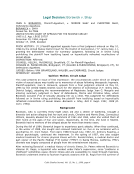
Commentary on Borawick v. Shay:
Hypnosis, Social Influence, Incestuous Child Abuse, and Satanic
Ritual Abuse:
The Iatrogenic Creation of
Horrific Memories for the Remote Past
Robert A. Karlin, Ph.D.
Rutgers University
Martin T. Orne, M.D., Ph.D.
University of Pennsylvania
Abstract
Borawick v. Shay involved several issues of broad concern. These are (1) the
admissibility of hypnotically influenced memory, (2) iatrogenic contributions to
memories of satanic ritual abuse and early incestuous child abuse, (3) the
problematic diagnosis of hidden, incestuous child abuse as a causative factor in
adult psychopathology, and (4) whether multiple personality disorder, recently
renamed dissociative identity disorder, is a defense mechanism of overwhelmed
children seeking escape or whether it is, in many cases, a dramatic, adult social
role legitimized by certain therapists.
With rare and easily identified exceptions, the authors suggest that hypnotically
influenced testimony be excluded per se (i.e., automatically). They also suggest
that decade-delayed memories of satanic rituals and of very early incestuous abuse
recovered in therapy, hypnosis, or with hypnosis-like procedures are usually
iatrogenic fantasies and/or based on postevent information. Next, the authors
present a Bayesian statistical analysis indicating that, at a minimum, more than
70% of diagnoses of hidden incestuous abuse are likely to be false positives.
Finally, they point out several factors indicating a largely iatrogenic origin to the
current epidemic of diagnoses of dissociative identity disorder.
In a recent decision the United States Court of Appeals for the Second District sitting on a
three-judge panel unanimously affirmed the U.S. District Ruling (Borawick v. Shay, 1995)
that excluded the hypnotically influenced testimony of Joan Borawick, a plaintiff seeking
damages for incestuous childhood abuse. Because Ms. Borawick also alleged abuse by a
satanic cult, her case raised a series of issues. Some of these issues involved the multifold
dangers of allowing hypnotically influenced memories to be presented as testimony in civil
cases. Broader concerns raised by Borawick v. Shay involved (1) iatrogenic contributions to
memories of satanic ritual abuse and early incestuous child abuse, (2) the problematic
diagnosis of hidden, incestuous child abuse as a causative factor in adult psychopathology
based on recent adult memories, and (3) whether multiple personality disorder is a defense
mechanism of over-whelmed children seeking escape or whether it is a dramatic adult social
role legitimized by certain therapists. Often using the available facts in Borawick v. Shay as
illustrations, this article will examine these issues.
When memories of childhood sexual abuse are recovered in therapy and regarded as
veridical, the results can be devastating. For example, in late 1994 the world learned that
Chicago‟s Archbishop Joseph Cardinal Bernadin had been accused of sexually abusing
Steven Cook when Steven was a teenager. Cook‟s “memories” were recovered as an adult
in therapy during hypnotic age regression. Although Cardinal Bernadin is now exonerated by
Commentary on Borawick v. Shay:
Hypnosis, Social Influence, Incestuous Child Abuse, and Satanic
Ritual Abuse:
The Iatrogenic Creation of
Horrific Memories for the Remote Past
Robert A. Karlin, Ph.D.
Rutgers University
Martin T. Orne, M.D., Ph.D.
University of Pennsylvania
Abstract
Borawick v. Shay involved several issues of broad concern. These are (1) the
admissibility of hypnotically influenced memory, (2) iatrogenic contributions to
memories of satanic ritual abuse and early incestuous child abuse, (3) the
problematic diagnosis of hidden, incestuous child abuse as a causative factor in
adult psychopathology, and (4) whether multiple personality disorder, recently
renamed dissociative identity disorder, is a defense mechanism of overwhelmed
children seeking escape or whether it is, in many cases, a dramatic, adult social
role legitimized by certain therapists.
With rare and easily identified exceptions, the authors suggest that hypnotically
influenced testimony be excluded per se (i.e., automatically). They also suggest
that decade-delayed memories of satanic rituals and of very early incestuous abuse
recovered in therapy, hypnosis, or with hypnosis-like procedures are usually
iatrogenic fantasies and/or based on postevent information. Next, the authors
present a Bayesian statistical analysis indicating that, at a minimum, more than
70% of diagnoses of hidden incestuous abuse are likely to be false positives.
Finally, they point out several factors indicating a largely iatrogenic origin to the
current epidemic of diagnoses of dissociative identity disorder.
In a recent decision the United States Court of Appeals for the Second District sitting on a
three-judge panel unanimously affirmed the U.S. District Ruling (Borawick v. Shay, 1995)
that excluded the hypnotically influenced testimony of Joan Borawick, a plaintiff seeking
damages for incestuous childhood abuse. Because Ms. Borawick also alleged abuse by a
satanic cult, her case raised a series of issues. Some of these issues involved the multifold
dangers of allowing hypnotically influenced memories to be presented as testimony in civil
cases. Broader concerns raised by Borawick v. Shay involved (1) iatrogenic contributions to
memories of satanic ritual abuse and early incestuous child abuse, (2) the problematic
diagnosis of hidden, incestuous child abuse as a causative factor in adult psychopathology
based on recent adult memories, and (3) whether multiple personality disorder is a defense
mechanism of over-whelmed children seeking escape or whether it is a dramatic adult social
role legitimized by certain therapists. Often using the available facts in Borawick v. Shay as
illustrations, this article will examine these issues.
When memories of childhood sexual abuse are recovered in therapy and regarded as
veridical, the results can be devastating. For example, in late 1994 the world learned that
Chicago‟s Archbishop Joseph Cardinal Bernadin had been accused of sexually abusing
Steven Cook when Steven was a teenager. Cook‟s “memories” were recovered as an adult
in therapy during hypnotic age regression. Although Cardinal Bernadin is now exonerated by